Key takeaways
- Native perennial for zones 5-9 that dies back to the ground each winter and resprouts vigorously in spring.
- Needs full sun and well-drained soil; established vines are drought tolerant but resent soggy winter ground.
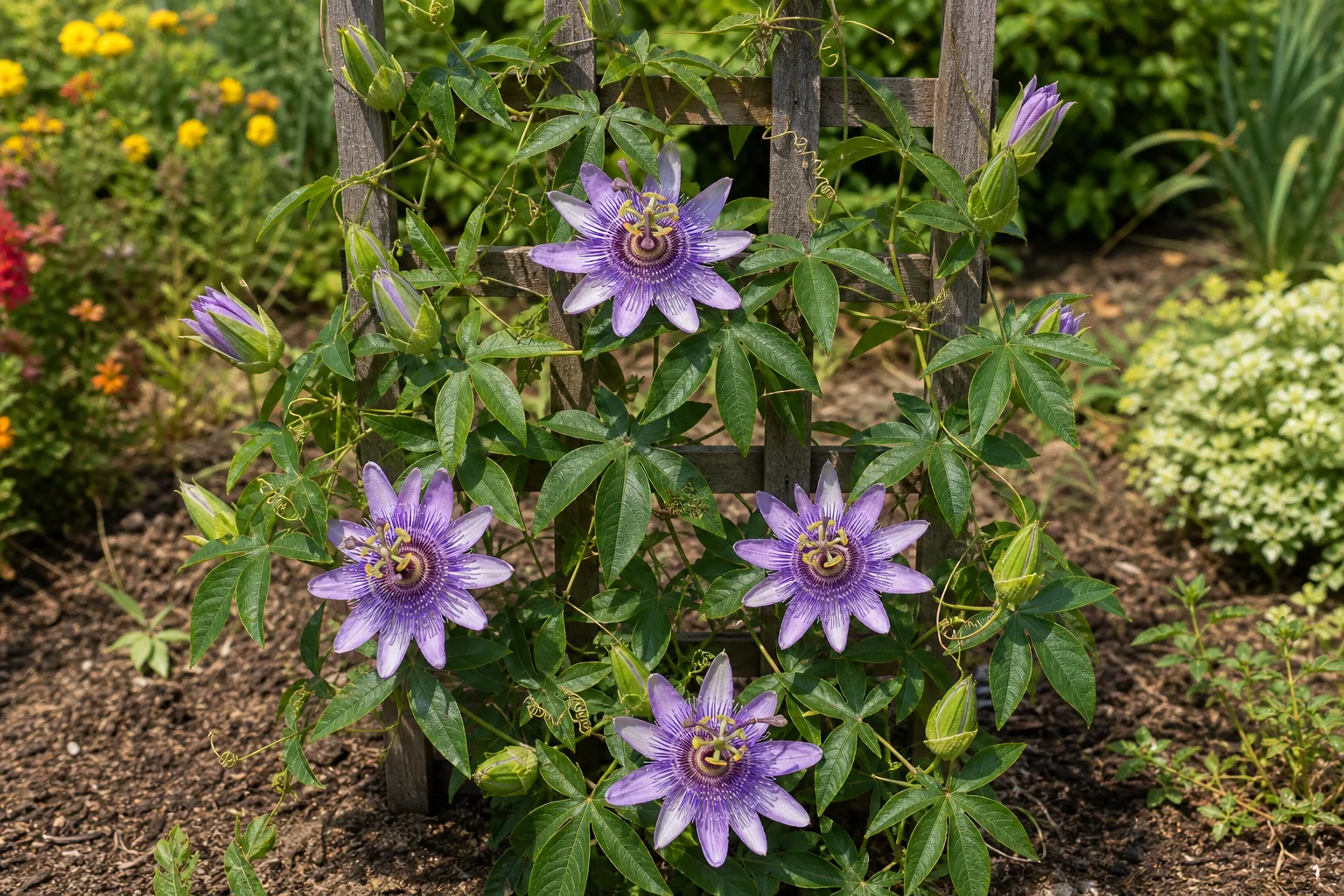
- Intricate lavender flowers are followed by edible 'maypop' fruits, and the vine is a host plant for Gulf Fritillary butterflies.
How to care for purple passionflower
Purple passionflower (Passiflora incarnata) is a vigorous native perennial vine that rewards full sun and room to roam. Plant it against a fence, trellis, or arbor, or let it scramble over shrubs, in average, well-drained soil. It climbs by tendrils, dies back to the ground after frost in colder zones, and resprouts strongly each spring. Water regularly while establishing, then only in drought. Expect the vine to spread by root suckers, and contain it where that is a problem. Do not panic when Gulf Fritillary or Variegated Fritillary caterpillars defoliate the vine - it leafs back out quickly.
Light
Passionflower blooms best in full sun (6 or more hours of direct light). It tolerates part shade, but flowering drops and the vine becomes more open and leggy. In very hot-summer regions a little afternoon shade is acceptable.
Water
Keep the soil evenly moist through establishment, then water only during extended drought - established vines are quite drought tolerant. Good drainage matters more than volume: wet, poorly drained winter soil is the main cause of root rot and plant loss. A loose mulch keeps the roots cool.
Soil and planting
Plant in average to fertile, well-drained soil in a sheltered, sunny position. This native grows in clay, loam, or sand if drainage is adequate; improve heavy ground with organic matter or plant on a slight mound. In containers use a large pot with a trellis and a freely draining mix, and repot in spring when rootbound.
Temperature, humidity, and fertilizer
Hardy in USDA zones 5-9, purple passionflower tolerates winter cold to roughly -10 F when dormant, but the top growth is killed by frost in colder gardens - that is normal, and it regrows from the roots. It handles summer heat and humidity well. Fertilizer is rarely needed; if growth is weak, feed lightly in spring with a balanced, low-nitrogen fertilizer and avoid pushing soft growth.
Pruning and propagation
Little pruning is required beyond clearing dead stems in late winter or early spring and thinning overcrowded growth. Pinch young plants to encourage bushiness. Propagate by seed (germination is often low, so direct sow), by root cuttings, or by division of the suckering root system; stem cuttings taken early in the season root readily.
Common problems
Start with the pattern, current soil moisture, and recent changes. One symptom can have several causes, so change the most likely factor first and observe before making another major adjustment.
| Symptom | Check first | First action |
|---|---|---|
| Vine stripped of leaves by caterpillars | Check for Gulf Fritillary or Variegated Fritillary larvae - this is the plant's purpose. | Leave them alone; the vine resprouts within weeks. This is the expected trade-off of growing a butterfly host plant. |
| Plant declines in wet or waterlogged soil | Check drainage and winter sogginess. | Improve drainage, plant on a mound, and reduce watering; root rot is the main killer. |
| Vigorous spread beyond its spot | Check for underground suckers emerging several feet away. | Plant in a contained bed, prune the roots, or grow in a large pot to manage the spread. |
| Plenty of leaves, few flowers | Check light and nitrogen levels. | Move to full sun and cut back nitrogen fertilizer; over-rich soil favors foliage over bloom. |
| Flower buds drop before opening | Check for drought stress or extreme heat at bud time. | Water consistently through bud formation, mulch to hold moisture, and avoid disturbing the root zone. |
Pet and household safety
Purple passionflower (Passiflora incarnata) is toxic to cats and dogs if ingested. NC State Extension rates this species as a medium-severity poison because the leaves and stems contain cyanogenic glycosides; consumption can cause severe nausea, vomiting, drowsiness, and episodes of irregular heartbeat, and NC State advises against eating the leaves as 'herbal medicine'. The ASPCA does not maintain a passion flower species page, so this is based on the university extension profile. Keep pets from chewing the foliage and vines, and contact a veterinarian after a concerning exposure. The ripe maypop fruit is edible for people, but the leaves and stems are not.
Frequently asked questions
How much sun does purple passionflower need?
Full sun (6 or more hours) for the heaviest bloom; part shade is tolerated but gives fewer flowers and a more open vine.
Is purple passionflower a perennial?
Yes, in zones 5-9. It dies back to the ground in cold winters and resprouts from the roots each spring.
Why is my passionflower being eaten by caterpillars?
Likely Gulf Fritillary or Variegated Fritillary larvae - this native vine is their host plant. The defoliation is temporary and the vine regrows quickly.
Can I eat the maypop fruit?
Yes - the ripe orange-yellow fruits are edible fresh or made into jelly. Do not eat the leaves or unripe fruit.
Why does my passionflower spread so much?
It suckers from the roots and can be aggressive; contain it in a bed or container and remove unwanted shoots early.
Is purple passionflower safe for pets?
No - the leaves and stems contain cyanogenic glycosides, and NC State rates the species as a medium-severity poison for cats and dogs. Keep pets from chewing it.
Sources and editorial review
This editorial draft is based on the sources below and awaits named horticulture-expert approval before publication.
- Passiflora incarnataRoyal Botanic Gardens, Kew (Plants of the World Online) · Checked
- Toxic and Non-Toxic Plants listASPCA · Checked
- Passiflora incarnataNorth Carolina State University Extension · Checked
- Passiflora incarnata (Maypop)Lady Bird Johnson Wildflower Center · Checked
What works well
- Intricate, showy lavender flowers with a distinctive fringed corona from early summer into fall.
- A native host plant for Gulf Fritillary, Variegated Fritillary, and other butterflies.
- Drought tolerant once established and dies back cleanly in cold winters.
What to consider
- Spreads aggressively by underground suckers and needs containment in the garden.
- Caterpillars may strip the foliage - an expected part of the butterfly relationship.
- Leaves and stems contain cyanogenic glycosides; NC State rates the species a medium-severity poison for pets.