Key takeaways
- Plant certified seed potatoes in warm, loose, slightly acidic soil and hill the stems to keep tubers covered and out of light.
- Water steadily (1-2 inches per week) while tubers form; uneven moisture causes scab, cracking, and poor set.
- Harvest new potatoes after flowering and mature tubers after the tops die; the green foliage and greened tubers are toxic, so keep pets away.
How to care for potato
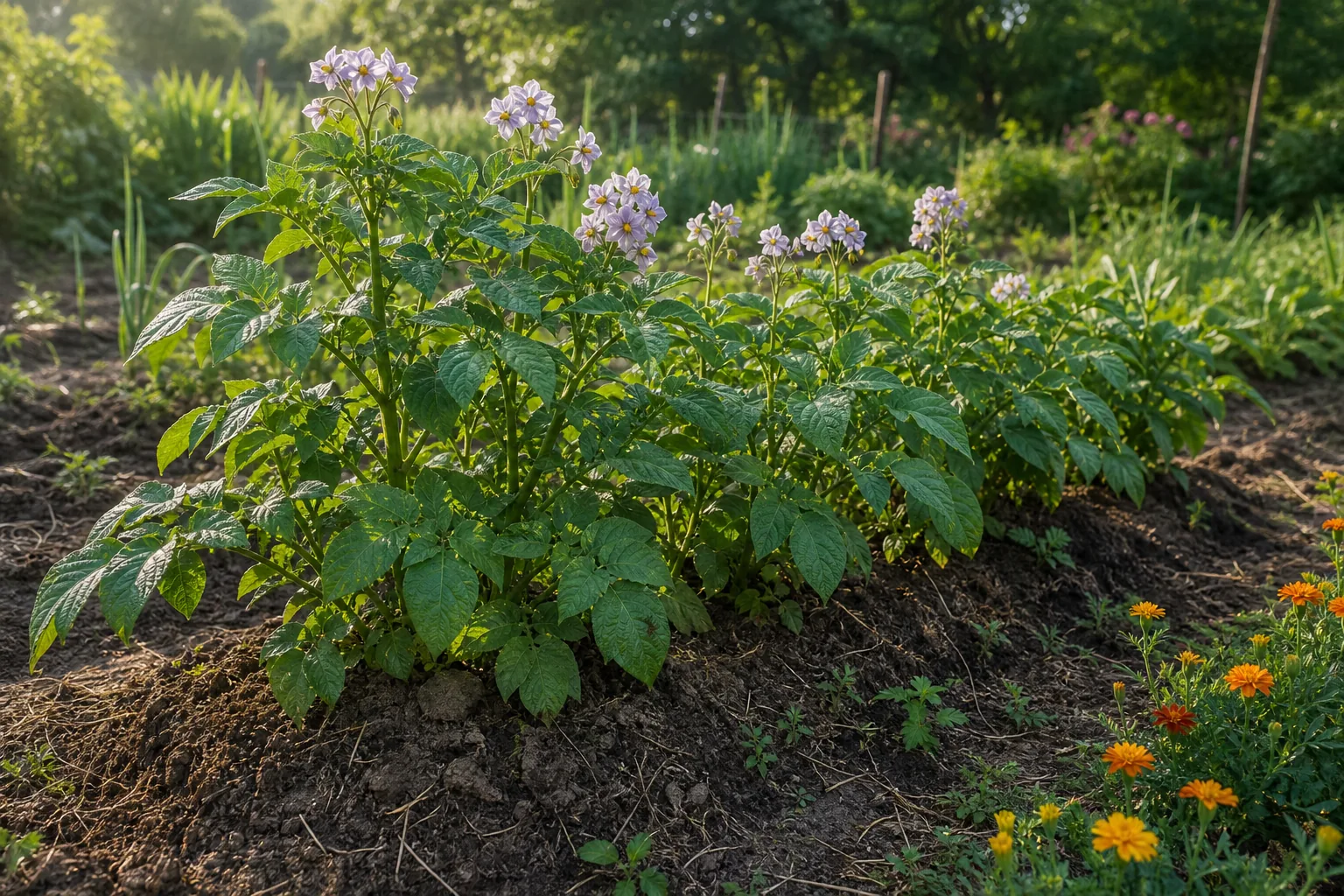
Potato (Solanum tuberosum) is a warm-season crop that wants sun, loose, slightly acidic, well-drained soil, and steady moisture. Plant certified disease-free seed pieces (cut to 1.25-inch blocks with 1-2 eyes, cut side down) 3-5 inches deep, 10-12 inches apart in rows 30-36 inches apart, after the soil has warmed. Hill the stems with soil or straw as they grow so the developing tubers stay covered and don't green. Water 1-2 inches per week while tubers size up, and harvest new potatoes after flowering or mature tubers after the tops die back; cure in the dark before storage.
Light
Potatoes need full sun — at least 6-8 hours of direct light — for the best yield; they tolerate a little shade but produce fewer, smaller tubers in low light. Hilling keeps the tubers out of the sun, which would turn them green and toxic.
Water
Water to keep the soil evenly moist, about 1-2 inches per week and more on sandy soil, especially while tubers are forming. Uneven moisture causes scab, cracking, and poor set; keep the root zone damp but not waterlogged, and water early in the day. Reduce watering as the vines die back so skins set for storage.
Soil and planting
Plant in loose, well-drained soil rich in organic matter with a slightly acidic pH of about 6.0-6.5 (tolerates down to 5.0). In containers use a deep pot or grow bag (at least 18 inches wide, 2-3 feet deep) with a light, free-draining mix and hill as plants grow. Avoid fresh manure and 'Weed and Feed' fertilizers; rotate out of tomatoes, peppers, and eggplant for 3-4 years to limit disease.
Temperature, humidity, and fertilizer
Potatoes are frost tender and grow best in mild summer temperatures; tubers form best in cool, moist soil. High humidity raises early and late blight risk, so space and hill for airflow. Feed moderately — a side-dressing of nitrogen about 4 weeks after planting and again 2 weeks later — because potatoes are heavier feeders than many vegetables; too much nitrogen favors foliage over tubers.
Pruning and propagation
No pruning beyond removing diseased foliage and, optionally, pinching tops to slow excessive growth. Propagate from certified seed pieces: cut tubers into 1.25-inch blocks with 1-2 eyes, let cuts callus, and plant after soil warms; never use grocery potatoes (often sprout-inhibited or diseased).
Common problems
Start with the pattern, current soil moisture, and recent changes. One symptom can have several causes, so change the most likely factor first and observe before making another major adjustment.
| Symptom | Check first | First action |
|---|---|---|
| Skeletonized or chewed leaves | Check for Colorado potato beetle adults and orange egg masses on leaf undersides. | Hand-pick beetles and crush eggs, or use spinosad / Bt; use row cover early. |
| Dark spots on leaves and stems, plants collapsing | Check for early or late blight in humid, wet weather. | Improve airflow and spacing, avoid overhead watering, and use preventive fungicide in wet spells; remove infected foliage. |
| Tunnels and scarring in the tubers | Check for wireworms or potato tuber moth larvae in the soil. | Rotate crops, solarize or trap-wireworm, and remove affected tubers. |
| Green patches on tubers | Check whether tubers were exposed to light (not hilled enough). | Hill soil/straw over the row and keep tubers covered; cut away green parts before eating. |
| Hollow or cracked tubers | Check for uneven watering and rapid growth swings. | Water evenly and steadily, especially while tubers size up. |
Pet and household safety
Potato foliage, stems, and green (sun-exposed) tubers are toxic to dogs and cats (nightshade family; solanine-like glycoalkaloids), while the ripe, properly cured tuber is non-toxic and safe to eat. The ASPCA classifies the related tomato plant as toxic to dogs and cats, and the same caution applies to potato foliage — keep pets from chewing leaves or stems, discard greened tubers, and contact a veterinarian if a pet eats plant parts.
Frequently asked questions
How much sun does potato need?
Full sun — at least 6-8 hours; light shade reduces yield. Hill to keep tubers out of the sun.
How often should I water potatoes?
Evenly moist, 1-2 inches per week while tubers form; uneven water causes scab and cracking.
Why do I hill potatoes?
Hilling covers developing tubers so they stay out of light and don't turn green and toxic; it also supports plants.
When do I harvest potatoes?
New potatoes after flowering; mature tubers after the tops die back, then cure in the dark.
What makes a potato toxic?
Greened tubers and the green foliage/stems contain solanine; the normal cured tuber is safe to eat.
Are potatoes safe for pets?
The ripe tuber is safe, but the foliage, stems, and greened tubers are toxic to dogs and cats (nightshade), so keep pets from chewing the plant.
Sources and editorial review
This editorial draft is based on the sources below and awaits named horticulture-expert approval before publication.
- Solanum tuberosumRoyal Botanic Gardens, Kew (Plants of the World Online) · Checked
- Tomato PlantASPCA (Animal Poison Control) · Checked
- Growing potatoes in home gardensUniversity of Minnesota Extension · Checked
- PotatoesOregon State University Extension · Checked
What works well
- Productive and space-efficient; a small bed yields a lot of food.
- The cured tuber stores for months in cool, dark, humid conditions.
- Fun and easy to grow, including in containers and grow bags.
What to consider
- Foliage, stems, and greened tubers are toxic to pets (nightshade solanine).
- Needs hilling and consistent moisture; prone to Colorado potato beetle and blight.
- Requires a 3-4 year rotation out of the nightshade family to limit soil-borne disease.