Key takeaways
- Give petunias at least 6 hours of sun; full sun produces the most flowers and compact growth.
- Water and feed regularly - container and basket plants are heavy feeders that dry out fast in heat.
- Deadhead or shear plants back by a third when they get leggy or fade in summer to trigger fresh bloom.
How to care for petunia
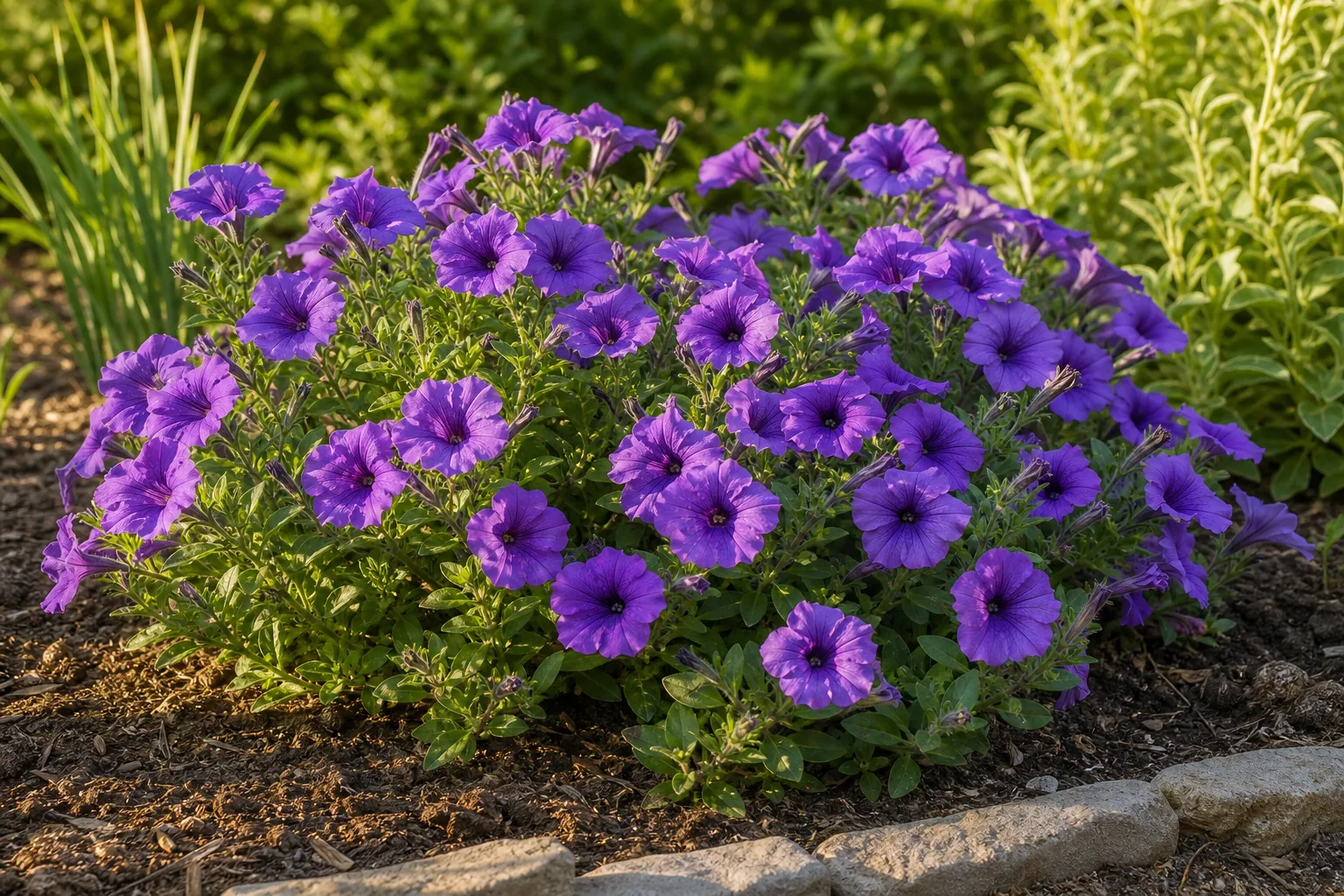
Petunia (Petunia × atkinsiana) is a tender perennial (hardy only in USDA zones 10-11) grown as an annual everywhere else. Set out stocky transplants after the last frost in full sun, spacing 10-12 inches so air moves between plants. Petunias are heavy feeders: mix a slow-release fertilizer into the soil at planting and supplement container plants with a balanced liquid feed every 1-2 weeks. Pinch the tips at planting and deadhead spent blooms to keep plants bushy and flowering. If plants get leggy or fade in midsummer heat, cut them back by about a third and feed to spark a new flush of flowers as weather cools.
Light
Petunias flower best in full sun - at least 6 hours of direct light daily. In the hottest summer climates, a little afternoon shade reduces scorching and helps bloom last longer, but too much shade makes plants leggy with few flowers. North- or east-facing sites give weak, open growth.
Water
Keep the soil evenly moist but never soggy. In-ground beds need about 1 inch of water weekly; containers and hanging baskets dry out fast and may need water once or even twice a day in hot, windy weather. Aim water at the base and avoid wetting foliage, which encourages fungal disease. Good drainage is essential - wet feet lead to root rot.
Soil and planting
Plant in average, medium-moisture, well-drained garden soil; petunias tolerate poor soils as long as drainage is good. In containers use a quality, freely draining potting mix - never unamended garden soil, which compacts and suffocates roots. Repot or refresh the top few inches of mix midsummer if growth stalls, water runs straight through, or plants wilt repeatedly despite watering.
Temperature, humidity, and fertilizer
Petunias are frost tender and thrive in warm weather but sulk in humidity and sustained heat above about 90°F. Feed container and basket plants every 1-2 weeks with a balanced liquid fertilizer; in-ground beds usually need only the starter dose plus a midseason boost. Stop heavy feeding if plants are heat-stressed. Good air circulation limits gray mold and blight.
Pruning and propagation
No strict pruning is needed beyond deadheading spent flowers and pinching young tips for branching. Shear declining midsummer plants back by a third to renew them. Most garden petunias are complex hybrids that do not come true from seed; start new plants from seed sown indoors 10-12 weeks before the last frost, or take softwood cuttings from favorite types. Many gardeners simply buy fresh transplants each spring.
Common problems
Start with the pattern, current soil moisture, and recent changes. One symptom can have several causes, so change the most likely factor first and observe before making another major adjustment.
| Symptom | Check first | First action |
|---|---|---|
| Leggy, open growth with few flowers | Check light hours and feeding; leggy petunias usually lack sun or food. | Move to fuller sun, begin regular fertilizing, and pinch growing tips to encourage branching. |
| Wilting in hot weather despite recent watering | Check container moisture and heat exposure; pots dry out fast. | Water more frequently (twice daily in heat), ensure drainage holes, and provide some afternoon shade. |
| Bloom slows or stops in midsummer | Check for heat stress and exhausted plants. | Shear plants back by a third, feed lightly, and expect renewed bloom as temperatures cool. |
| Yellowing lower leaves and wilting on wet soil | Check for root rot from overwatering or poor drainage. | Reduce watering, improve drainage, and avoid letting pots sit in saucers. |
| Gray, spotted, or mottled foliage | Check for gray mold, late blight, or tobacco mosaic virus in humid, crowded conditions. | Improve airflow, water at the base, remove affected foliage; remove and discard plants with mosaic virus. |
Pet and household safety
Petunia is non-toxic to dogs, cats, and horses according to the ASPCA non-toxic plant list. Eating large amounts of any plant can still cause mild stomach upset, so discourage chewing and contact a veterinarian if a pet shows persistent vomiting or diarrhea.
Frequently asked questions
How much sun does petunia need?
At least 6 hours of direct sun daily; full sun gives the most flowers and the most compact plants. Some afternoon shade helps in hot summers.
How often should I water petunias?
Keep soil evenly moist. In-ground plants need about 1 inch weekly; containers and baskets may need water daily or twice daily in heat.
What soil is best for petunias?
Average, well-drained soil in the ground; in pots use a freely draining potting mix and never heavy garden soil.
Why did my petunias get leggy?
Usually too little sun or too little fertilizer. Move to full sun, feed regularly, and pinch the tips.
Should I deadhead or cut back petunias?
Yes - deadhead spent blooms, and shear plants back by a third if they get leggy or fade in summer to trigger fresh flowering.
Are petunias safe for pets?
Yes - the ASPCA lists petunia as non-toxic to dogs, cats, and horses, though large amounts may cause mild stomach upset.
Sources and editorial review
This editorial draft is based on the sources below and awaits named horticulture-expert approval before publication.
- Petunia × atkinsianaRoyal Botanic Gardens, Kew (Plants of the World Online) · Checked
- PetuniaASPCA · Checked
- Petunia (group)Missouri Botanical Garden · Checked
- Growing PetuniasUniversity of Minnesota Extension · Checked
What works well
- Prolific, long-lasting bloom from spring to frost in a huge range of colors and forms.
- Excellent for beds, borders, window boxes, and trailing baskets.
- Non-toxic to dogs and cats (ASPCA non-toxic plant list).
What to consider
- Frost tender and short-lived; declines in prolonged heat and humidity.
- Needs steady water and fertilizer, especially in containers, or it stalls.
- Susceptible to root rot, gray mold, late blight, and tobacco mosaic virus in wet, crowded conditions.