Key takeaways
- Choose a cool northern site; paper birch grows poorly and is short-lived where summers are hot and humid.
- Keep soil consistently moist and acidic; mulch the root zone and consider a northern or eastern exposure with afternoon shade.
- Prune in the dormant season only - never in spring while sap is running - and watch for bronze birch borer on stressed trees.
How to care for paper birch
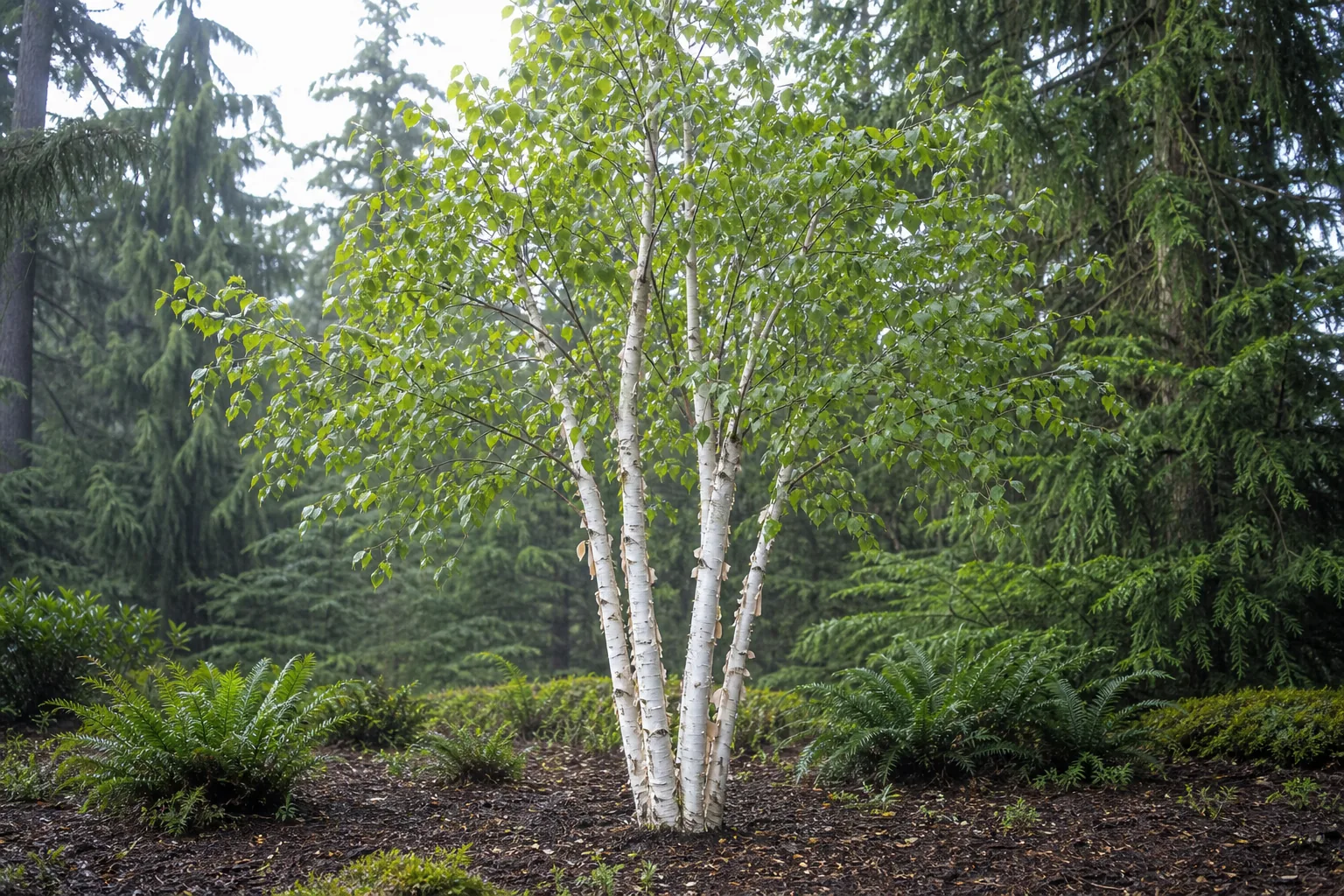
Paper birch (Betula papyrifera) is a fast-growing tree of cool northern climates, and its care is mostly about choosing the right site. Plant it where summer temperatures rarely climb, ideally on a northern or eastern exposure that gets some afternoon shade, in moist, acidic, well-drained sandy or rocky loam. Keep the root zone consistently cool and moist with soaker hoses and bark mulch - roots are shallow and suffer in dry, hot ground. In St. Louis and similar warm, humid regions the tree is marginal and generally short-lived; river birch is a better choice there. Give the mature tree 25-50 ft of spread and enjoy the peeling white bark, which is the main reason to grow it.
Light
Paper birch grows best in full sun in cool climates, with the best bark color and shape in open light. In warmer zones, part shade - especially afternoon shade - keeps the root zone cooler and reduces stress. Deep shade produces weak, sparse growth, so aim for bright light with protection from the hottest afternoon sun.
Water
Consistently moist soil is the single most important requirement. Paper birch is native to cool, damp, even wet sites and needs regular moisture, especially where summers are warm. Use soaker hoses or drip irrigation and bark mulch to keep roots cool and damp, and never let the shallow root zone dry out for long. It tolerates medium to wet soils but not prolonged drought.
Soil and planting
Plant paper birch in moist, acidic, well-drained sandy or rocky loam; it grows on clay, loam, or sand as long as drainage is adequate and moisture is consistent. Keep the root zone mulched and cool, and plant in the ground (the tree does not repot). Choose a site away from pavement heat and pollution, which the species tolerates poorly, and avoid disturbing the shallow roots with digging or heavy foot traffic.
Temperature, humidity, and fertilizer
Paper birch is a cold-climate tree, hardy in USDA zones 2-7, that performs best where summer temperatures rarely exceed about 75°F and the ground stays cool. Hot, humid summers stress the tree, weaken it, and invite bronze birch borer, which usually kills it in warm regions. Fertilizer is generally unnecessary; a light compost mulch renews the soil, and excess nitrogen should be avoided on trees already prone to borer attack.
Pruning and propagation
Paper birch needs little pruning; remove dead, damaged, or crossing branches in the dormant season and avoid spring pruning, when heavy sap flow causes severe bleeding. Never top a birch - cut wounds heal slowly and open the way for borer entry. Propagate from seed (which requires cold stratification for best germination) or from softwood cuttings taken in early summer, though named forms are usually grown from seed.
Common problems
Start with the pattern, current soil moisture, and recent changes. One symptom can have several causes, so change the most likely factor first and observe before making another major adjustment.
| Symptom | Check first | First action |
|---|---|---|
| Yellowing canopy and dieback from the top down in a warm climate | Check for bronze birch borer - look for D-shaped exit holes and ridged bark on stressed trees. | Improve site conditions (cooler, moister), keep the tree vigorous, and remove and destroy heavily infested branches. |
| Brown or blistered tunnels within leaves | Check for birch leaf miner damage in the leaf interior. | Rake and dispose of infested leaves; tolerate light damage and support natural predators rather than spraying. |
| Leaf drop and scorch in summer | Check heat stress and soil moisture. | Water deeply, mulch the root zone, and provide afternoon shade where possible. |
| Bleeding from pruning wounds in spring | Check whether pruning was done while sap was flowing. | Avoid all spring pruning; make dormant-season cuts and leave the wound to seal naturally. |
| Sparse, slow, or stunted growth in hot lowland sites | Check climate fit - this is a cool-climate species. | Choose river birch or another heat-tolerant birch for warm regions instead of paper birch. |
Pet and household safety
Paper birch is not listed on the ASPCA Toxic and Non-Toxic Plants list, and no species-specific non-toxic classification for cats and dogs was confirmed in the reviewed sources. NC State and Missouri Botanical Garden profiles note no known toxicity, but absence from a poison-control list is not proof of safety. Discourage chewing of bark or leaves and contact a veterinarian after substantial ingestion or concerning symptoms.
Frequently asked questions
How much sun does paper birch need?
Full sun in cool climates; part shade with afternoon protection in warmer zones. It needs bright light but a cool, shaded root zone.
How often should I water paper birch?
Keep the soil consistently moist, especially in warm weather; use soaker hoses and mulch so the shallow roots stay cool and damp.
What soil suits paper birch?
Moist, acidic, well-drained sandy or rocky loam. It grows in clay, loam, or sand but dislikes dry ground and hot pavement.
Why is my paper birch dying from the top down?
Usually bronze birch borer, which attacks heat- and drought-stressed trees. Improve site conditions and remove badly infested wood.
When should I prune paper birch?
Only in the dormant season. Spring pruning causes heavy sap bleeding and slow-healing wounds that invite borers.
Is paper birch safe for pets?
Birch is not listed on the ASPCA Toxic and Non-Toxic Plants list and no species-specific classification for cats and dogs was confirmed, so discourage chewing and treat unlisted plants conservatively.
Sources and editorial review
This editorial draft is based on the sources below and awaits named horticulture-expert approval before publication.
- Betula papyriferaRoyal Botanic Gardens, Kew (Plants of the World Online) · Checked
- Toxic and Non-Toxic PlantsASPCA · Checked
- Betula papyriferaNorth Carolina State University Extension · Checked
- Betula papyriferaMissouri Botanical Garden Plant Finder · Checked
What works well
- Striking white peeling bark with year-round interest and clear yellow fall color.
- Fast-growing pioneer tree that establishes quickly in cool, moist sites.
- Attractive in multi-trunk clumps and a good wildlife tree for seed and nesting.
What to consider
- Short-lived and prone to bronze birch borer in hot, humid, or drought-stressed sites.
- Needs consistently cool, moist soil; suffers from heat and humidity stress.
- Not listed by the ASPCA, with no confirmed non-toxic classification for cats and dogs.