Key takeaways
- Sow in early spring and again in late summer for fall; lettuce bolts (runs to seed) in heat, so give afternoon shade in summer.
- Keep the soil evenly moist — uneven water makes leaves bitter and slows regrowth after cutting.
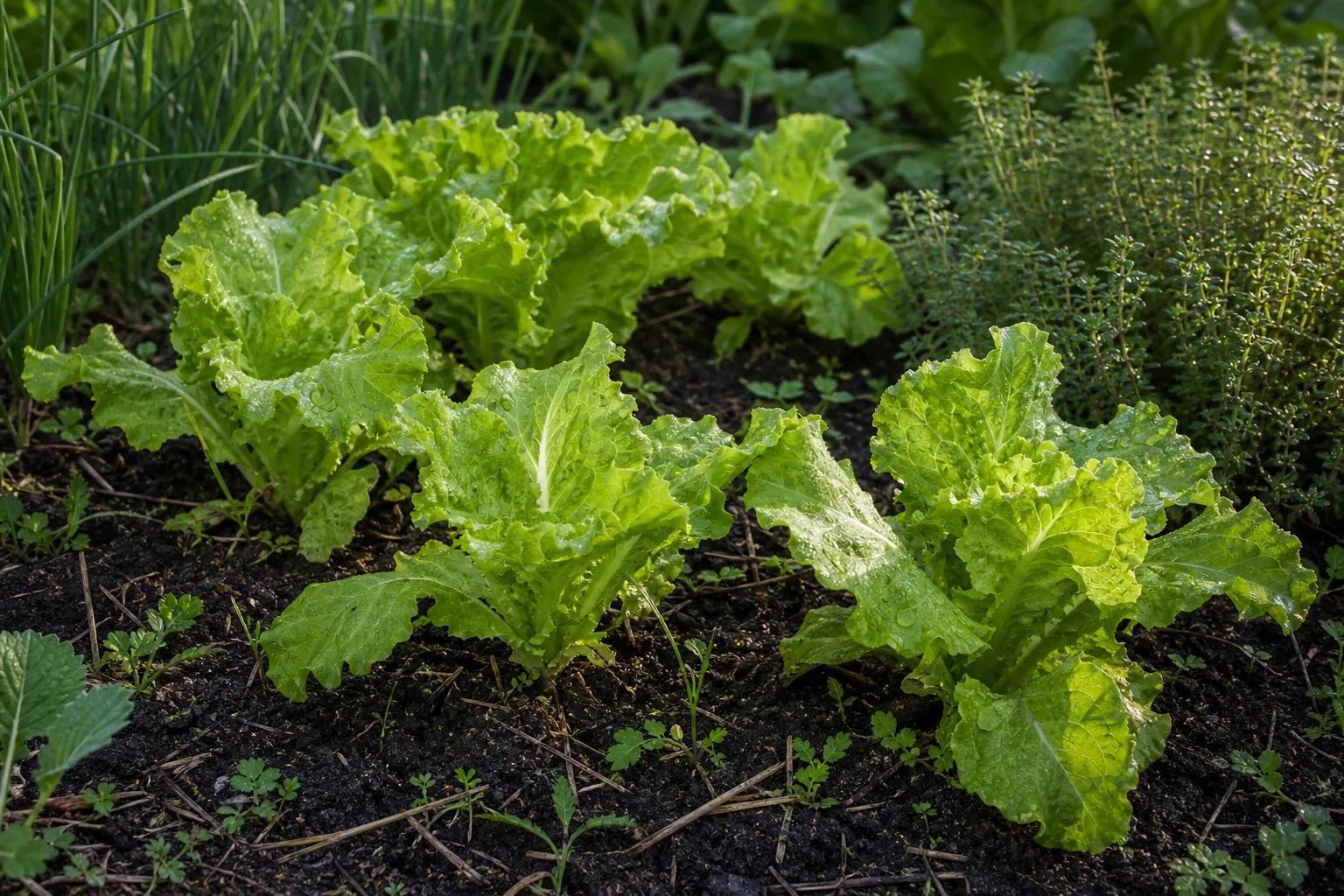
- Harvest outer leaves as needed; the center keeps growing so one planting feeds you for weeks.
How to care for leaf lettuce
Leaf lettuce (Lactuca sativa) is a cool-season crop that rewards frequent, small harvests. Sow seed 1/4 inch deep in rows or blocks, thinning to about 6-8 inches so plants have room to branch. Water to keep the topsoil consistently damp, and mulch to hold moisture and keep leaves clean. Harvest the outer leaves with scissors, leaving the growing crown intact so the plant regrows. In warm regions sow in part shade and succession-plant every 2-3 weeks; pull plants that bolt and replace them with a fresh sowing.
Light
Lettuce grows best in full sun in cool spring and fall (about 6 hours), but it tolerates and actually prefers partial shade in hot summer, where afternoon shade delays bolting and keeps leaves tender. In low light it grows more slowly and the leaves are thinner.
Water
Lettuce has shallow roots and needs steady moisture — about 1 inch per week, more in heat and containers. Water so the top few inches never dry out completely; uneven watering stresses the plant and makes leaves bitter. Drip irrigation or a gentle overhead soak in the morning is ideal, and wetting foliage at night invites slug and disease pressure.
Soil and planting
Plant in loose, fertile, well-drained soil rich in organic matter with a slightly acidic to neutral pH of about 6.0-7.0. Raised beds and containers work well; use a freely draining potting mix and repot or thin crowded seedlings so air moves between plants. Because lettuce is shallow rooted, keep the soil surface from crusting and avoid deep cultivation near the crown.
Temperature, humidity, and fertilizer
Lettuce is a cool-season crop that germinates best around 60-70°F and grows well from about 45-75°F; above that it bolts. High humidity is fine if airflow is good, but wet leaves invite downy mildew and rot. Feed lightly with a balanced liquid fertilizer or compost at planting; too much nitrogen produces soft, disease-prone growth. In summer, use shade cloth to extend the season.
Pruning and propagation
No pruning is needed beyond harvesting outer leaves and removing any yellow or damaged ones. Propagate from seed: direct-sow in the garden as soon as soil can be worked in spring, or start indoors 3-4 weeks before last frost and transplant. For fall crops sow in late summer; lettuce also germinates poorly above 80°F, so chill seed or sow in shade when it is hot.
Common problems
Start with the pattern, current soil moisture, and recent changes. One symptom can have several causes, so change the most likely factor first and observe before making another major adjustment.
| Symptom | Check first | First action |
|---|---|---|
| Plants shoot up a tall flower stalk and leaves turn bitter | Check day length and temperature — this is bolting in heat. | Harvest remaining leaves, pull the plant, and sow a fresh crop in cooler or shaded conditions. |
| Irregular holes and slime trails on leaves | Check the underside of leaves and soil surface at night for slugs and snails. | Use beer traps, hand-pick at dusk, or apply iron-phosphate bait; keep mulch from touching the crown. |
| Curled, yellow, sticky leaves with tiny insects | Check leaf undersides for aphids. | Rinse with a strong stream of water or apply insecticidal soap; avoid broad sprays that harm pollinators. |
| Leaves wilt and the crown rots at the soil line | Check for wet soil and poor drainage causing bottom rot or rot. | Improve drainage, water in the morning, and avoid crowding plants. |
| Seedlings thin out after sprouting | Check for cutworms or crusted soil preventing emergence. | Use collars around seedlings and keep the surface moist and loose for even germination. |
Pet and household safety
Leaf lettuce is considered non-toxic to dogs and cats and is not listed as a poison by the ASPCA; the edible leaves are safe for people and pets in normal amounts. Eating very large quantities of any plant may cause mild stomach upset, so discourage pets from grazing and contact a veterinarian if a pet shows persistent signs.
Frequently asked questions
How much sun does leaf lettuce need?
Full sun in cool spring and fall (about 6 hours); in hot summer give partial shade or afternoon shade to prevent bolting.
How often should I water leaf lettuce?
Keep the topsoil evenly moist — about 1 inch per week, more in heat and containers. Shallow roots dry quickly, so check often.
When and how do I harvest leaf lettuce?
Start when leaves are 4-6 inches; cut outer leaves with scissors and leave the center to regrow for weeks of harvest.
Why did my lettuce get bitter?
Heat and bolting make leaves bitter. Sow in cool weather, give afternoon shade in summer, and keep plants well watered.
How do I grow lettuce in summer?
Use partial shade, succession sow every 2-3 weeks, water steadily, and choose heat-tolerant or slow-bolting varieties.
Is leaf lettuce safe for pets?
Yes — lettuce is non-toxic to dogs and cats per the ASPCA; only very large amounts might cause mild digestive upset.
Sources and editorial review
This editorial draft is based on the sources below and awaits named horticulture-expert approval before publication.
- Lactuca sativaRoyal Botanic Gardens, Kew (Plants of the World Online) · Checked
- Toxic and Non-Toxic Plants ListASPCA · Checked
- Growing lettuce, endive and radicchioUniversity of Minnesota Extension · Checked
- Lettuce: planting, growing, and harvestingUC Marin Master Gardeners / UC ANR · Checked
What works well
- Very fast from seed to salad (often 30-45 days for leaf types).
- Perfect for small spaces, containers, and succession planting.
- Cut-and-come-again harvest means less waste and continuous yield.
What to consider
- Bolts and turns bitter in hot weather and long days.
- Shallow roots dry out fast and attract slugs and aphids.
- Short shelf life after harvest compared with storage crops.