Key takeaways
- Site the flowers in sun to part shade but keep the root zone cool and shaded with mulch or low plants; the roots dislike hot, dry soil.
- Water regularly so the soil stays evenly moist, feed lightly in spring, and never let the root zone dry out.
- Prune according to bloom group ('Jackmanii' tolerates Group 2 or 3); a hard cutback in late winter or early spring keeps the vine full and flowering.
How to care for large-flowered clematis
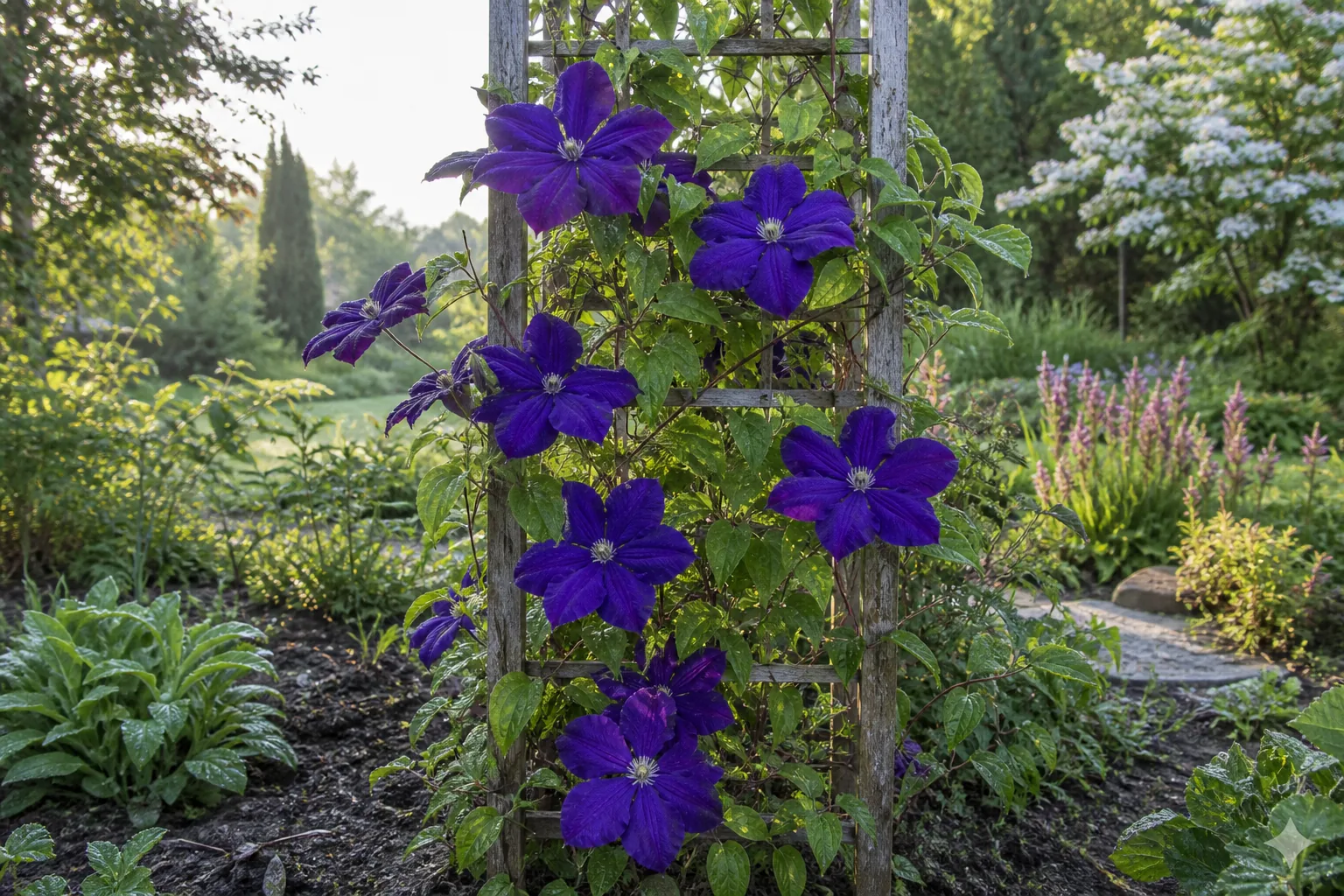
Large-flowered clematis (Clematis × jackmanii) is a deciduous, twining vine grown for its big violet-purple flowers. Plant it 2-3 inches deeper than the nursery pot so several nodes sit below the soil line; these buried buds can resprout if a stem is lost to clematis wilt. Give the flowering stems a support of wires, a trellis, or a fence, and keep the roots shaded with a low ground cover or 2 inches of mulch - the classic rule is 'heads in the sun, feet in the shade.' Water so the root zone stays evenly moist through the growing season, and apply a balanced fertilizer lightly in spring once new growth begins.
Light
Clematis flowers best with at least 6 hours of sun on the stems, but it appreciates light afternoon shade in hot summer climates; deep shade sharply reduces flowering. Keep the crown and roots shaded regardless - mulch or low perennials around the base keep the soil cool. In very hot regions an eastern or north-facing wall suits the vine well.
Water
Clematis wants consistently moist but well-drained soil; this vine is quick to wilt when the root zone dries out. Water deeply about once a week in dry spells, aiming at the base and keeping the foliage dry to limit leaf spot and mildew. Mulch to conserve moisture and moderate soil temperature around the roots.
Soil and planting
Plant in fertile, humusy, medium-moisture, well-drained soil with a near-neutral to slightly alkaline pH. Work compost into the planting hole and set the crown a few inches below the soil surface so the vine can regrow from buried buds. In containers use a rich, freely draining mix in a deep pot with the root zone shaded, and repot only when rootbound, refreshing the mix without raising the crown.
Temperature, humidity, and fertilizer
Large-flowered clematis is hardy in USDA zones 4-8 and resents hot, dry, or wet feet; good airflow helps limit powdery mildew and leaf spots in humid summers. Fertilizer needs are modest - an all-purpose, balanced feed applied once in early spring is usually enough, and heavy feeding promotes soft growth. Protect the base with mulch in winter and site the vine away from cold, drying winter winds where possible.
Pruning and propagation
'Jackmanii' flowers on new wood and can be pruned as Group 2 or Group 3. For a strong display, cut back to a pair of strong buds in late winter or early spring (Group 3), or lightly remove dead and weak stems (Group 2). Clematis wilt is the main threat: remove and destroy collapsed stems promptly, and keep the plant deeply planted so basal buds can resprout. Propagate from softwood cuttings in summer or by layering; named cultivars come true only from vegetative propagation.
Common problems
Start with the pattern, current soil moisture, and recent changes. One symptom can have several causes, so change the most likely factor first and observe before making another major adjustment.
| Symptom | Check first | First action |
|---|---|---|
| Sudden collapse of stems with leaves turning black | Check for clematis wilt (fungal stem rot) after a warm, wet stretch. | Cut affected stems to the ground and destroy them; plants planted with buds below the soil usually resprout from the base. |
| Few or no flowers | Check pruning timing, light hours, and whether flower buds were removed or killed by frost. | Match pruning to the bloom group, give more sun, and avoid damaging emerging buds in late winter. |
| White powdery coating on leaves | Check airflow, humidity, and overhead watering. | Improve spacing and airflow, water at the base, and remove badly affected leaves. |
| Yellowing, wilting leaves despite moist soil | Check for root rot from soggy, poorly drained soil or a container sitting in water. | Improve drainage, reduce watering frequency, and keep the crown dry. |
| Chewed or stippled leaves | Check for aphids, vine weevils, slugs or snails, and spider mites on new growth. | Hand-pick or hose off pests and use cultural controls first; avoid broad pesticide sprays. |
Pet and household safety
Clematis is toxic to dogs, cats, and horses according to the ASPCA. The toxic principle is the irritant glycoside protoanemonin, which causes salivation, vomiting, and diarrhea when plant material is chewed or swallowed. Keep pets from chewing the vine and contact a veterinarian after substantial ingestion.
Frequently asked questions
How much sun does 'Jackmanii' clematis need?
At least 6 hours of sun on the flowering stems, with the roots kept cool and shaded by mulch or low plants.
How often should I water clematis?
Keep the root zone evenly moist; water deeply about once a week in dry weather and mulch to hold moisture.
What soil suits clematis?
Fertile, humusy, medium-moisture, well-drained soil with a near-neutral to slightly alkaline pH.
When do I prune large-flowered clematis?
In late winter or early spring; Group 3 vines can be cut back to a pair of strong buds, Group 2 vines just need dead and weak wood removed.
Why did my clematis collapse suddenly?
Usually clematis wilt; remove and destroy the affected stems and rely on the buried basal buds, which regrow when the plant was planted deeply.
Is clematis safe for pets?
No - the ASPCA lists clematis as toxic to dogs, cats, and horses (protoanemonin). Prevent chewing and call a veterinarian after substantial ingestion.
Sources and editorial review
This editorial draft is based on the sources below and awaits named horticulture-expert approval before publication.
- Clematis × jackmaniiRoyal Botanic Gardens, Kew (Plants of the World Online) · Checked
- ClematisASPCA · Checked
- Clematis 'Jackmanii'Missouri Botanical Garden · Checked
- ClematisClemson Cooperative Extension (HGIC 1104) · Checked
What works well
- Long, heavy display of large violet-purple flowers from midsummer to early autumn.
- Readily covers trellises, fences, walls, and arbors in a compact 7-10 ft habit.
- Vigorous and easy to renew from the base when planted a few inches deep.
What to consider
- Susceptible to clematis wilt, which can suddenly collapse whole stems.
- Roots demand cool, consistently moist soil or the vine declines.
- Toxic to cats, dogs, and horses (protoanemonin causes salivation, vomiting, diarrhea).