Key takeaways
- Plant in full sun in acidic (pH 4.5-5.5), moist, well-drained, organic soil.
- Prune in late winter to remove old canes and open the bush for fruit.
- Set out at least two different varieties for good cross-pollination and yield.
How to care for highbush blueberry
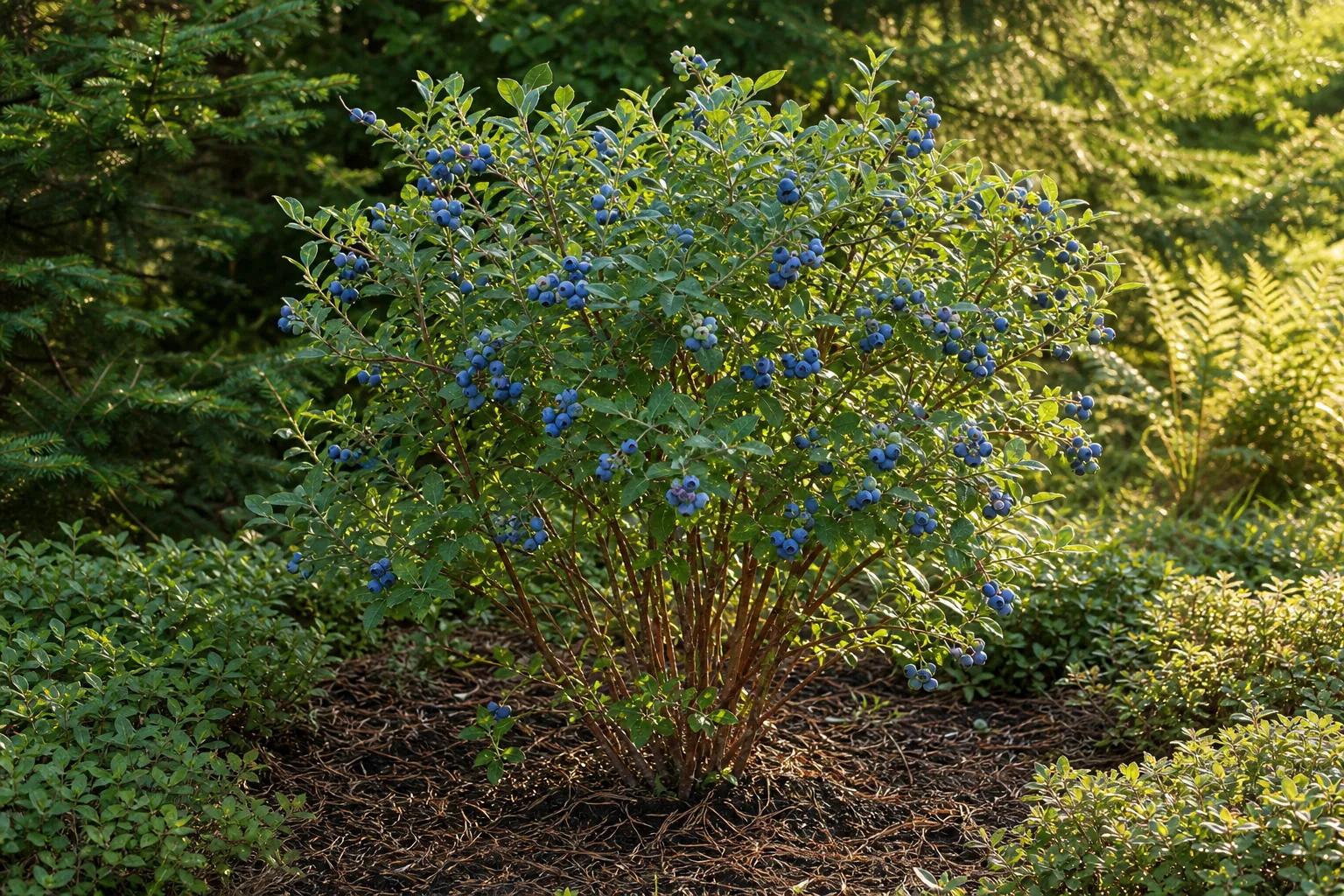
Highbush blueberry (Vaccinium corymbosum) is an edible shrub that mostly needs acidic soil and sun. Plant in full sun in moist, well-drained, organically rich soil with a pH of about 4.5-5.5, spacing 4-6 ft and mulching 2-4 in with pine bark or needles. Water regularly so the shallow roots never dry out, especially at fruiting. Plant at least two different varieties for cross-pollination. Prune in late winter to remove the oldest canes and open the center for light and fruit.
Light
Blueberries want full sun - at least 6 hours of direct light daily - for the heaviest crop and best fall color. They tolerate light part shade but fruit less. Morning sun that dries foliage helps limit disease.
Water
Water regularly - about 1-2 in per week - because blueberries have shallow roots and need even moisture, especially when fruit swells. Use drip or soaker at the base and keep the root zone from drying out; mulch to conserve water.
Soil and planting
Plant in very acidic (pH 4.5-5.5), moist, well-drained, high-organic soil. Blueberries fail in neutral or alkaline ground and show chlorosis; amend with peat, pine bark, and sulfur as needed. In containers use an ericaceous (acid) mix and repot when rootbound, keeping the crown at the soil line.
Temperature, humidity, and fertilizer
Hardy in USDA zones 3-8, blueberries need a winter chill to fruit well. Fertilize lightly in spring with an acid-form fertilizer; avoid lime and high nitrogen. Good air circulation limits mummy berry and leaf spots in humid weather.
Pruning and propagation
Prune in late winter, removing a few of the oldest, least-productive canes at the base each year and thinning the center; this keeps the bush open and fruiting on vigorous young wood. Propagate from softwood cuttings in summer or by layering low branches.
Common problems
Start with the pattern, current soil moisture, and recent changes. One symptom can have several causes, so change the most likely factor first and observe before making another major adjustment.
| Symptom | Check first | First action |
|---|---|---|
| Yellow leaves with green veins (chlorosis) | Check soil pH - blueberries need very acidic soil. | Lower pH with sulfur and use an acid fertilizer; avoid lime and alkaline water. |
| Few or no berries | Check for a single variety (needs a pollinizer) and poor pollination. | Plant a second compatible variety and attract bees; don't over-prune young wood. |
| Berries shrivel or drop | Check for mummy berry or drought at fruit swell. | Water evenly, remove mummified fruit, and improve air flow. |
| Birds eating the crop | Check for birds stripping ripe fruit. | Net the bushes or harvest as soon as berries ripen. |
| Small, dry berries | Check moisture and soil fertility. | Water evenly at swell and feed lightly with an acid fertilizer in spring. |
Pet and household safety
Highbush blueberry is considered non-toxic to dogs and cats and is not on the ASPCA toxic plant list. The ripe berries are safe and nutritious for people and pets; the leaves and stems are not considered a serious poison but can cause mild stomach upset if eaten in quantity, so discourage grazing and contact a veterinarian if a pet shows persistent signs.
Frequently asked questions
How much sun does blueberry need?
Full sun - at least 6 hours daily. Light shade is tolerated but reduces the crop.
What soil does blueberry need?
Very acidic (pH 4.5-5.5), moist, well-drained, organic soil. Neutral ground causes chlorosis.
Do I need two blueberry plants?
Yes - plant at least two different varieties for good cross-pollination and yield.
When should I prune blueberry?
In late winter, removing oldest canes and thinning the center for light and fruit.
Why are my blueberry leaves yellow?
Usually chlorosis from soil that is not acidic enough. Lower pH with sulfur and use an acid fertilizer.
Is blueberry safe for pets?
Yes - ripe blueberries are non-toxic and safe for dogs and cats; leaves may cause mild upset if eaten in bulk.
Sources and editorial review
This editorial draft is based on the sources below and awaits named horticulture-expert approval before publication.
- Vaccinium corymbosumRoyal Botanic Gardens, Kew (Plants of the World Online) · Checked
- BlueberryASPCA · Checked
- Vaccinium corymbosumMissouri Botanical Garden · Checked
- Vaccinium corymbosumNorth Carolina State University Extension · Checked
What works well
- Sweet, homegrown berries that are safe and nutritious for people and pets.
- Beautiful fall color and early spring flowers; great wildlife plant.
- Non-toxic to dogs and cats.
What to consider
- Demands acidic soil; fails or turns chlorotic in neutral-to-alkaline ground.
- Birds and wildlife compete for the ripening fruit.
- Needs cross-pollination and consistent moisture for a good crop.