Key takeaways
- Plant the biggest cloves, pointed end up, 2-3 inches deep and a few inches apart in rich, well-drained soil.
- Grow in full sun and keep soil evenly moist through spring; stop watering as the tops begin to dry.
- Harvest when lower leaves yellow and cure bulbs in a warm, shady, airy spot before storing.
How to care for garlic
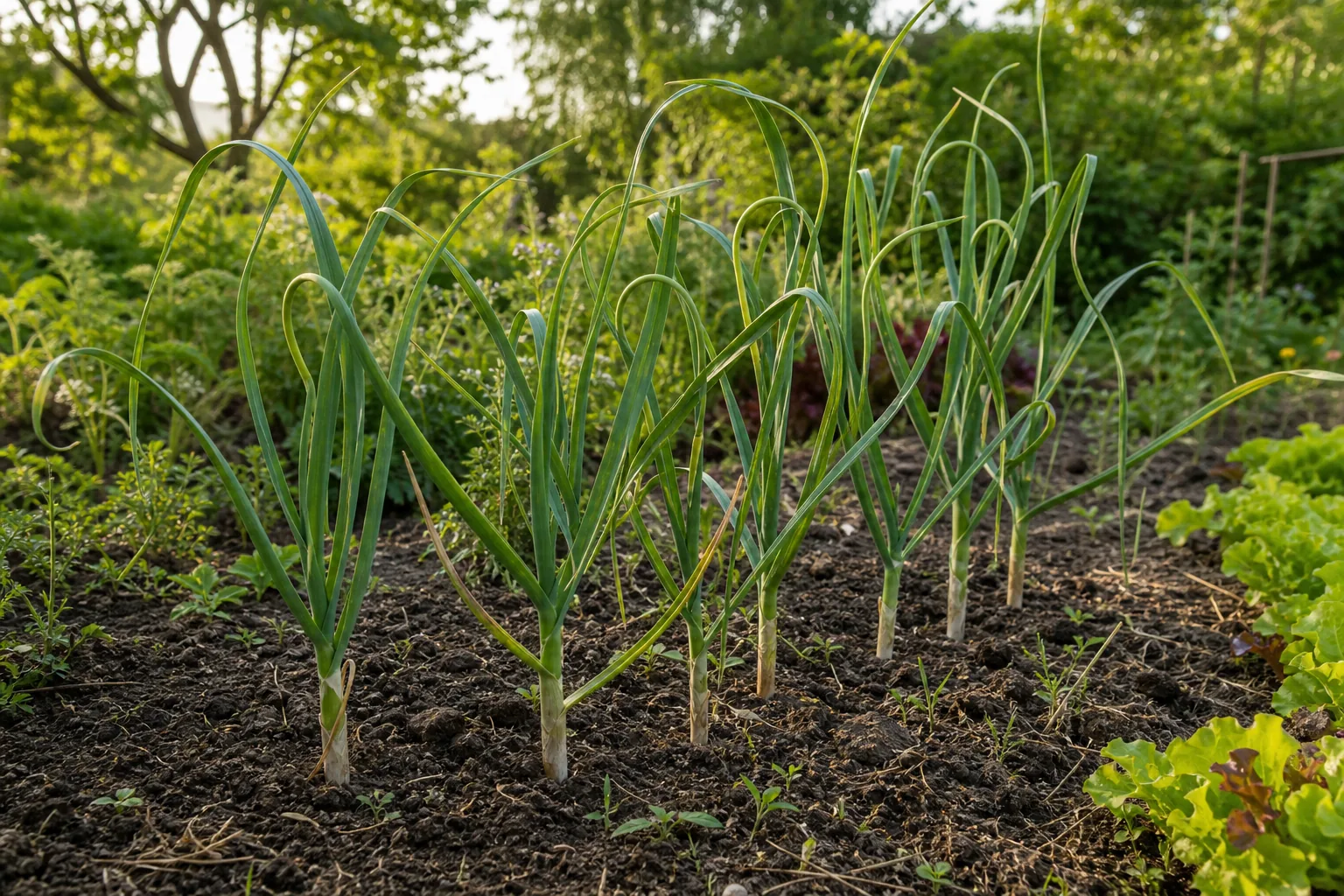
Garlic (Allium sativum) is grown from individual cloves, not seeds. Break a healthy bulb into cloves just before planting and set the largest ones, pointed end up, in loose, fertile, well-drained soil in full sun. Autumn planting (late September-November in most regions) gives the biggest bulbs because roots establish before winter; spring planting works but yields less. Space cloves 3-4 inches apart in rows 6-10 inches apart. Mulch after planting to buffer soil temperature and suppress weeds, and remove mulch in spring once growth is steady.
Light
Garlic is a full-sun crop. It needs at least 6 hours of direct light daily to build large tops, and large tops are what drive large bulbs. Shaded or crowded sites produce thin foliage and small, poorly formed bulbs.
Water
Garlic has a shallow root system and is sensitive to moisture stress, especially during bulb formation (roughly late May to mid-July). Water thoroughly to a depth of about 12 inches and keep the soil evenly moist, using drip irrigation if possible. Cut watering back as the leaves begin to mature and turn yellow; excess late water delays curing and invites storage rot.
Soil and planting
Garlic grows in any soil that is rich in organic matter, well drained, moist, and fertile; raised beds help where drainage is poor. Work compost or a complete fertilizer into the top 6 inches before planting and avoid fresh manure. Garlic is not grown in containers routinely, but a deep, freely draining pot can work; bulbs do not 'repot' so plan the bed for the full 6-9 month season.
Temperature, humidity, and fertilizer
Garlic is a hardy, cool-season crop that bulks up in cool spring weather and matures in early to mid-summer. A cold period (roughly 40°F for a month or two) after planting triggers bulb initiation, which is why fall planting works so well. Feed at planting and again when shoots are 4-6 inches tall, then side-dress with nitrogen in May; avoid late, high-nitrogen feeding that delays maturity. Good air circulation and crop rotation limit fungal disease.
Pruning and propagation
Hardneck types send up a flowering stalk ('scape') that can be removed once it curls to redirect energy into the bulb (least important in well-fertilized soil). There is no other pruning. Propagation is simply saving and replanting the largest cloves from your own disease-free bulbs each season; never plant supermarket garlic treated for sprouting, and rotate beds to avoid soil-borne disease.
Common problems
Start with the pattern, current soil moisture, and recent changes. One symptom can have several causes, so change the most likely factor first and observe before making another major adjustment.
| Symptom | Check first | First action |
|---|---|---|
| Small, split, or irregular bulbs | Check planting date, clove size, and soil fertility. | Plant in autumn with the largest cloves in fertile soil; avoid spring-only planting and compaction. |
| Yellow leaf tips during growth | Check for water stress or normal varietal trait. | Maintain even moisture and adequate nitrogen; tip yellowing late in the season is normal before harvest. |
| Rotting bulbs in storage | Check watering at maturity and curing conditions. | Stop watering as tops dry, cure 2-3 weeks in a warm, shady, airy spot, and store dry. |
| Poor stands or lifted cloves in winter | Check planting depth and mulch coverage. | Plant 2-3 inches deep, mulch 3-4 inches after planting, and remove mulch in spring after hard freezes. |
| Insect damage from thrips or onion maggots | Check leaves for silvering and roots/bulbs for worms. | Use crop rotation, clean seed, and cultural controls; avoid excess organic matter that attracts maggots. |
Pet and household safety
Garlic is toxic to dogs, cats, and horses according to the ASPCA. The toxic principle is N-propyl disulfide, an Allium compound that can break down red blood cells and cause hemolytic anemia, weakness, vomiting, and panting. All forms - raw, cooked, powdered, or dried - are hazardous, and cats are especially sensitive. Keep garlic and garlic scraps away from pets and contact a veterinarian if ingested.
Frequently asked questions
When should I plant garlic?
Usually in autumn (late September-November) for the largest bulbs; spring planting is possible but yields smaller bulbs. Cloves need a cool period to bulb well.
How deep and far apart do I plant garlic cloves?
Set cloves pointed end up, 2-3 inches deep, about 3-4 inches apart in rows 6-10 inches apart. Plant the largest cloves for the biggest bulbs.
How often should I water garlic?
Keep soil evenly moist, especially during bulb formation in late spring; water deeply to about 12 inches. Stop watering as the tops yellow to aid curing.
When and how do I harvest and cure garlic?
Harvest when the lower leaves turn yellow but before they're fully dry. Lift carefully, then cure 2-3 weeks in a warm, shady, airy spot before storing.
Should I remove garlic scapes?
For hardneck types, yes - remove the curling flower stalks to focus growth on the bulb (least critical in well-fertilized soil). Scapes are edible.
Is garlic safe for pets?
No - garlic is toxic to dogs, cats, and horses (N-propyl disulfide causes anemia). Keep all forms away from pets.
Sources and editorial review
This editorial draft is based on the sources below and awaits named horticulture-expert approval before publication.
- Allium sativumRoyal Botanic Gardens, Kew (Plants of the World Online) · Checked
- GarlicASPCA · Checked
- Garlic in the GardenUtah State University Extension · Checked
- Garlic, Allium sativumUniversity of Wisconsin-Madison Extension · Checked
What works well
- Easy, long-storing crop that thrives in most home gardens with little pest pressure.
- Planting in autumn gives the largest, best-keeping bulbs.
- Few serious insect or disease problems compared with many vegetables.
What to consider
- Toxic to dogs, cats, and horses (Allium compounds cause anemia).
- Needs a long, cool growing season and precise timing to bulb well.
- Poor in wet, compacted, or low-fertility soil; bulbs deform or stay small.