Key takeaways
- Plant in full sun (6+ hours) in well-drained, slightly acidic, organically rich soil.
- Water about 1 inch per week at the base and mulch to hold moisture and suppress weeds.
- Prune in late winter to early spring, deadhead spent blooms, and feed in spring.
How to care for garden roses
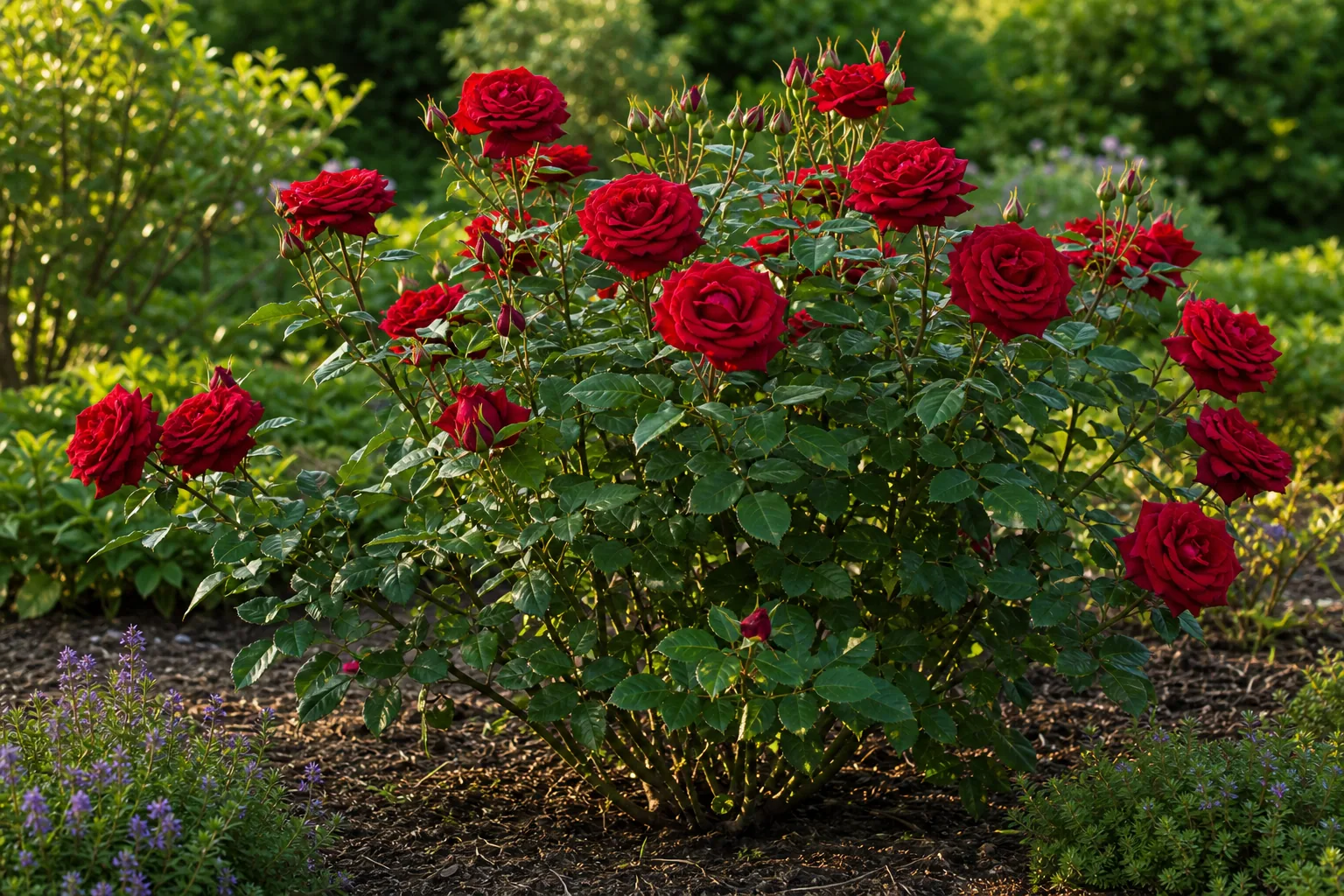
Garden roses (Rosa x hybrida) reward a little routine care with months of bloom. Plant in full sun in well-drained, slightly acidic, organically enriched soil, setting the graft union at or just above the soil line and spacing for air flow. Water about 1 in per week at the base with a soaker hose, and mulch 2-3 in to hold moisture and limit disease. Remove spent flowers to encourage repeat bloom, and begin feeding as new growth starts in spring. Choose disease-resistant types and site for good air movement to cut problems.
Light
Roses need full sun - at least 6 hours of direct light daily - to flower heavily and stay healthy. Less sun means fewer blooms and more disease. Morning sun that dries foliage quickly is especially valuable in humid climates.
Water
Roses use about 1 in of water per week, delivered deeply at the base rather than overhead. Soaker hoses or drip irrigation keep foliage dry and reduce black spot and mildew. Water more often in containers and during hot, dry spells; let the top inch dry between soakings.
Soil and planting
Plant roses in well-drained, slightly acidic (pH about 6.0-6.5), fertile soil amended with compost. Avoid wet, compacted sites. In containers use a rich, freely draining potting mix and a large pot with drainage holes; repot when roots fill the container, keeping the graft union at the soil line.
Temperature, humidity, and fertilizer
Hardy range varies widely by type (roughly USDA 4-9), but all roses dislike wet foliage and stagnant air. Feed in spring with a rose or balanced fertilizer and repeat lightly through summer; stop by late summer so growth hardens before winter. Good air circulation is the best defense against fungal disease.
Pruning and propagation
Prune in late winter to early spring as buds swell: remove dead, diseased, and crossing canes, open the center, and cut back to outward-facing buds. Deadhead spent blooms through the season. Most modern types bloom on new wood, so spring pruning shapes the flush; once-blooming old roses need only light shaping after flowering. Propagate by cuttings or layering.
Common problems
Start with the pattern, current soil moisture, and recent changes. One symptom can have several causes, so change the most likely factor first and observe before making another major adjustment.
| Symptom | Check first | First action |
|---|---|---|
| Black spots with yellowing leaves | Check for black spot fungus in wet, humid conditions. | Improve air flow, water at the base, remove affected leaves, and use a fungicide if severe. |
| White powdery coating on leaves | Check for powdery mildew in humid, crowded sites. | Improve spacing and air flow, avoid overhead watering, and treat if needed. |
| Rapid branch dieback with red, witch's-broom growth | Check for rose rosette disease (mite-vectored virus). | Remove and destroy infected plants promptly; choose resistant types. |
| Few flowers on lush green growth | Check for too much nitrogen or too much shade. | Move to full sun and cut back on fertilizer; roses flower best with balanced feeding. |
| Chewed or skeletonized leaves | Check for Japanese beetles, aphids, or caterpillars. | Hand-pick beetles, rinse aphids, and use targeted controls; avoid broad sprays that harm pollinators. |
Pet and household safety
Garden roses are considered non-toxic to dogs and cats and are not on the ASPCA toxic plant list. The main household hazard is the thorns, which can scratch skin or injure a curious pet's mouth or paws. Eating petals or leaves may cause mild stomach upset, so discourage chewing and contact a veterinarian if a pet shows persistent signs.
Frequently asked questions
How much sun do roses need?
Full sun - at least 6 hours daily. Less sun means fewer blooms and more disease.
How often should I water roses?
About 1 inch per week, deeply, at the base. Soaker hoses keep foliage dry and reduce disease.
When should I prune roses?
Late winter to early spring as buds swell. Deadhead spent blooms through the season for repeat flowering.
Why do my rose leaves have black spots?
Black spot fungus, favored by wet foliage and humidity. Improve air flow, water at the base, and remove affected leaves.
What soil do roses like?
Well-drained, slightly acidic, fertile soil enriched with compost; avoid wet, compacted sites.
Are roses safe for pets?
Yes - roses are not listed as toxic to dogs or cats by the ASPCA. Thorns can scratch, so site with care.
Sources and editorial review
This editorial draft is based on the sources below and awaits named horticulture-expert approval before publication.
- Rosa x hybridaRoyal Botanic Gardens, Kew (Plants of the World Online) · Checked
- RoseASPCA · Checked
- RosesMissouri Botanical Garden · Checked
- The Promise of a Rose GardenNC State Extension (Homegrown) · Checked
What works well
- Repeat-flowering, fragrant blooms in a vast range of colors and forms.
- Excellent cut flowers and a classic landscape and container plant.
- Non-toxic to dogs and cats (thorns are the only real hazard).
What to consider
- Prone to black spot, powdery mildew, and rose rosette disease in humid areas.
- Needs regular pruning, feeding, and pest monitoring to stay healthy.
- Thorns can scratch skin and injure curious pets.