Key takeaways
- Sow in cool spring and fall and succession-plant every 1-2 weeks for a steady supply.
- Harvest promptly at the right size; left too long, radishes become woody, hollow, and fiery.
- Loose, even-moisture soil prevents splitting and keeps roots crisp and mild.
How to care for garden radish
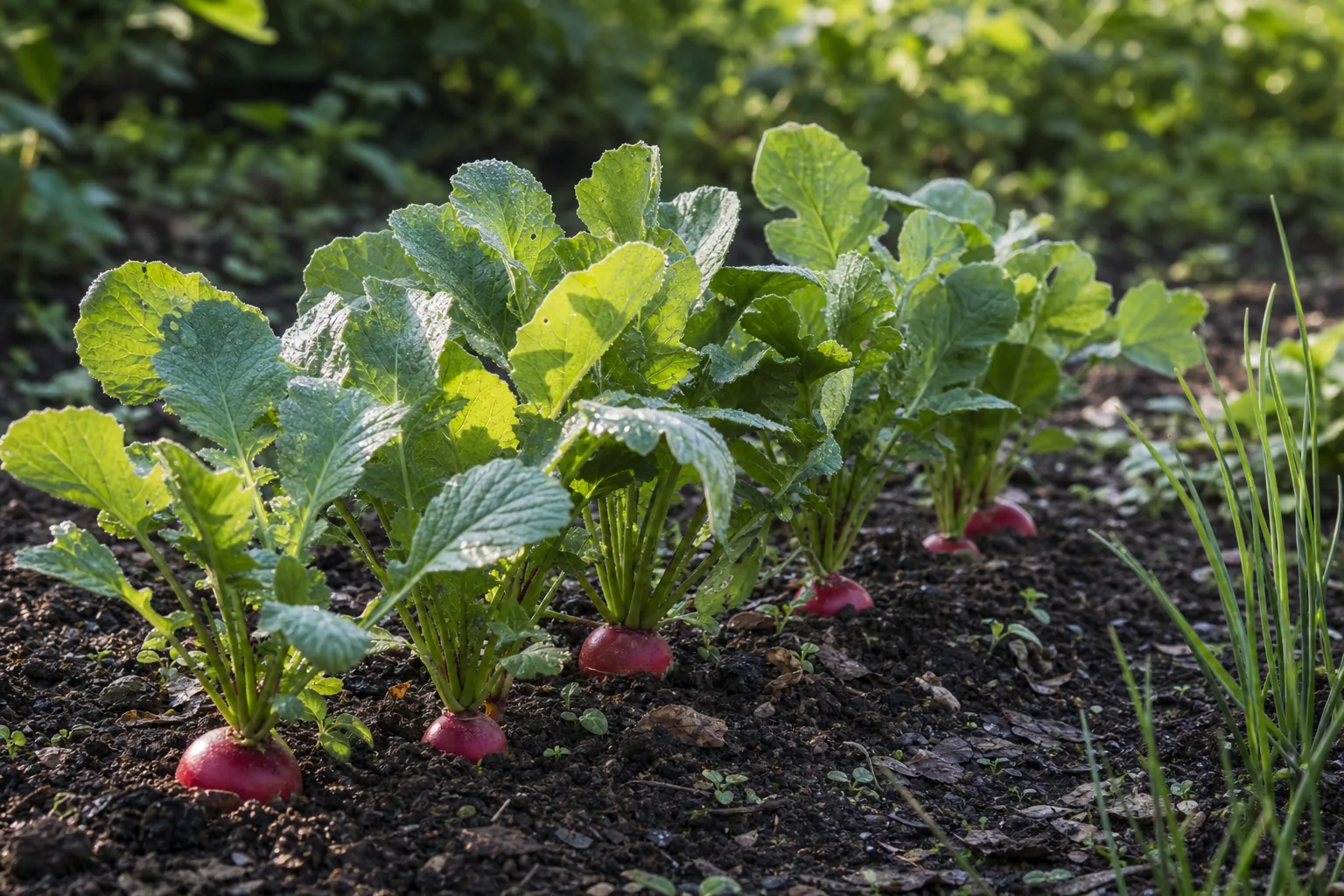
Garden radish (Raphanus sativus) is a cool-season root crop that matures in weeks. Sow seed 1/2 inch deep, thinning to about 1-2 inches so roots size up round and crisp. Keep the soil evenly moist and mulch to cool the roots and suppress weeds. Harvest as soon as the roots reach the variety's size — typically when they are about an inch across — because overmature radishes go woody and hot. Sow a new short row every week or two in spring and again in fall.
Light
Radishes grow best in full sun (6+ hours) in cool weather but tolerate partial shade, which helps in warming spring and extends the crop. Too much shade produces mainly leaves with small roots.
Water
Water to keep the soil evenly moist, about 1 inch per week. Radishes are mostly water, so drought makes them woody and split them when rain returns; steady moisture keeps them crisp and mild. Water in the morning and avoid wetting foliage late to limit disease.
Soil and planting
Plant in loose, fertile, well-drained soil with a pH of about 6.0-7.0; remove stones so roots stay smooth. In containers use a light potting mix at least 6-8 inches deep and sow thinly, thinning rather than transplanting. Fresh, even moisture matters more than heavy feeding; a little compost at planting is enough.
Temperature, humidity, and fertilizer
Radishes germinate well around 55-75°F and grow best in cool weather; they bolt and get pithy as it warms and days lengthen. High humidity is fine with airflow. Feed lightly — too much nitrogen gives lush leaves and small roots. A low-nitrogen, balanced approach with compost is ideal.
Pruning and propagation
No pruning is needed beyond harvesting on time and pulling bolting plants. Propagate from seed only: direct-sow every 1-2 weeks in spring as soon as soil is workable, and again in late summer through fall. Radishes do not transplant well, so always sow in place and thin seedlings early.
Common problems
Start with the pattern, current soil moisture, and recent changes. One symptom can have several causes, so change the most likely factor first and observe before making another major adjustment.
| Symptom | Check first | First action |
|---|---|---|
| Roots small while leaves are large | Check light and nitrogen — too much shade or fertilizer pushes tops. | Move to fuller sun and ease off nitrogen; thin seedlings for root room. |
| Woody, hollow, or fiery-hot roots | Check harvest timing and heat — roots were left too long or it warmed up. | Harvest promptly at size and sow in cooler weather; succession-plant. |
| Roots split or cracked | Check for uneven watering and returning rain after drought. | Keep soil evenly moist; mulch to buffer moisture swings. |
| Pinholes and scarring on leaves | Check for flea beetles, especially on young seedlings. | Use row cover on seedlings and keep plants vigorous; avoid broad sprays. |
| Tunnels or rot in the root | Check for root maggot larvae near the soil line. | Rotate crops and use row cover; remove affected roots. |
Pet and household safety
Garden radish is considered non-toxic to dogs and cats and is not listed as a poison by the ASPCA; the root and the leaves are safe in normal culinary amounts. As with any plant, very large quantities may cause mild stomach upset, so discourage pets from over-eating and contact a veterinarian if a pet shows persistent signs.
Frequently asked questions
How much sun does radish need?
Full sun (6+ hours) in cool weather; partial shade helps as it warms and extends the crop.
How often should I water radishes?
Keep soil evenly moist, about 1 inch per week. Drought makes them woody; steady water keeps them crisp.
When do I harvest radishes?
When roots reach about 1 inch across, usually 3-4 weeks after sowing. Don't delay or they turn pithy.
Why are my radishes all tops and no roots?
Too much shade or nitrogen and crowded seedlings. Give sun, ease fertilizer, and thin.
How do I grow radish in summer?
It is best in cool spring and fall; in summer use partial shade, steady moisture, and fast-maturing varieties, or wait for fall.
Are radishes safe for pets?
Yes — radishes are non-toxic to dogs and cats per the ASPCA; the root and leaves are safe in moderation.
Sources and editorial review
This editorial draft is based on the sources below and awaits named horticulture-expert approval before publication.
- Raphanus sativusRoyal Botanic Gardens, Kew (Plants of the World Online) · Checked
- Toxic and Non-Toxic Plants ListASPCA · Checked
- Growing radishesUniversity of Minnesota Extension · Checked
- Radish growing guideNew South Wales Department of Primary Industries · Checked
What works well
- Extremely fast — often ready in 3-4 weeks from seed.
- Great for kids, containers, and filling gaps between slow crops.
- Cool-season and frost-tolerant; easy to grow.
What to consider
- Quickly bolts and turns pithy in heat and long days.
- Uneven water causes splitting and cracking.
- Flea beetles and root maggots can damage leaves and roots.