Key takeaways
- Plant in cool weather - fall for earliest bloom, or early spring - and grow in full sun to light shade.
- Keep soil consistently moist and humusy; pansies are not drought tolerant and wilt in heat.
- Deadhead spent flowers and cut back leggy plants to keep them blooming until summer heat ends the show.
How to care for garden pansy
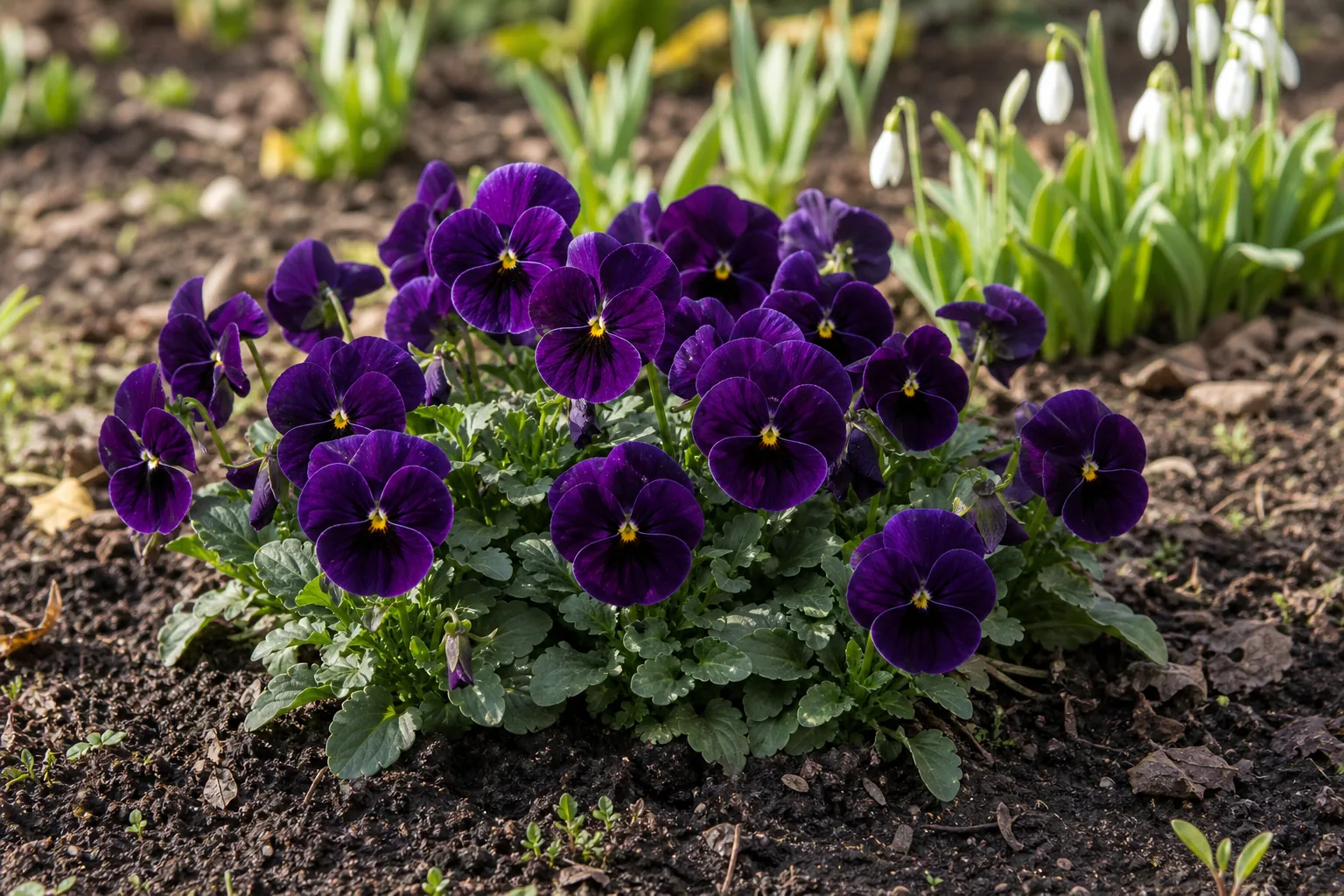
Garden pansy (Viola × wittrockiana) is a short-lived perennial usually grown as a cool-season annual or biennial. Set out stocky transplants in early spring, or plant in fall (zones 7-9) for bloom from late winter into spring. Space 6-9 inches apart in humusy, consistently moist, well-drained soil. Pansies do best below about 75°F and fade once heat arrives, so site them where they get sun in cool weather and a little afternoon shade as it warms. Deadhead spent flowers to prolong bloom, and cut back leggy plants to revitalize them. Remove plants when they decline in summer heat.
Light
Pansies grow in full sun to part shade. In cool weather full sun gives the most flowers; as temperatures rise, provide part shade (especially afternoon shade) to extend bloom and reduce stress. Too much shade makes plants leggy and reduces flowering.
Water
Keep the soil evenly moist but not saturated. Pansies are not drought tolerant and wilt quickly when dry, but they also resent waterlogged ground, which invites root and crown rot. Water at the base and avoid overhead irrigation that wets foliage and flowers; allow the surface to dry slightly between waterings. Consistent moisture also helps limit spider mites in hot, dry spells.
Soil and planting
Plant in humusy, well-drained soil with a slightly acidic pH (about 5.6-6.0 in the ground, 5.4-5.8 in containers). Good drainage is the single most important cultural step for avoiding root and crown rots. In containers use a freely draining soilless mix and a pot with drainage holes; pansies are excellent in window boxes and pots, where they dry out faster and need more frequent watering.
Temperature, humidity, and fertilizer
Pansies are cool-season plants that thrive below about 75°F and decline in sustained heat. They are hardy in USDA zones 6-10 but are grown as annuals in most climates. Feed lightly at planting with a balanced fertilizer and again if growth slows; avoid overfeeding, which can soften growth. Good air circulation and dry foliage reduce fungal leaf diseases and gray mold in humid weather.
Pruning and propagation
Care is limited to deadheading spent blooms and cutting back leggy stems to keep plants compact and flowering. Pansies are usually bought as transplants, but you can start them from seed sown indoors 12-14 weeks before the last frost (seeds need darkness to germinate). Most garden pansies are F1 hybrids that will not come true from saved seed, so purchase new transplants or seed each season.
Common problems
Start with the pattern, current soil moisture, and recent changes. One symptom can have several causes, so change the most likely factor first and observe before making another major adjustment.
| Symptom | Check first | First action |
|---|---|---|
| Plants wilt and decline as weather warms | Check temperature and soil moisture; pansies are cool-season and melt in heat. | Grow in cool seasons, provide afternoon shade and even moisture, and remove plants when they falter in summer. |
| Leggy, weak growth with few flowers | Check light; too much shade causes spindly plants. | Move to fuller sun in cool weather and deadhead regularly to encourage compact bloom. |
| Spotted or decaying foliage in wet weather | Check for fungal leaf diseases, gray mold, or root/crown rot. | Improve drainage and airflow, water at the base, and remove affected foliage. |
| Holes or slime trails on leaves | Check for slugs and snails, especially at night. | Hand-pick at night, use traps, and reduce moisture and hiding spots around plants. |
| Yellowing with stunted, distorted growth | Check for aphids on new growth or spider mites in hot, dry spells. | Rinse with water, encourage predators, and treat heavily infested plants culturally first. |
Pet and household safety
Garden pansy (Viola × wittrockiana) is considered non-toxic to dogs and cats and is widely listed among the ASPCA non-toxic plants. The flowers are even edible for people. As with any plant, eating large amounts may cause mild stomach upset, so discourage pets from chewing and contact a veterinarian if signs persist.
Frequently asked questions
How much sun does a garden pansy need?
Full sun in cool weather, with part shade (especially afternoon) as temperatures rise. Too much shade makes plants leggy.
When should I plant pansies?
In early spring, or in fall (zones 7-9) for the earliest bloom from late winter into spring. They are cool-season plants.
How often should I water pansies?
Keep soil evenly moist but not saturated. They wilt when dry and rot when wet, so water at the base and let the surface dry slightly.
Why do my pansies die in summer?
They are cool-season plants that decline once sustained heat arrives. Grow them in spring and autumn and replace in summer.
Are pansy flowers edible?
Yes - pansy flowers are edible and used to garnish salads and desserts. They are also non-toxic to dogs and cats.
Are pansies safe for pets?
Yes - pansies are considered non-toxic to dogs and cats (ASPCA non-toxic plant list), though large amounts may upset the stomach.
Sources and editorial review
This editorial draft is based on the sources below and awaits named horticulture-expert approval before publication.
- Viola × wittrockianaRoyal Botanic Gardens, Kew (Plants of the World Online) · Checked
- Pansy (Viola)ASPCA · Checked
- Viola × wittrockianaMissouri Botanical Garden · Checked
- PansyClemson Cooperative Extension (HGIC 2105) · Checked
What works well
- Early, long-lived cool-season color in beds, edging, and containers.
- Edible flowers and a wide palette of colors and patterns.
- Non-toxic to dogs and cats (ASPCA non-toxic plant list).
What to consider
- Short-lived; melts out and declines once summer heat arrives.
- Needs consistent moisture and resents drought, heat, and waterlogged soil.
- Susceptible to fungal leaf diseases, slugs, snails, and root or crown rots in wet conditions.