Key takeaways
- Plant in poor to average, well-drained soil in full sun; too much fertilizer means all leaves, few flowers.
- Sow seeds directly after the last frost and water only lightly once established - nasturtiums are drought tolerant.
- All above-ground parts are edible and peppery; use flowers and young leaves in salads and pickled seedpods as caper substitutes.
How to care for garden nasturtium
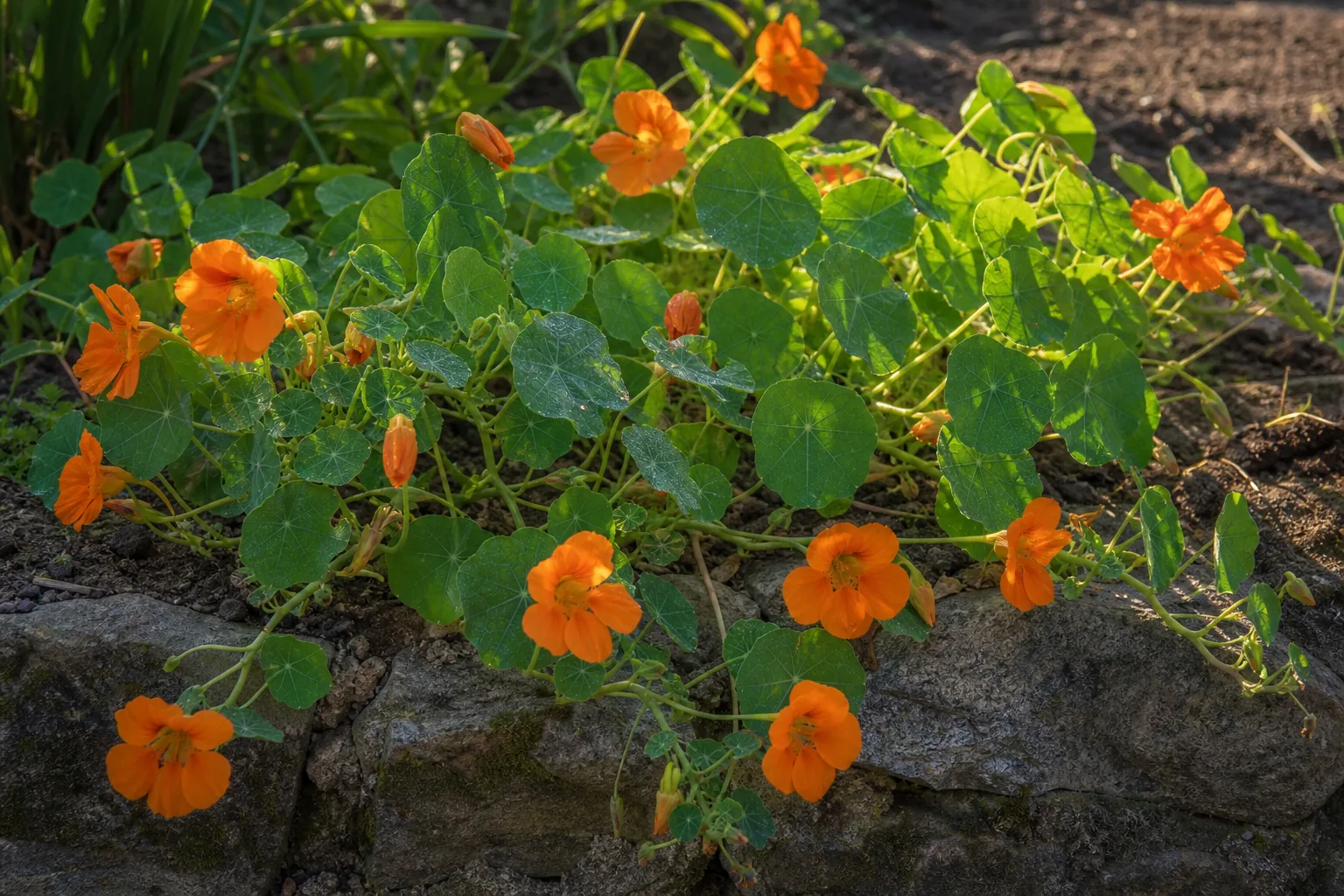
Garden nasturtium (Tropaeolum majus) is a care-free tender annual that actually prefers neglect. Sow seeds directly in the garden after all danger of frost, 1-2 cm deep and 20-30 cm apart (farther for trailing types), or start indoors in large cells a couple of weeks early since roots dislike disturbance. Site it in full sun in poor to average, well-drained soil - rich soil simply makes a leafy, flower-poor plant. Water sparingly once established and pinch or deadhead spent blooms to keep flowers coming into autumn.
Light
Nasturtium blooms best in full sun (6+ hours of direct light). It tolerates part shade, but shade shifts energy into leaves rather than flowers and the plant looks lanky. In hot summer regions a little afternoon shade helps foliage stay crisp.
Water
Nasturtiums are drought tolerant and need only occasional water once established; paradoxically, a little dry stress can increase flowering. Keep the soil from drying out completely when young, then water lightly and let it dry between soakings. Avoid heavy, frequent watering and wet foliage, which encourage rot.
Soil and planting
The key is lean, well-drained soil - sand, loam, or grit with low fertility. Do not amend with rich compost or fertilizer; poor soil is what keeps nasturtium flowering. In containers use a lean, free-draining mix and a pot with drainage holes; no repotting is needed through its single season, though trailing types appreciate a hanging basket or support.
Temperature, humidity, and fertilizer
Nasturtium is frost tender and grows as a warm-season annual; it likes moderate temperatures and tolerates dry air. Fertilizer is best skipped - any more than a light, occasional feed produces lush leaves and few blooms. Good drainage matters more than feeding. It is not bothered by low humidity and shrugs off neglect.
Pruning and propagation
No real pruning is required; just deadhead spent flowers to extend blooming and control self-seeding if you don't want volunteers. Trim back straggly or frost-damaged growth as needed. Propagate easily by seed sown in place each spring; saved seed from ripened pods germinates readily the next year. Trailing and climbing forms can be guided onto a low trellis or allowed to sprawl as groundcover.
Common problems
Start with the pattern, current soil moisture, and recent changes. One symptom can have several causes, so change the most likely factor first and observe before making another major adjustment.
| Symptom | Check first | First action |
|---|---|---|
| Lots of leaves but few flowers | Check soil fertility and light. | Move to poorer, sunnier soil and stop fertilizing; rich soil suppresses flowering. |
| Clusters of small insects on stems and buds | Check for aphids - nasturtiums are aphid magnets. | Spray off with water or use as a trap crop; avoid broad pesticides that harm pollinators. |
| Seedlings fail or rot after sowing | Check soil temperature and drainage. | Sow after frost in well-drained soil; avoid cold, wet ground and overwatering. |
| Pale, yellowing, or wilting foliage | Check for overwatering or root rot in heavy soil. | Improve drainage, water less, and grow in lean, gritty soil. |
| Plant spreads far beyond its spot | Check for self-sown seedlings the next season. | Deadhead before pods ripen or pull volunteers early to control spread. |
Pet and household safety
Garden nasturtium is listed as non-toxic to dogs, cats, and horses by the ASPCA, and its flowers, leaves, and seedpods are edible for people with a peppery flavour. Eating large amounts of any plant can still cause mild stomach upset in pets, so moderate nibbling is fine but don't let them strip the plant. Wash edible parts before eating.
Frequently asked questions
How much sun does nasturtium need?
Full sun (6+ hours) gives the most flowers; part shade is tolerated but produces more leaves and fewer blooms.
How often should I water nasturtium?
Only occasionally once established - it's drought tolerant. Light, infrequent watering encourages more flowers than frequent soaking.
Why are my nasturtiums all leaves and no flowers?
Usually too-rich soil or too much fertilizer. Grow them in lean, well-drained soil and skip feeding.
Are nasturtium flowers and leaves edible?
Yes - the flowers, leaves, and unripe seedpods are edible with a peppery, watercress-like flavour; use them in salads and as caper substitutes.
How do I grow nasturtium from seed?
Sow seeds directly after the last frost 1-2 cm deep where they'll grow, or start indoors in large cells. They dislike root disturbance, so transplant carefully.
Is nasturtium safe for pets?
Yes - the ASPCA lists nasturtium as non-toxic to dogs, cats, and horses. The edible parts are safe; large amounts may cause mild tummy upset.
Sources and editorial review
This editorial draft is based on the sources below and awaits named horticulture-expert approval before publication.
- Tropaeolum majusRoyal Botanic Gardens, Kew (Plants of the World Online) · Checked
- NasturtiumASPCA · Checked
- Tropaeolum majusNorth Carolina State University Extension · Checked
- Tropaeolum majus (garden nasturtium)Royal Horticultural Society · Checked
What works well
- Bright, long-blooming flowers in red, orange, and yellow that attract pollinators.
- Entirely edible - flowers, leaves, and seedpods add peppery flavour to dishes.
- Non-toxic to dogs and cats (ASPCA) and easy, low-maintenance annual.
What to consider
- Self-seeds aggressively and can spread beyond its spot.
- Susceptible to aphids, which often flock to it (though it can act as a trap crop).
- Frost tender and short-lived; dies at the first cold snap.