Key takeaways
- Plant in full sun in average, well-drained soil; cosmos tolerates poor ground.
- Deadhead spent flowers and water moderately; avoid rich soil and overfeeding.
- Cosmos is non-toxic to dogs and cats and attracts bees and butterflies.
How to care for garden cosmos
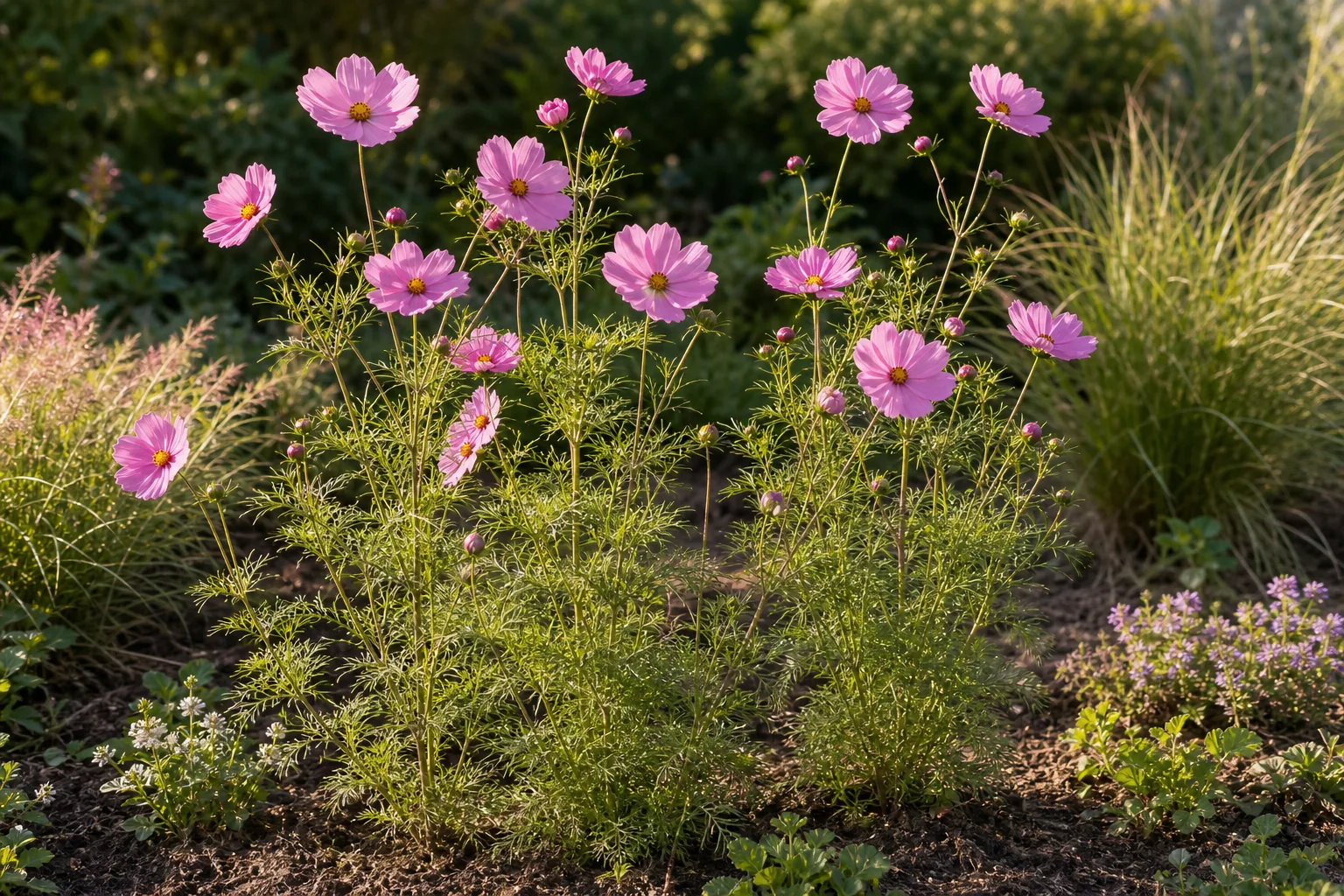
Garden cosmos (Cosmos bipinnatus) is an easy warm-season annual. Sow seeds directly in the garden after the last frost in full sun, or start indoors 4-6 weeks earlier, spacing 12-18 inches apart in average, well-drained soil. Keep the crown at the soil line and water to establish, then let the top inch of soil dry between soakings. Deadhead spent flowers regularly to keep bloom going to frost; taller types may need support or closer spacing. Cosmos actually blooms better in lean soil, so do not overfeed.
Light
Cosmos needs full sun - at least 6 to 8 hours of direct light daily - for the heaviest bloom and sturdy stems. In too much shade plants get leggy with few flowers and are more disease-prone.
Water
Water moderately, about 1 inch per week or when the top two inches of soil feel dry. Cosmos is somewhat drought tolerant once established but bloom best with even moisture; avoid soggy soil, which invites stem rot, and water at the base.
Soil and planting
Plant in average to lean, well-drained soil; cosmos tolerates poor, even sandy, ground and blooms poorly in rich soil. In containers use a lightweight, freely draining mix and water more often than in-ground plants; cosmos dislikes heavy garden soil in pots.
Temperature, humidity, and fertilizer
Cosmos is frost tender and loves warmth; wait until all frost danger has passed to sow or set out. High humidity raises disease risk, so space for airflow. Feed lightly - too much nitrogen produces foliage at the expense of flowers; a single light compost dressing at planting is often enough.
Pruning and propagation
No real pruning beyond deadheading spent blooms, though a midseason shear can renew a tired patch. Propagate from seed: sow directly after frost or start indoors; cosmos also self-sows readily in warmer zones.
Common problems
Start with the pattern, current soil moisture, and recent changes. One symptom can have several causes, so change the most likely factor first and observe before making another major adjustment.
| Symptom | Check first | First action |
|---|---|---|
| Few flowers and lush foliage | Check for rich soil or overfeeding. | Stop fertilizing and grow in leaner soil; cosmos blooms best when lightly fed. |
| Flopping or falling over | Check support and spacing; tall cosmos need help. | Space closer, stake, or grow shorter cultivars in windy sites. |
| White powdery coating on leaves | Check humidity, airflow, and overhead watering for powdery mildew. | Improve spacing and airflow, avoid wetting foliage, and remove affected leaves. |
| Aphids on shoot tips | Check for aphids in warm weather. | Rinse with water or use insecticidal soap; avoid broad sprays that harm pollinators. |
| Blooming slows in peak summer heat | Check heat; a natural summer dip. | Keep deadheading and watering; blooming resumes as temperatures cool. |
Pet and household safety
Garden cosmos is considered non-toxic to dogs and cats and appears on the ASPCA non-toxic plant list. Eating large amounts of any plant may cause mild vomiting or diarrhea, so discourage chewing and contact a veterinarian if a pet shows persistent signs.
Frequently asked questions
How much sun does cosmos need?
Full sun - at least 6 to 8 hours daily; too much shade reduces bloom and causes legginess.
How often should I water cosmos?
About 1 inch per week, or when the top two inches of soil are dry; somewhat drought tolerant once established.
Why won't my cosmos flower much?
Usually rich soil or too much fertilizer; grow them lean and avoid overfeeding.
Should I deadhead cosmos?
Yes - regular deadheading keeps them blooming from summer to frost.
Is cosmos easy from seed?
Very - sow directly after the last frost, or start indoors 4-6 weeks earlier; it also self-sows.
Are cosmos safe for pets?
Yes - the ASPCA lists cosmos as non-toxic to dogs and cats, though large amounts can upset the stomach.
Sources and editorial review
This editorial draft is based on the sources below and awaits named horticulture-expert approval before publication.
- Cosmos bipinnatusRoyal Botanic Gardens, Kew (Plants of the World Online) · Checked
- CosmosASPCA · Checked
- Cosmos bipinnatusMissouri Botanical Garden · Checked
- Cosmos bipinnatusNorth Carolina State University Extension · Checked
What works well
- Very easy from direct-sown seed and fast growing.
- Long bloom from summer to frost with many colours; great for cutting.
- Attracts pollinators and is non-toxic to pets (ASPCA non-toxic list).
What to consider
- Tall types may flop without support or spacing.
- Susceptible to powdery mildew and aphids in humid, crowded conditions.
- Frost tender; must be replanted each year from seed.