Key takeaways
- Plant in full sun to part shade in moist, well-drained, acidic-to-neutral soil.
- Prune in winter as needed; next year's berries form on new growth.
- Protect from cold winter wind; it dislikes hot, humid summers and is invasive in parts of the US.
How to care for English holly
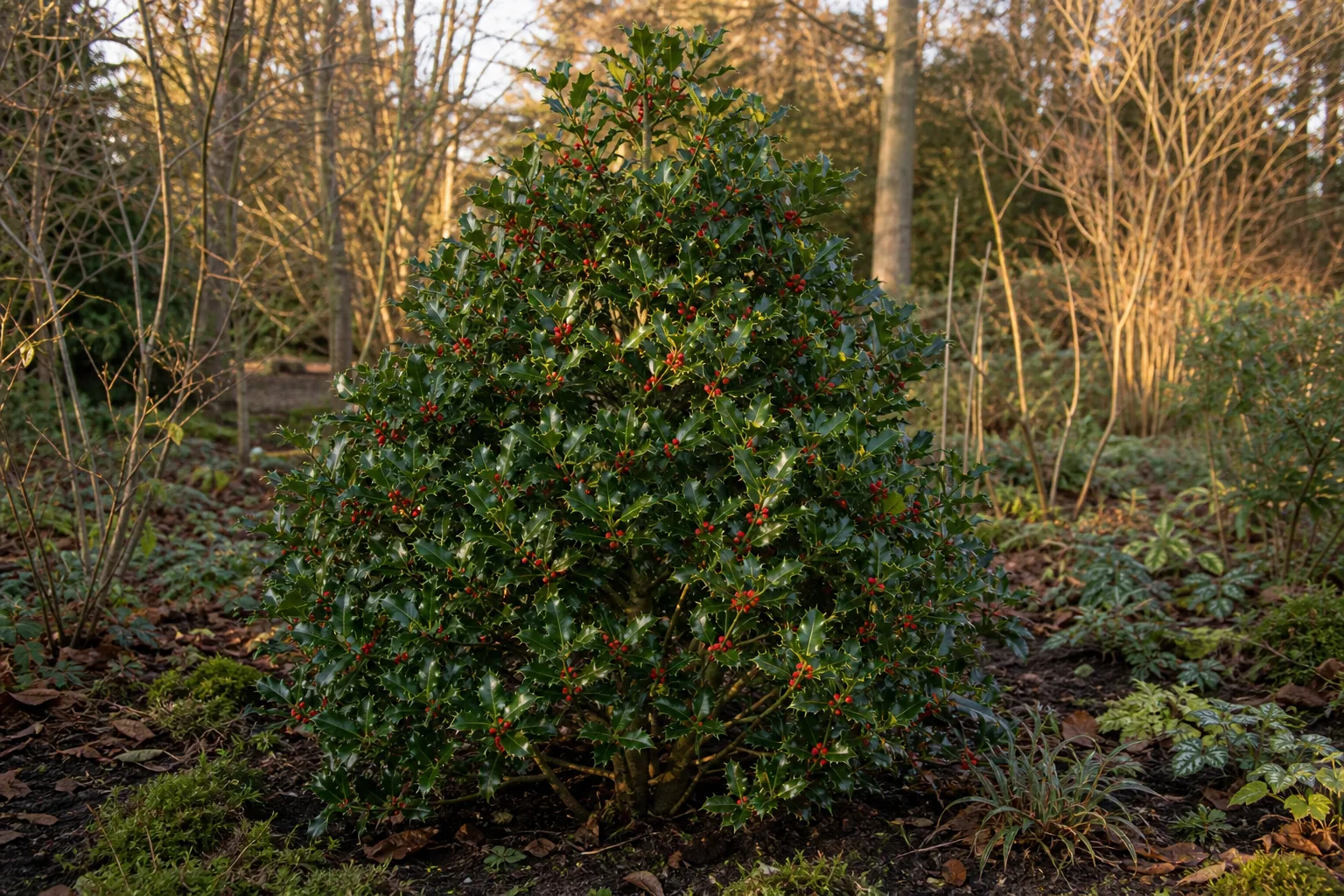
English holly (Ilex aquifolium) is an evergreen that wants even moisture and protection from harsh weather. Plant in full sun to part shade in moist, well-drained, acidic-to-neutral soil, setting the root ball at the soil line and mulching 2-3 in to conserve moisture. Water regularly so the root zone never dries out, especially in the first two years and in containers. Prune in winter to shape or train as a hedge, remembering that berries form on new growth. Site out of cold winter wind and avoid hot, humid sites where it struggles.
Light
English holly grows in full sun to part shade. In hot climates afternoon shade reduces stress and leaf scorch; in cool climates full sun keeps plants dense and berrying well. Too much deep shade reduces berry set.
Water
Holly needs steady moisture - about 1 in per week - without waterlogging. Water at the base and never let the root zone dry completely, particularly in spring and summer. Mulch to conserve moisture and keep roots cool; in containers water more often.
Soil and planting
Plant in moist, well-drained soil with an acidic to neutral pH (about 5.0-7.0). It tolerates clay and nutritionally poor ground if drainage is good. In containers use a loam-based, freely draining mix and repot when rootbound, keeping the crown at the soil line.
Temperature, humidity, and fertilizer
Hardy in USDA zones 7-9, English holly dislikes harsh winters and hot, humid summers; it grows best in the Pacific Northwest climate. Fertilize lightly in spring with a balanced, slow-release feed; avoid overfeeding. Good air circulation helps limit leaf spot and holly leaf miner.
Pruning and propagation
Prune in winter to shape, train as a standard, or shear as a hedge; berries form on new wood, so winter pruning preserves the display. Plants are dioecious - you need a male pollinizer near a female for berries. Propagate from semi-hardwood cuttings in summer.
Common problems
Start with the pattern, current soil moisture, and recent changes. One symptom can have several causes, so change the most likely factor first and observe before making another major adjustment.
| Symptom | Check first | First action |
|---|---|---|
| No berries on a plant | Check whether it is a male plant or has no nearby pollinizer. | Plant a male pollinizer nearby; female plants need a male to set fruit. |
| Yellowing leaves with green veins (chlorosis) | Check soil pH - holly prefers acidic soil. | Lower pH with sulfur or an acid fertilizer; avoid lime. |
| Spotted, blighted, or dropping leaves | Check for leaf spot, tar spot, or holly leaf miner. | Improve air flow, avoid overhead watering, and remove affected foliage. |
| Scorched or brown winter foliage | Check for winter wind and dry soil. | Site out of wind, water well going into winter, and apply winter mulch. |
| Poor growth in hot, humid summers | Check climate fit; holly dislikes heat and humidity. | Site in afternoon shade with good air flow, or choose a better-adapted holly species. |
Pet and household safety
English holly is toxic to dogs, cats, and horses according to the ASPCA. The toxic principles are saponins concentrated in the berries (and to a lesser extent the leaves); clinical signs include vomiting, diarrhea, drooling, and depression. The spiny leaves can also mechanically injure the mouth. Prevent pets from eating the berries and call a veterinarian if ingestion is substantial.
Frequently asked questions
How much sun does English holly need?
Full sun to part shade. Afternoon shade helps in hot climates; deep shade reduces berries.
Why doesn't my holly have berries?
Holly is dioecious - a female plant needs a nearby male pollinizer to set fruit.
What soil does holly prefer?
Moist, well-drained, acidic-to-neutral soil. It tolerates clay if drainage is good.
When should I prune English holly?
In winter to shape or shear as a hedge; berries form on new wood.
Is holly invasive?
English holly is invasive on the US West Coast and listed as a noxious weed in some areas; choose non-invasive alternatives there.
Is holly safe for pets?
No - the ASPCA lists holly as toxic to dogs, cats, and horses (saponins, mainly in the berries). Keep pets from eating them.
Sources and editorial review
This editorial draft is based on the sources below and awaits named horticulture-expert approval before publication.
- Ilex aquifoliumRoyal Botanic Gardens, Kew (Plants of the World Online) · Checked
- HollyASPCA · Checked
- Ilex aquifoliumMissouri Botanical Garden · Checked
- Ilex aquifoliumNorth Carolina State University Extension · Checked
What works well
- Glossy evergreen foliage and showy red winter berries for holiday use.
- Tolerant of pruning and useful as a hedge, specimen, or foundation plant.
- Berries attract birds to the landscape.
What to consider
- Toxic to dogs, cats, and horses (saponins in berries and leaves).
- Invasive on the US West Coast and listed as a noxious weed in some areas.
- Spiny leaves and a dislike of hot, humid summers limit siting.