Key takeaways
- Eggplant needs real heat — soil and air warm, nights above ~60°F — or it just sits there.
- Keep soil evenly moist and feed for fruit; drought causes bitter, tough flesh and poor set.
- Harvest when skin is glossy and firm; dull skin means overripe and seedy.
How to care for eggplant
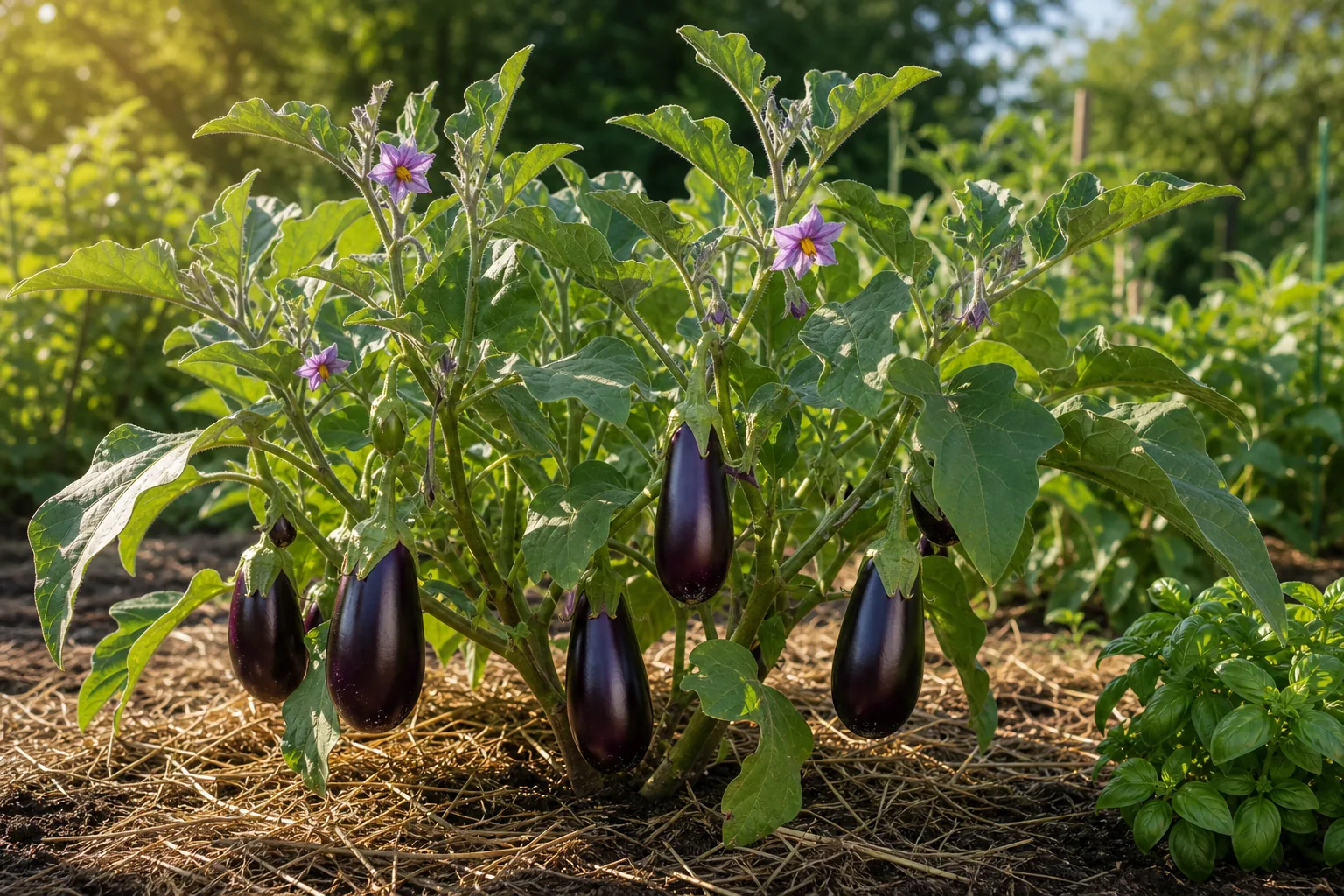
Eggplant (Solanum melongena) is a heat-loving warm-season crop. Start transplants indoors 6-8 weeks before last frost or buy stocky plants, and set them out only after soil is warm and nights stay above about 60°F, spacing 18-24 inches with a cage or stake. Mulch to hold warmth and moisture, water deeply, and feed when flowering begins. Harvest fruit when it is glossy, firm, and full-sized for the variety — before the skin dulls and seeds toughen. In short-season areas choose early, compact varieties.
Light
Eggplant needs full sun — at least 6-8 hours of direct light — and heat for good fruiting. It will not perform in shade; low light and cool conditions cause poor set and slow growth.
Water
Water deeply and evenly, about 1-2 inches per week, more in heat and containers. Eggplant has a large leaf area and needs steady moisture; drought causes bitter, tough fruit and flower drop, while uneven water can cause blossom-end rot. Use drip irrigation or soak the soil in the morning and avoid wetting foliage.
Soil and planting
Plant in fertile, well-drained soil rich in organic matter with a pH of about 6.0-6.8. In containers use a large pot (at least 5 gallons) with a rich, free-draining mix and a cage; eggplant dislikes root disturbance, so use biodegradable pots or the root ball intact. Warm the soil with black plastic before setting out and keep the crown at the surface.
Temperature, humidity, and fertilizer
Eggplant is frost tender and grows best around 75-90°F; it stalls below about 60-65°F and sets poorly in cool weather. High humidity with poor airflow raises fungal-disease risk. Feed with a balanced fertilizer at planting and a higher-potassium feed once fruiting; too much nitrogen gives foliage over fruit.
Pruning and propagation
Pinch the first flowers to build a stronger plant, and stake or cage for support; you may remove a few lower leaves for airflow. Propagate from seed: start indoors 6-8 weeks before last frost in warmth, then harden off and transplant after frost. Wear gloves with spiny types to avoid scratches.
Common problems
Start with the pattern, current soil moisture, and recent changes. One symptom can have several causes, so change the most likely factor first and observe before making another major adjustment.
| Symptom | Check first | First action |
|---|---|---|
| Sunken, rotten spot on the blossom end of fruit | Check for uneven watering causing blossom-end rot (calcium uptake issue). | Water evenly and deeply; add calcium if soil is deficient; mulch to buffer moisture. |
| Tiny holes and chewed seedlings | Check for flea beetles, especially on young plants. | Use row cover on seedlings, keep plants vigorous, and control weeds nearby. |
| Dull, seedy, bitter fruit | Check harvest timing — fruit was left too long on the plant. | Harvest when skin is glossy and firm; dull skin means overripe. |
| Stippled, bronzed leaves with fine webbing | Check leaf undersides for spider mites in hot, dry weather. | Rinse foliage and raise humidity at the base; use cultural controls first. |
| Poor fruit set in cool weather | Check temperature and bee activity; eggplant needs heat and pollination. | Wait for warm weather, provide a warm site, and avoid pesticide during bloom. |
Pet and household safety
Eggplant foliage, stems, and leaves are toxic to dogs and cats (nightshade family; solanine-like glycoalkaloids), while the ripe fruit is considered non-toxic and safe to eat. The ASPCA classifies the related tomato plant as toxic to dogs and cats, and the same caution applies to eggplant foliage — keep pets from chewing leaves or stems. Spiny varieties can also scratch skin. Contact a veterinarian if a pet eats plant parts.
Frequently asked questions
How much sun does eggplant need?
Full sun and heat — at least 6-8 hours of direct light; it will not fruit well in cool or shady sites.
How often should I water eggplant?
Deeply and evenly, about 1-2 inches per week. Drought makes fruit bitter and tough.
When do I harvest eggplant?
When the skin is glossy and firm and the fruit is full-sized; dull skin means overripe and seedy.
Why is my eggplant not setting fruit?
Usually cool weather or low heat; eggplant needs warm air and soil plus pollination.
How do I grow eggplant in containers?
Use a 5-gallon or larger pot with rich, free-draining mix, full sun, a cage, and steady water and heat.
Is eggplant safe for pets?
The ripe fruit is safe to eat, but the foliage, stems, and leaves are toxic to dogs and cats (nightshade), so keep pets from chewing the plant.
Sources and editorial review
This editorial draft is based on the sources below and awaits named horticulture-expert approval before publication.
- Solanum melongenaRoyal Botanic Gardens, Kew (Plants of the World Online) · Checked
- Tomato PlantASPCA (Animal Poison Control) · Checked
- EggplantUniversity of Illinois Extension (HortAnswers) · Checked
- How to Grow EggplantMichigan State University Extension · Checked
What works well
- Handsome, productive plants with striking fruit for the kitchen.
- Thrives in hot summer where cool-season crops fail.
- Grows well in large containers given heat and water.
What to consider
- Frost tender and very heat-demanding; a short season limits yield.
- Foliage and stems are toxic to pets (nightshade solanine), and the spiny types can scratch.
- Susceptible to flea beetles, spider mites, and blossom-end rot.