Key takeaways
- Plant in rich, moist, well-drained soil; it is intolerant of dry soil and needs protection from strong winds.
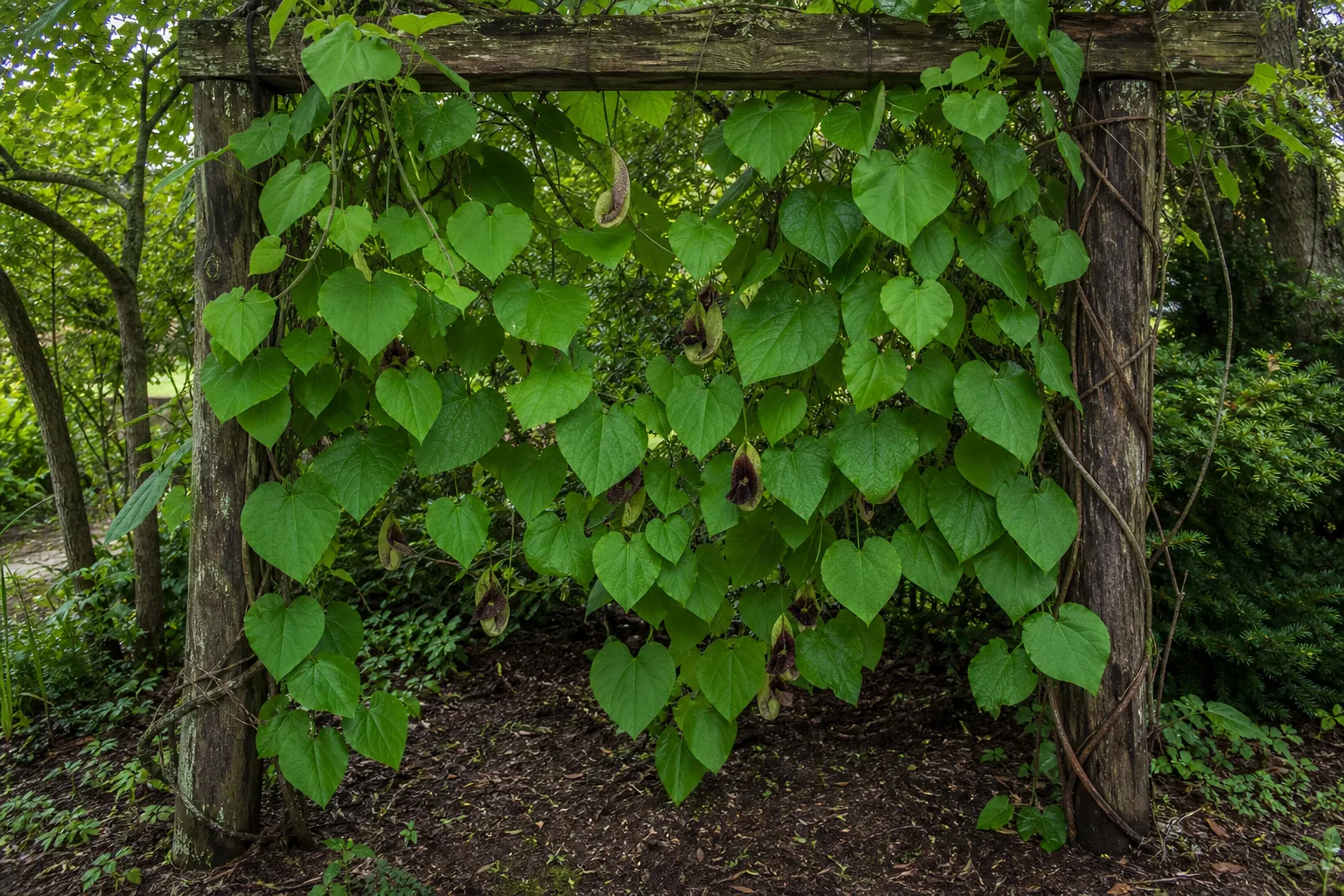
- It climbs fast by twining stems to 15-40 ft, so give it a sturdy arbor, fence, or wall to cover.
- All parts are poisonous - aristolochic acid can cause irreversible kidney damage - so keep pets and children away.
How to care for Dutchman's pipe
Dutchman's pipe (Aristolochia macrophylla) is a vigorous, deciduous, woody twining vine grown for its enormous, heart-shaped leaves (up to 12 inches long) that form a dense green screen. Plant it in full sun to part shade in rich, moist, well-drained soil, with a sturdy arbor, fence, or wall to climb, and protection from strong winds. It is intolerant of dry soil, so keep the root zone consistently moist, especially in summer. Cut it back in late winter to control growth. Its small, pipe-shaped flowers are usually hidden by the dense foliage.
Light
Dutchman's pipe grows in full sun to part shade. In hot climates light afternoon shade is welcome, but more sun gives the most vigorous cover. Deep shade produces a thinner, less dense screen. Site it where the large leaves can shade a porch or wall without blocking what you need.
Water
This vine wants consistently moist soil and is intolerant of dry ground - water regularly during dry spells, especially in summer, and mulch to hold moisture. Good drainage still matters; soggy roots cause decline. In containers, water more frequently than in-ground plants.
Soil and planting
Plant in average to rich, medium-moisture, well-drained loam with a neutral pH (about 6.0-8.0). Amend with compost and keep the soil consistently moist. In containers use a rich, freely draining mix in a deep pot with a sturdy support; repot in late winter or early spring when rootbound.
Temperature, humidity, and fertilizer
Hardy in USDA zones 4-8, Dutchman's pipe prefers rich, moist conditions and dislikes drought and strong winds. It has few serious pests or diseases and tolerates urban pollution well. Fertilizer is rarely needed; a light spring feeding on poor soils is enough.
Pruning and propagation
Cut the vine back in late winter to control its size and encourage fresh, dense growth; it tolerates heavy pruning. Propagation is by seed or cuttings - seed is straightforward, and the vine can also be layered. It is the primary larval food for the pipevine swallowtail, whose caterpillars may defoliate it without lasting harm.
Common problems
Start with the pattern, current soil moisture, and recent changes. One symptom can have several causes, so change the most likely factor first and observe before making another major adjustment.
| Symptom | Check first | First action |
|---|---|---|
| Leaves wilt in dry weather | Check soil moisture - the vine is intolerant of dry soil. | Water deeply and regularly, mulch, and protect from strong winds. |
| Caterpillars eating all the leaves | Check for pipevine swallowtail larvae (harmless to the vine). | Leave them - the vine recovers quickly and the butterflies are valuable. |
| Vine outgrows its support | Check for dense twining growth. | Cut back hard in late winter to control the size. |
| Yellowing, weak foliage | Check for dry soil, poor drainage, or nutrient-poor ground. | Improve moisture and fertility, and ensure drainage is adequate. |
| Foliage scorched in strong winds | Check the site exposure. | Move to a sheltered spot or provide a windbreak. |
Pet and household safety
Dutchman's pipe is toxic to cats and dogs: all parts contain aristolochic acid, and NC State Extension rates the plant as a high-severity poison - ingestion can cause irreversible kidney failure. It is not individually listed in the ASPCA database, but the species-wide aristolochic acid toxicity is well documented. Keep the vine out of reach and contact a veterinarian immediately after any ingestion.
Frequently asked questions
How much sun does Dutchman's pipe need?
Full sun to part shade; more sun gives the most vigorous screen.
How often should I water Dutchman's pipe?
Regularly - it is intolerant of dry soil and wants consistent moisture.
What soil suits Dutchman's pipe?
Rich, moist, well-drained loam with a neutral pH.
When do I prune Dutchman's pipe?
In late winter to control size; it tolerates hard pruning.
Why are caterpillars eating my vine?
Those are pipevine swallowtail larvae - harmless and beneficial; the vine recovers.
Is Dutchman's pipe safe for pets?
No - all parts contain aristolochic acid and are toxic; call a veterinarian immediately if ingested.
Sources and editorial review
This editorial draft is based on the sources below and awaits named horticulture-expert approval before publication.
- Aristolochia macrophyllaRoyal Botanic Gardens, Kew (Plants of the World Online) · Checked
- Toxic and Non-Toxic Plants ListASPCA · Checked
- Aristolochia macrophyllaNorth Carolina State University Extension · Checked
- Aristolochia macrophyllaMissouri Botanical Garden · Checked
What works well
- Huge, dense, heart-shaped leaves make a fast, beautiful privacy screen.
- Native vine that is the larval host for the pipevine swallowtail butterfly.
- Few serious pests or diseases; easily pruned in late winter to keep in bounds.
What to consider
- The whole plant is poisonous (aristolochic acid); ingestion can cause irreversible kidney damage.
- The flowers are inconspicuous and hidden by the foliage.
- Needs consistently moist, rich soil and fails in dry sites.