Key takeaways
- Plant in full sun to part shade in average, well-drained soil; water during dry spells.
- Divide crowded clumps every 3-5 years and remove spent flower scapes.
- Daylily is toxic to cats (possible kidney failure) but generally non-toxic to dogs - keep cats away.
How to care for daylily
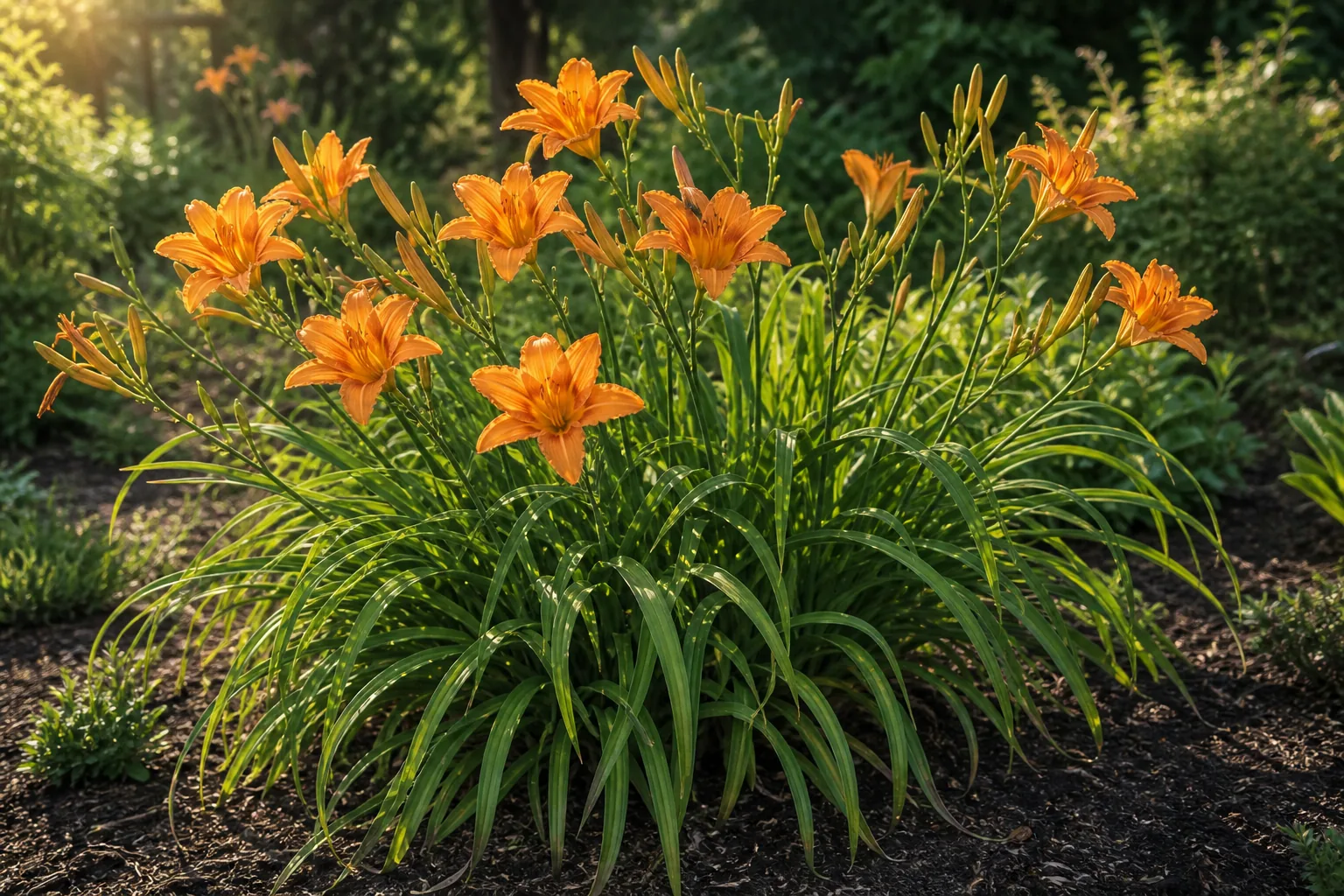
Daylily (Hemerocallis fulva) is a rugged perennial that thrives with little fuss. Plant in spring or autumn in full sun to part shade and average, well-drained soil, setting the crown at the soil line and spacing 18-24 inches apart. Water to establish, then only during extended dry spells; a spring mulch conserves moisture. Remove spent flower scapes to keep plants tidy and divide crowded clumps every 3-5 years in early spring or autumn to renew vigour and increase bloom. Daylilies tolerate heat and a range of soils better than many perennials.
Light
Daylilies flower best in full sun (6+ hours) but accept part shade, especially in hot climates where afternoon shade improves summer appearance. Too much shade reduces blooming and makes plants leggy.
Water
Water moderately: about 1 inch per week during the growing season, more in heat and drought. Established daylilies are fairly drought tolerant but bloom and look best with steady moisture; aim water at the base and avoid wetting foliage to limit leaf streak.
Soil and planting
Plant in average, fertile, well-drained soil with a slightly acidic to neutral pH. Daylilies are tolerant of clay and poor soils once established. In containers use a roomy, freely draining mix and divide or repot when badly crowded; they are typically grown in the ground.
Temperature, humidity, and fertilizer
Hardy in USDA zones 3-9, daylilies handle heat and humidity better than many perennials. Good air circulation reduces foliar disease. Feed in spring with a balanced fertilizer as new growth starts; a midseason light feed supports repeat bloom on reblooming types.
Pruning and propagation
Remove spent flower scapes (the leafless flower stalks) once blooming finishes to keep plants neat; trim ragged foliage as needed. Propagate by division: dig and separate the fleshy crowns every 3-5 years, replanting healthy fans. Seed is possible but hybrids will not come true.
Common problems
Start with the pattern, current soil moisture, and recent changes. One symptom can have several causes, so change the most likely factor first and observe before making another major adjustment.
| Symptom | Check first | First action |
|---|---|---|
| Few or no flowers | Check light and crowding; daylilies need sun and division when old. | Move to fuller sun and divide crowded clumps every few years. |
| Brown streaks or spots on leaves | Check for leaf streak or rust in humid weather. | Improve airflow, avoid overhead watering, and remove affected foliage. |
| Tired, yellowing foliage in summer | Check heat and watering. | Water during dry spells and trim brown leaves; plants usually recover. |
| Crowded, declining clump | Check plant age and spread. | Divide in early spring or autumn every 3-5 years. |
| Cat illness after chewing plant | Check pet access; daylily is toxic to cats. | Keep cats away from daylilies and contact a veterinarian if a cat chews the plant. |
Pet and household safety
Daylily is toxic to cats and the ASPCA notes a risk of kidney failure in cats that chew the plant; it is generally considered non-toxic to dogs. Because the cat risk is real, prevent cats from accessing daylilies and contact a veterinarian promptly if a cat is seen chewing the foliage or flowers.
Frequently asked questions
How much sun does daylily need?
Full sun for the most blooms, but it tolerates part shade, especially in hot climates.
How often should I water daylilies?
About 1 inch per week in growth; established plants are fairly drought tolerant.
When and how do I divide daylilies?
Every 3-5 years in early spring or autumn; dig and separate the fleshy crowns, replanting healthy fans.
Why are my daylily leaves streaked?
Usually leaf streak or rust in humidity; improve airflow and remove affected foliage.
Do daylily flowers really last one day?
Yes - each flower lasts about a day, but plants produce many in succession over weeks.
Are daylilies safe for pets?
They are toxic to cats (kidney-failure risk per the ASPCA) but generally non-toxic to dogs; keep cats away.
Sources and editorial review
This editorial draft is based on the sources below and awaits named horticulture-expert approval before publication.
- Hemerocallis fulvaRoyal Botanic Gardens, Kew (Plants of the World Online) · Checked
- DaylilyASPCA · Checked
- Hemerocallis fulvaMissouri Botanical Garden · Checked
- DaylilyNorth Carolina State University Extension · Checked
What works well
- Very tough, long-lived, and adaptable to many soils and sites.
- Succession of blooms over weeks; many colours and forms.
- Good for borders, massing, and erosion control on slopes.
What to consider
- Toxic to cats (ASPCA lists a kidney-failure risk) though non-toxic to dogs.
- Foliage can look tired after blooming in hot summers.
- Can spread aggressively and need periodic division.