Key takeaways
- Plant bulbs in autumn, pointed end up, 2-3 times their depth in well-drained soil.
- Give full sun to part shade and water during active growth; let leaves die back naturally.
- All parts are toxic - keep bulbs and foliage away from pets and children.
How to care for daffodil
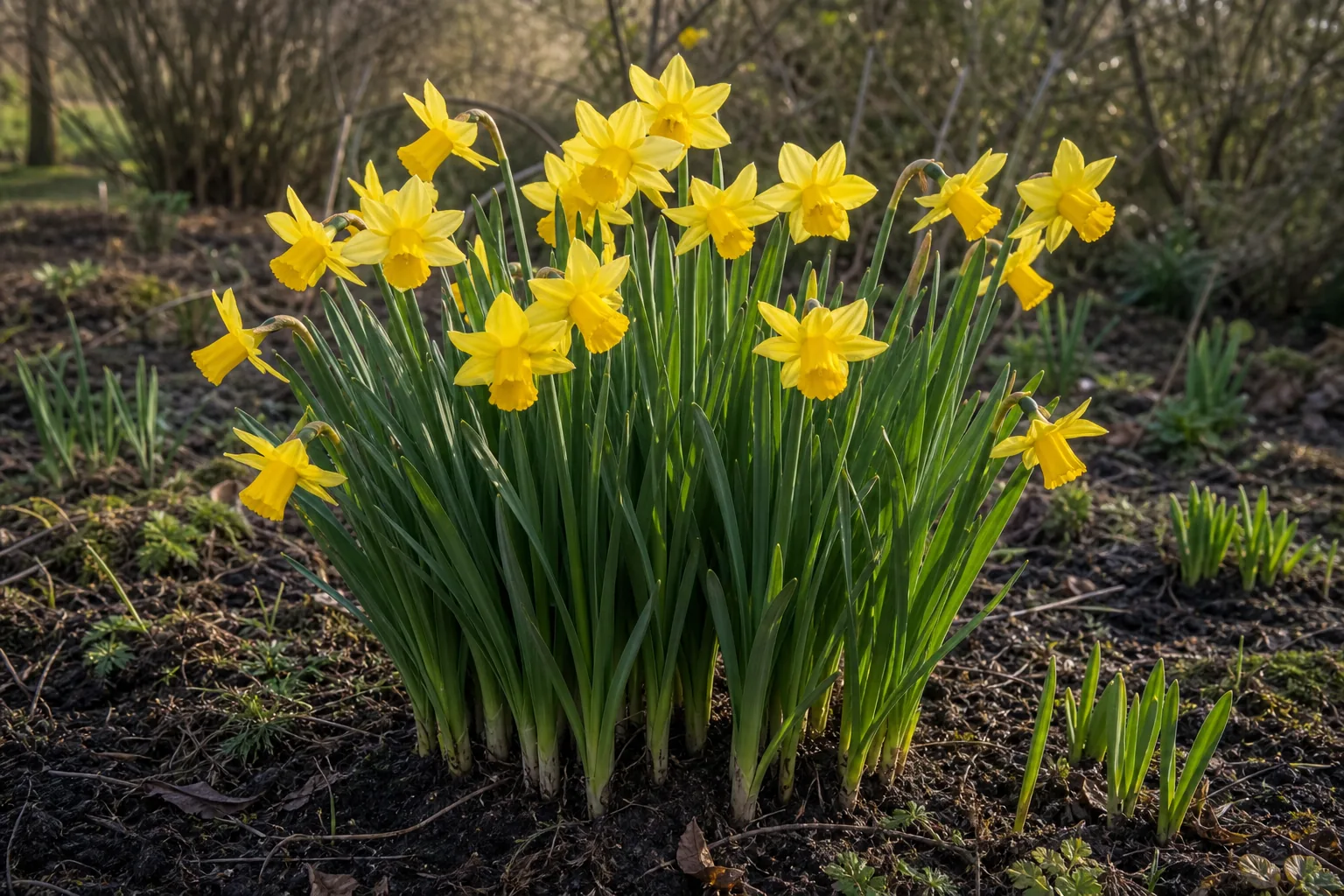
Daffodil (Narcissus pseudonarcissus) is grown from bulbs planted in autumn. Set bulbs pointed end up, 4-6 inches deep and 3-6 inches apart in full sun to part shade and well-drained soil. Water after planting and through the growing season, then let the leaves yellow and wither naturally - this feeds next year's bulb, so never braid or cut green foliage. In cold climates mulch after the ground freezes; in warm climates most types need a winter chill to bloom well. Lift and divide crowded clumps only after foliage dies if flowering declines.
Light
Daffodils grow in full sun to part shade. They flower best with at least half a day of sun, though in warm regions a little afternoon shade prolongs bloom. Under deciduous trees works well because they finish before leaves fully expand.
Water
Water after planting in autumn and during active growth in spring if rain is lacking; about 1 inch per week is plenty. Daffodils are fairly drought tolerant once dormant but dislike wet soil - the bigger risk is too much water causing bulb rot.
Soil and planting
Plant in average, well-drained soil with a neutral to slightly acidic pH; amend clay with grit or compost to ensure drainage. In containers use a deep, freely draining bulb mix and keep pots cool and moist in winter; bulbs are typically planted fresh each autumn rather than repotted.
Temperature, humidity, and fertilizer
Daffodils are hardy spring bulbs that need a cool winter rest to bloom. Good air circulation limits fungal leaf problems in humid springs. Feed with a balanced bulb fertilizer at planting and again as shoots emerge in spring; avoid high-nitrogen feeds that favor leaves over flowers.
Pruning and propagation
Deadhead spent flowers but leave the foliage until it is brown and dry. Propagate by dividing offsets (small bulbs) from the clump after foliage dies, or by seed for species types (slow). Replant offsets in autumn.
Common problems
Start with the pattern, current soil moisture, and recent changes. One symptom can have several causes, so change the most likely factor first and observe before making another major adjustment.
| Symptom | Check first | First action |
|---|---|---|
| No flowers or few flowers | Check planting depth, crowding, or lack of winter chill. | Divide crowded clumps in summer and replant at proper depth; ensure cool dormancy. |
| Yellow, wilting foliage early in season | Check for bulb rot from wet soil. | Improve drainage and avoid overwatering; lift and discard soft bulbs. |
| Leaves flop or are sparse | Check light and fertility. | Move to brighter site and feed at planting and shoot emergence. |
| Bulbs pushed out of ground | Check frost heaving in cold climates. | Mulch after ground freezes and replant at correct depth in autumn. |
| Animal digging at bulbs | Check for squirrels or rodents. | Use netting or plant in protected beds; daffodils are usually rodent resistant once established. |
Pet and household safety
Daffodil is toxic to dogs, cats, and horses according to the ASPCA. The toxic principle is lycorine (concentrated in the bulbs), and clinical signs include vomiting, diarrhea, abdominal pain, and drooling. Ingestion of bulbs is most dangerous; keep pets and children from chewing any part and contact a veterinarian if ingested.
Frequently asked questions
When should I plant daffodil bulbs?
In autumn, before the ground freezes, so roots establish before winter.
How deep do I plant daffodil bulbs?
About 4-6 inches deep, 2-3 times the bulb height, pointed end up.
Can I cut the leaves after blooming?
No - let foliage yellow naturally to refill the bulb; cut only once it is brown.
Why didn't my daffodils bloom?
Usually crowding, too little winter chill, or bulbs planted too shallow; divide and replant.
Why are my daffodils wilting?
Usually overwatering or poor drainage causing bulb rot; improve drainage.
Are daffodils safe for pets?
No - the ASPCA lists daffodil as toxic to dogs, cats, and horses (lycorine, especially in bulbs). Keep pets away.
Sources and editorial review
This editorial draft is based on the sources below and awaits named horticulture-expert approval before publication.
- Narcissus pseudonarcissusRoyal Botanic Gardens, Kew (Plants of the World Online) · Checked
- DaffodilASPCA · Checked
- Narcissus pseudonarcissusMissouri Botanical Garden · Checked
- DaffodilsNorth Carolina State University Extension · Checked
What works well
- Reliable spring bloom and easy naturalizing in many climates.
- Deer and rodent resistant because the bulbs are unpleasant to eat.
- Low maintenance once established; good for beds, borders, and forcing.
What to consider
- Toxic to dogs, cats, and horses (lycorine) - bulbs are the most hazardous part.
- Foliage is unsightly for weeks after bloom and must not be cut early.
- Bulbs rot in wet, poorly drained soil.