Key takeaways
- Wait for warm soil and nights above 50-55°F; cucumbers hate cold and sulk or rot if planted early.
- Water generously and evenly — inconsistent moisture makes fruit bitter and misshapen.
- Harvest frequently and trellis vining types for cleaner fruit and more yield.
How to care for cucumber
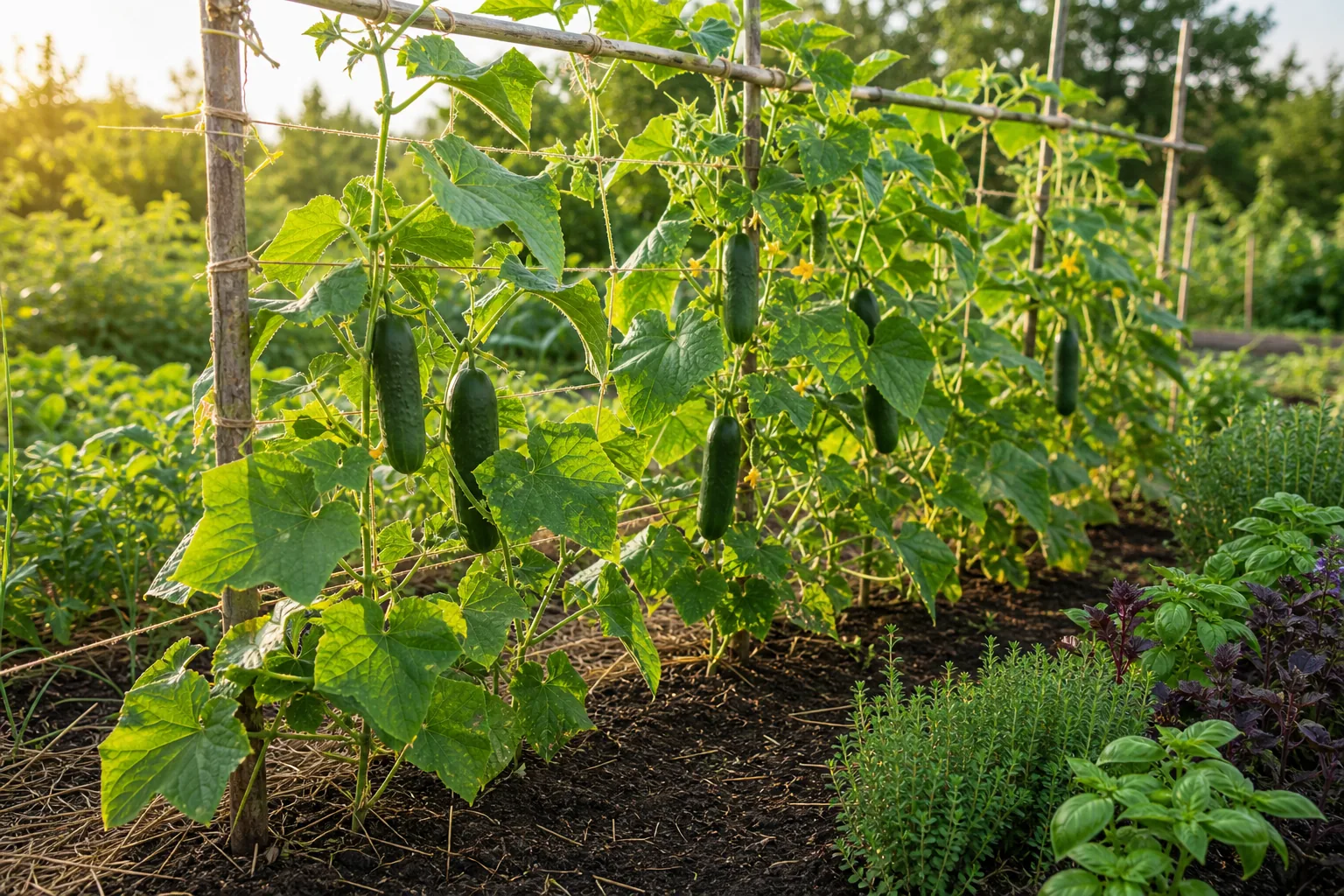
Cucumber (Cucumis sativus) is a warm-season vining crop that wants heat, sun, and steady water. Sow or transplant after soil is warm (above about 60°F) and all frost danger passes, spacing bush types 1-2 feet and vining types 1 foot at the base of a trellis. Mulch to hold moisture and keep fruit clean, and water deeply and often. Harvest fruits frequently at the right size — daily in peak season — because letting them ripen and yellow stops production. Feed every few weeks once flowering begins.
Light
Cucumbers need full sun — at least 6-8 hours of direct light — for strong growth and good fruiting. They will grow in part shade but produce fewer, slower fruits and are more disease prone in low light.
Water
Water generously and evenly, about 1-2 inches per week, more in heat and in containers. Cucumbers are mostly water, so drought or uneven watering causes bitter, misshapen fruit and slows growth. Use drip irrigation or soak the soil in the morning; wet foliage at night invites powdery mildew and foliar disease.
Soil and planting
Plant in fertile, well-drained soil rich in organic matter with a pH of about 6.0-6.8. In containers use a large, deep pot (5 gallons or more) with a light, nutrient-rich mix and a trellis; cucumbers are sensitive to root disturbance, so use biodegradable pots or sow in place. Trellis vining types to keep fruit straight and air moving; keep the crown at the soil line.
Temperature, humidity, and fertilizer
Cucumbers are frost tender and grow best around 70-85°F; cool soil and nights below 50°F stall them. High humidity raises powdery-mildew and bacterial-wilt risk, so space and trellis for airflow. Feed with a balanced fertilizer at planting and a higher-potassium feed every 2-3 weeks once fruiting; too much nitrogen pushes vines over fruit.
Pruning and propagation
For vining types, train the main vine up the trellis and pinch laterals if crowded; remove any yellow or diseased leaves. Propagate from seed: direct-sow after soil warms, or start indoors 2-3 weeks before last frost in biodegradable pots to avoid root disturbance. Bush types need no trellising.
Common problems
Start with the pattern, current soil moisture, and recent changes. One symptom can have several causes, so change the most likely factor first and observe before making another major adjustment.
| Symptom | Check first | First action |
|---|---|---|
| Bitter or misshapen fruit | Check watering and heat stress; uneven moisture and high heat cause bitterness. | Water evenly and deeply, mulch, and harvest on time; choose burpless varieties if sensitive. |
| Wilting that does not recover after watering | Check for bacterial wilt spread by cucumber beetles. | Remove infected plants, control beetles with row cover or targeted methods. |
| White powdery coating on leaves | Check for powdery mildew in humid or crowded conditions. | Improve airflow and trellis; avoid overhead watering and remove affected leaves. |
| Holes and yellowing seedlings with sticky eggs | Check for striped or spotted cucumber beetles. | Use row cover on seedlings and remove beetles; rotate plantings yearly. |
| Slow growth in cool, wet weather | Check soil temperature and recent cold snaps. | Wait for warm soil; use black plastic or cloches to warm the bed before planting. |
Pet and household safety
Cucumber is considered non-toxic to dogs and cats and is not listed as a poison by the ASPCA; the fruit is safe as an occasional treat. The foliage and vines are not toxic either, but as with any plant, large amounts may cause mild stomach upset, so discourage chewing and contact a veterinarian if a pet shows persistent signs.
Frequently asked questions
How much sun does cucumber need?
Full sun — at least 6-8 hours of direct light for the best fruiting.
How often should I water cucumbers?
Generously and evenly, about 1-2 inches per week, more in heat. Uneven water makes fruit bitter.
Should I trellis cucumbers?
Yes for vining types — it saves space, keeps fruit straight, and improves airflow and yield.
Why are my cucumbers bitter?
Heat and uneven watering. Water steadily, mulch, and harvest promptly; pick burpless types if sensitive.
When do I harvest cucumbers?
At the variety's picking size, often daily in peak season; don't let them yellow or production stops.
Are cucumbers safe for pets?
Yes — cucumbers are non-toxic to dogs and cats per the ASPCA; the fruit is a safe occasional treat.
Sources and editorial review
This editorial draft is based on the sources below and awaits named horticulture-expert approval before publication.
- Cucumis sativusRoyal Botanic Gardens, Kew (Plants of the World Online) · Checked
- Toxic and Non-Toxic Plants ListASPCA · Checked
- How to Grow CucumbersMichigan State University Extension · Checked
- CucumberPenn State Extension / PlantVillage · Checked
What works well
- Very productive in warm weather for fresh eating and pickling.
- Trellising saves space and improves fruit quality and airflow.
- Fast growing once warm, with a long harvest window.
What to consider
- Frost tender and heat-stressed in extremes; needs warm, stable conditions.
- Thirsty and prone to bitter fruit under uneven water.
- Susceptible to cucumber beetles, powdery mildew, and bacterial wilt.