Key takeaways
- Site in full sun for the heaviest bloom; it grows in part shade but flowers less freely.
- Prune immediately after flowering (it blooms on new growth) and give the twining stems a support.
- An easy, low-maintenance native that attracts hummingbirds and tolerates clay, salt, and drought once established.
How to care for coral honeysuckle
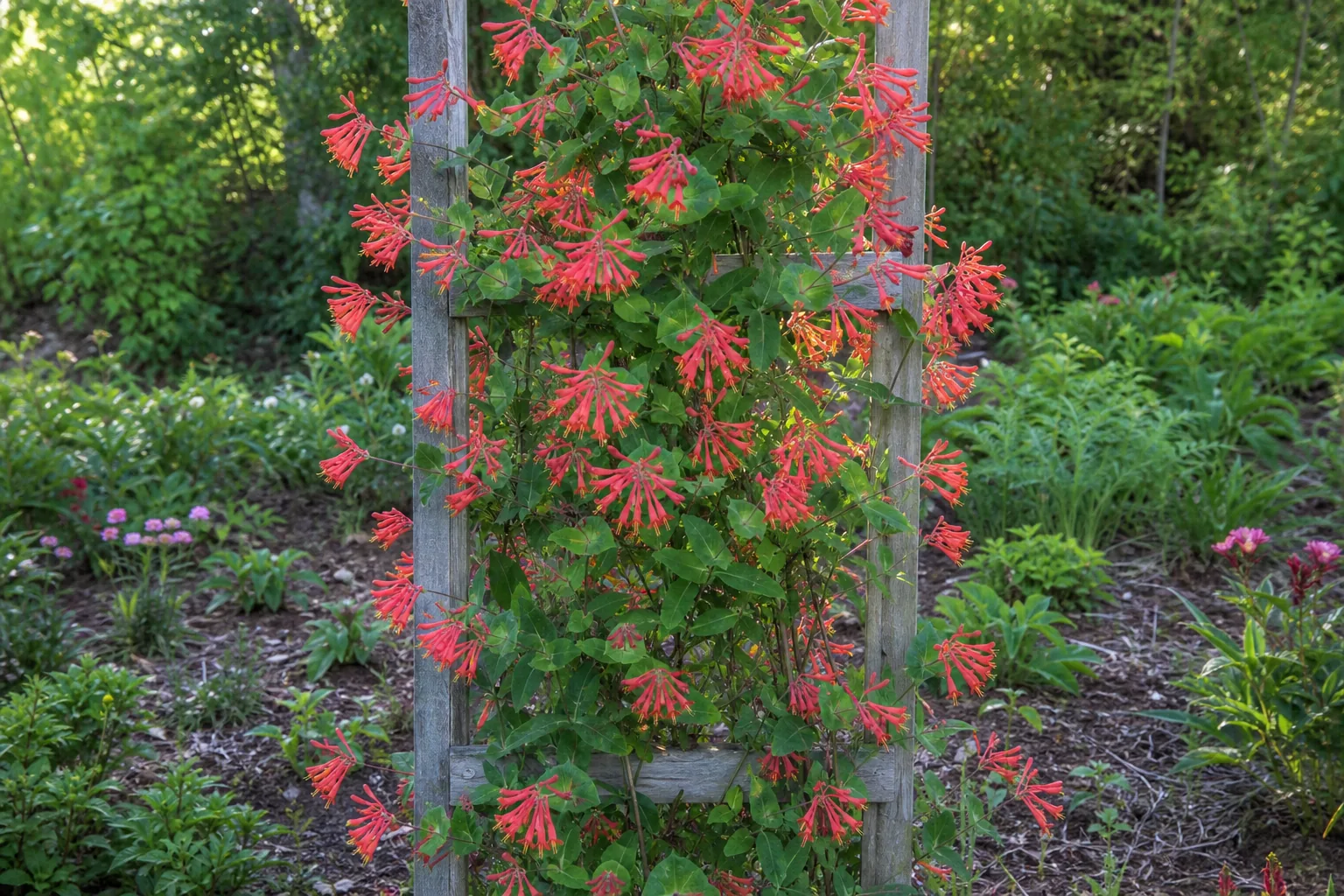
Coral honeysuckle (Lonicera sempervirens) is a twining native vine that rewards simple attention. Plant it in full sun in average, medium-moisture, well-drained soil, and give the twining stems a trellis, arbor, or fence to climb (or allow it to sprawl as a ground cover). Water to establish, then water during extended dry spells. Because it flowers on new growth, prune right after the main bloom rather than in spring. It is evergreen to semi-evergreen in warm climates and deciduous where winters are cold.
Light
Coral honeysuckle flowers best in full sun - at least 6 hours of direct light daily. It tolerates part shade (2-6 hours) but blooms less freely there, and heavy shade produces sparse, leggy growth. Choose the sunniest spot available, especially for a heavy spring bloom.
Water
Water regularly during the first season to establish roots, then reduce. Established plants tolerate some drought and coastal salt and grow well in average, medium-moisture soil. Avoid soggy ground and water at the base; in hot, humid summers good airflow matters more than extra water.
Soil and planting
Grow in average, moist-to-medium, well-drained soil; clay, loam, and high-organic-matter soils all work, with an acid-to-neutral pH (about 6.0-8.0). It is salt-tolerant, so it suits coastal gardens. In containers use a well-drained mix and a sturdy support, water more often, and repot when rootbound in spring, refreshing the soil.
Temperature, humidity, and fertilizer
Hardy in USDA zones 4-9, coral honeysuckle is semi-evergreen in zone 8 and warmer and fully deciduous in cold-winter zones. It tolerates heat and humidity but may develop powdery mildew and leaf spots in crowded, humid sites, so space for airflow. Fertilizer is rarely needed; a light spring feeding is enough on poor soils.
Pruning and propagation
Prune immediately after the spring bloom, cutting out dead wood and shaping the vine, because flowers form on new growth; pruning in spring removes the coming bloom. Tip-pinch young vines to encourage branching. Propagate by softwood cuttings in summer, by layering rooted segments, or by sowing seed; named cultivars are grown from cuttings.
Common problems
Start with the pattern, current soil moisture, and recent changes. One symptom can have several causes, so change the most likely factor first and observe before making another major adjustment.
| Symptom | Check first | First action |
|---|---|---|
| Powdery coating on leaves in humid weather | Check airflow, crowding, and overhead watering. | Improve spacing and airflow, water at the base, and remove affected foliage. |
| Few flowers | Check sun exposure and whether the vine was pruned in spring. | Move to full sun and prune only after flowering. |
| Sparse, leggy growth | Check light and whether the twining stems have a support. | Give full sun and a trellis, and pinch young tips to encourage branching. |
| Leaves chewed or distorted | Check for aphids and leaf miners on new growth. | Hose off aphids and use cultural controls; the damage is rarely serious. |
| Vine looks bare after winter | Check whether winter cold killed foliage (normal in cold zones). | Leave dead tips until spring growth begins, then prune back to live wood. |
Pet and household safety
Coral honeysuckle is considered non-toxic to cats and dogs: it is not listed in the ASPCA toxic and non-toxic database, and NC State Extension lists no toxicity warning for the species. Non-toxic does not mean edible - the red berries are inedible, and any large amount of plant material can cause mild stomach upset, so discourage chewing and contact a veterinarian if a pet shows persistent signs.
Frequently asked questions
How much sun does coral honeysuckle need?
Full sun for the heaviest bloom; it tolerates part shade but flowers less freely.
How often should I water coral honeysuckle?
Water to establish, then during dry spells; it is drought tolerant once settled.
What soil suits coral honeysuckle?
Average, well-drained soil from clay to loam, acid to neutral pH, even salty coastal soil.
When do I prune coral honeysuckle?
Right after flowering, because it blooms on new growth; spring pruning removes the coming bloom.
Why did my honeysuckle stop blooming?
Usually too much shade, pruning in spring, or a young plant; give full sun and prune after bloom.
Is coral honeysuckle safe for pets?
Considered non-toxic to cats and dogs - not on the ASPCA list and no NC State warning - though the berries are inedible.
Sources and editorial review
This editorial draft is based on the sources below and awaits named horticulture-expert approval before publication.
- Lonicera sempervirensRoyal Botanic Gardens, Kew (Plants of the World Online) · Checked
- Toxic and Non-Toxic Plants ListASPCA · Checked
- Lonicera sempervirensNorth Carolina State University Extension · Checked
- Lonicera sempervirensMissouri Botanical Garden · Checked
What works well
- Brilliant scarlet-orange tubular flowers loved by hummingbirds from spring to summer.
- Native, low-maintenance, and tolerant of clay soil, salt, and dry conditions once established.
- Considered non-toxic to cats and dogs (not listed in the ASPCA database; no toxicity warning from NC State).
What to consider
- The red berries are inedible, and the vine can mildew in hot, humid summers without airflow.
- Twining stems need a support; without pruning it sprawls as a ground cover.
- Semi-evergreen to deciduous - it can look bare in cold winters.