Key takeaways
- Plant in full sun in rich, well-drained soil with the crown only 1-2 inches deep.
- Water through the season and support heavy blooms; avoid deep planting.
- All parts are toxic to pets (paeonol) - keep dogs and cats from chewing.
How to care for common peony
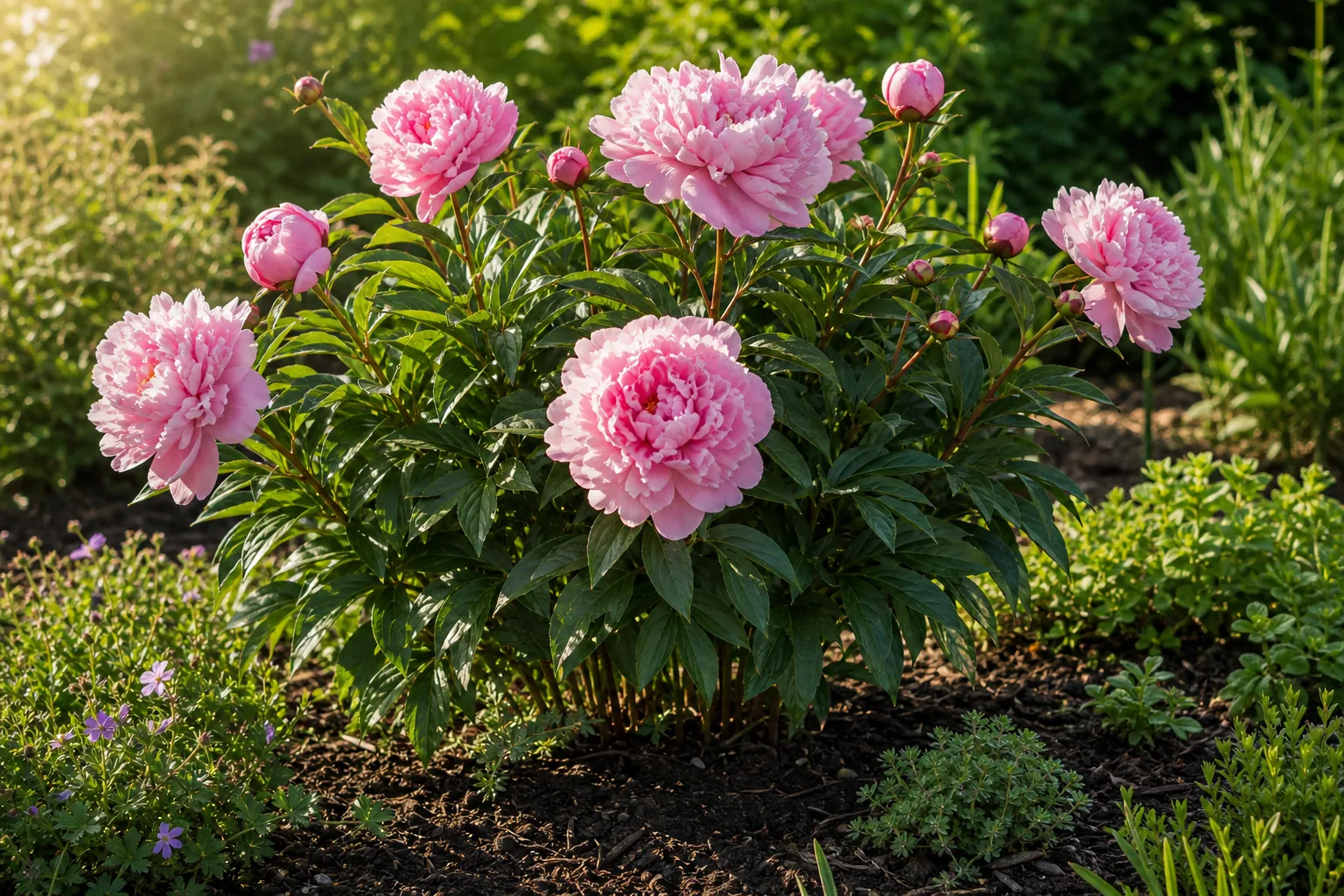
Common peony (Paeonia lactiflora) is a long-lived perennial that rewards patience. Plant in full sun in rich, well-drained soil, setting the pink crown buds only 1-2 inches below the surface - too deep means no blooms. Water to establish and during dry spells, and apply a low mound of support rings before stems lengthen to hold heavy flowers. Peonies dislike being disturbed, so plant once in a permanent spot and divide only when clumps are very old (every 10+ years). A spring mulch and balanced feed support flowering.
Light
Peonies need full sun - at least 6 hours of direct light daily - for the best bloom; in hot climates a little afternoon shade helps flowers last. Too much shade reduces flowering and makes plants leggy and disease-prone.
Water
Water moderately and deeply, about 1 inch per week during the growing season, more in heat and drought. Peonies are fairly drought tolerant once established but bloom and look best with steady moisture at the root zone; avoid wetting foliage to limit botrytis blight.
Soil and planting
Plant in rich, fertile, well-drained soil with a neutral pH; amend with compost. Crucially, plant shallowly - the crown 1-2 inches deep - because deep planting prevents flowering. In containers use a deep, freely draining mix and repot only when badly crowded; peonies are best in the ground.
Temperature, humidity, and fertilizer
Hardy in USDA zones 3-8, peonies need a cold winter dormancy to set buds. High humidity raises the risk of botrytis blight, so space for airflow. Feed in spring with a balanced fertilizer as shoots emerge; avoid excess nitrogen, which favors foliage over flowers.
Pruning and propagation
In autumn cut stems back to the ground after frost. Propagate by division in autumn: dig the clump and separate with 3-5 eyes (buds) per piece, replanting shallowly. Seed is slow and not true to type for cultivars.
Common problems
Start with the pattern, current soil moisture, and recent changes. One symptom can have several causes, so change the most likely factor first and observe before making another major adjustment.
| Symptom | Check first | First action |
|---|---|---|
| No flowers for years | Check planting depth and plant age; peonies hate deep planting or moving. | Replant shallowly (crown 1-2 in deep) in a permanent spot; wait for maturity. |
| Grey mould on buds and stems | Check for botrytis blight in humid, wet weather. | Improve airflow, avoid overhead watering, and remove affected parts. |
| Flopping heavy blooms | Check support; peony flowers are heavy. | Set support rings early and stake stems before they lengthen. |
| Leaves yellowing | Check drainage and watering. | Improve soil drainage and water evenly; avoid soggy soil. |
| Ants on buds | Check buds; ants are attracted to nectar and are harmless. | Leave them or rinse off; they do not harm the plant. |
Pet and household safety
Peony is toxic to dogs, cats, and horses according to the ASPCA. The toxic principle is paeonol (concentrated in the bark and roots, also present in other parts), and clinical signs include vomiting, diarrhea, and depression after ingestion. Keep pets from chewing the plant and contact a veterinarian if ingested.
Frequently asked questions
Why won't my peony bloom?
Usually planted too deep or disturbed; the crown should be only 1-2 inches deep and left undisturbed.
How much sun does peony need?
Full sun - at least 6 hours daily; afternoon shade in hot climates helps flowers last.
When and how do I divide peony?
In autumn every 10+ years; dig and split into pieces with 3-5 buds, replanting shallowly.
Should I worry about ants on peony buds?
No - ants are after nectar and harmless; they do not damage the plant.
How do I prevent botrytis on peony?
Improve airflow, avoid overhead watering, and cut stems to the ground in autumn.
Are peonies safe for pets?
No - the ASPCA lists peony as toxic to dogs, cats, and horses (paeonol). Keep pets away.
Sources and editorial review
This editorial draft is based on the sources below and awaits named horticulture-expert approval before publication.
- Paeonia lactifloraRoyal Botanic Gardens, Kew (Plants of the World Online) · Checked
- PeonyASPCA · Checked
- Paeonia lactifloraMissouri Botanical Garden · Checked
- PeonyNorth Carolina State University Extension · Checked
What works well
- Long-lived, low-maintenance perennial with fragrant showy flowers.
- Excellent cut flower and strong border presence.
- Deer resistant and durable once established.
What to consider
- Toxic to dogs, cats, and horses (paeonol) if ingested.
- Slow to establish and resents being moved or planted too deep.
- Heavy blooms may need staking; ants on buds are normal but unwelcome.