Key takeaways
- Scarify seeds (nick the coat or soak overnight) and sow after frost in full sun and well-drained soil.
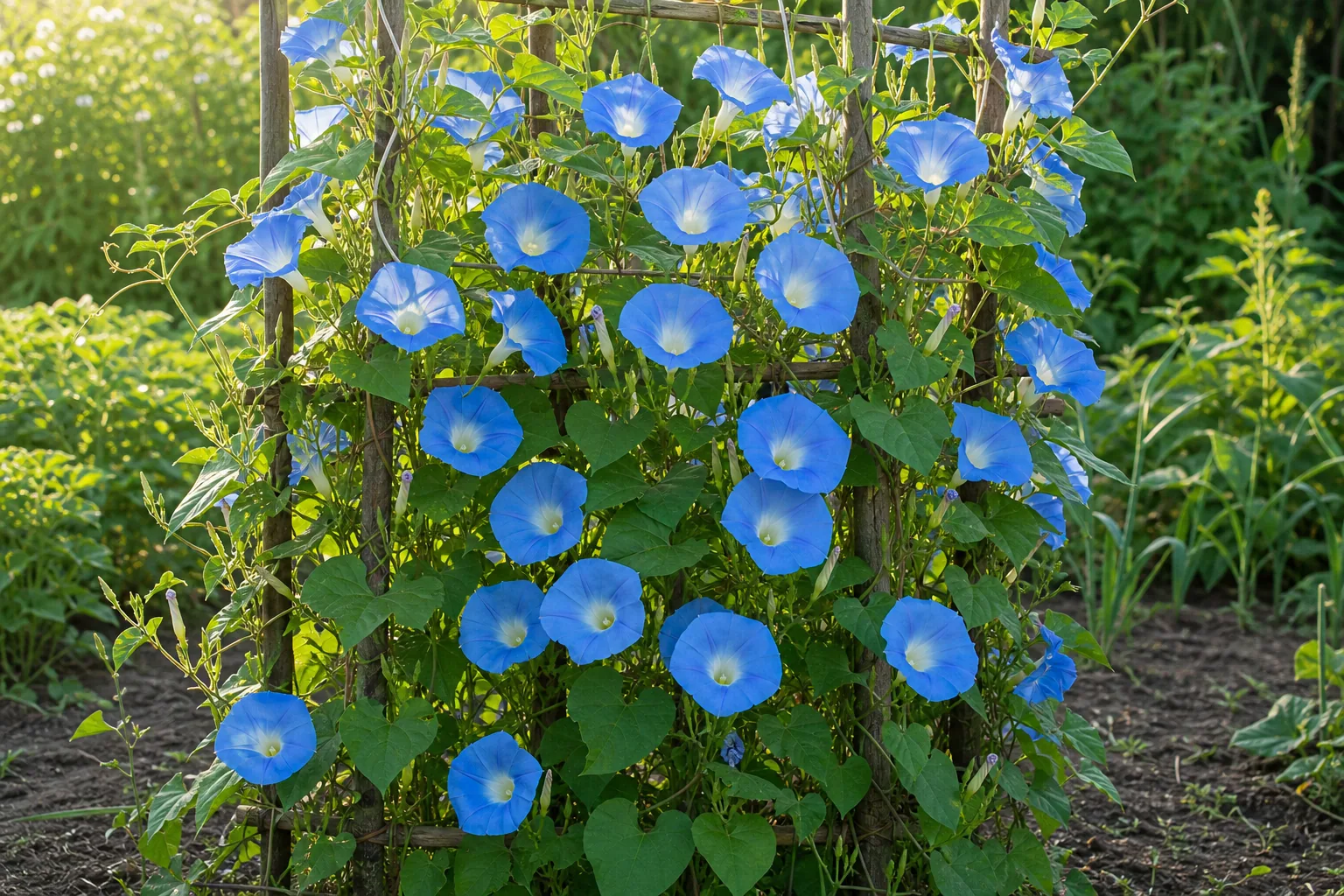
- Fast, twining cover for fences, trellises, and arbors - one vine can climb 10-15 feet in a season.
- Deadhead before seed pods ripen; the plant self-seeds aggressively and the seeds are toxic to pets.
How to care for common morning glory
Common morning glory (Ipomoea purpurea) is a twining annual that needs little more than sun, a support, and seed. Install the trellis, fence, or strings before planting. Scarify the hard seeds - nick them or soak overnight - then sow outdoors after the last frost in full sun and well-drained, average soil. Keep young plants evenly moist, then water only when the soil dries; over-rich soil and heavy feeding produce leaves at the expense of flowers. Deadhead spent blooms before pods form if you want to slow self-seeding.
Light
Morning glory needs full sun - at least 6 hours of direct light - for heavy flowering. In shade it grows lanky and blooms poorly. Flowers open in the morning and close by early afternoon in hot, sunny weather, which is the plant's normal rhythm.
Water
Water regularly while establishing, then moderately once growing. Morning glory is fairly drought tolerant but blooms best with even moisture; avoid soggy, waterlogged ground. Let the top inch or two of soil dry between waterings.
Soil and planting
Grow in well-drained, poor to average soil; morning glory tolerates most conditions but dislikes heavy, soggy ground. In containers use a freely draining potting mix with a trellis or strings, water more often than in-ground plants, and start fresh from seed each year rather than repotting.
Temperature, humidity, and fertilizer
Morning glory is a warm-season annual that grows through summer and dies at frost; it thrives in warm weather and needs no winter protection. Fertilizer is best avoided or kept very light, because too much nitrogen encourages rampant growth and few flowers. Good airflow and avoiding wet foliage limit mildew in humid summers.
Pruning and propagation
No real pruning is needed; just guide young stems to the support, trim any rampant shoots, and deadhead before pods form to control seed. Propagate by seed: scarify the hard seed coat (nick or soak overnight), sow after frost, or start indoors 4-6 weeks early. The plant reseeds itself readily.
Common problems
Start with the pattern, current soil moisture, and recent changes. One symptom can have several causes, so change the most likely factor first and observe before making another major adjustment.
| Symptom | Check first | First action |
|---|---|---|
| Vines grow lush but few flowers | Check soil fertility and light. | Move to full sun and stop fertilizing; poor, average soil gives more blooms. |
| Seedlings fail to appear | Check seed treatment and soil temperature. | Scarify seeds (nick or soak overnight) and sow after the soil warms. |
| Hundreds of volunteers next spring | Check for mature seed pods left on the vines. | Deadhead before pods ripen or pull volunteer seedlings early. |
| White, powdery coating on leaves | Check for powdery mildew in crowded or humid spots. | Improve airflow, avoid overhead watering, and remove affected foliage. |
| Flowers close by mid-morning | Check the time of day and heat - this is normal for morning glory. | Enjoy the bloom cycle; fresh flowers open each morning and shrivel in midday heat. |
Pet and household safety
Common morning glory (Ipomoea purpurea) is toxic to dogs, cats, and horses according to the ASPCA. The toxic principles are indole alkaloids (lysergic acid, lysergamide, elymoclavine, and chanoclavine), concentrated in the seeds; clinical signs include vomiting, and large amounts of seeds may cause hallucinations. NC State Extension likewise rates the plant as low-severity poison with the seeds as the toxic part. Keep seed pods out of reach of pets, deadhead before pods mature, and contact a veterinarian after any substantial seed ingestion.
Frequently asked questions
How much sun do morning glories need?
Full sun - at least 6 hours of direct light. Shade reduces flowering and makes the vines lanky.
Why do morning glory flowers close by noon?
That is the plant's normal habit: each trumpet opens in the morning and shrivels by midday in heat, and a fresh flower opens the next day.
How do I get morning glory seeds to germinate?
Nick or file the hard seed coat, or soak seeds overnight in warm water, then sow after frost in warm soil.
Are morning glories invasive?
They self-seed aggressively and can become weedy. Deadhead before pods form or pull volunteers early to control them.
Can I grow morning glory in a container?
Yes - use a 12-inch or larger pot with a trellis or strings, a freely draining mix, and more frequent watering.
Is morning glory safe for pets?
No - the ASPCA lists morning glory as toxic to dogs, cats, and horses; the seeds contain indole alkaloids. Prevent pets from eating the seeds.
Sources and editorial review
This editorial draft is based on the sources below and awaits named horticulture-expert approval before publication.
- Ipomoea purpureaRoyal Botanic Gardens, Kew (Plants of the World Online) · Checked
- Morning GloryASPCA · Checked
- Ipomoea purpureaNorth Carolina State University Extension · Checked
- Morning Glory, Common Ipomoea purpureaUniversity of Illinois Extension · Checked
What works well
- Rapid, dependable cover with fresh trumpet blooms daily from midsummer to frost.
- Attracts hummingbirds, butterflies, and specialized bees.
- Easy from seed and tolerant of poor, dry soil.
What to consider
- Self-seeds aggressively and can become weedy.
- Seeds are toxic to cats, dogs, and horses (indole alkaloids).
- Flowers open only in the morning and close by midday in heat.