Key takeaways
- Plant in part shade in rich, moist, well-drained soil; water consistently.
- Let plants self-sow or sow seed for bloom the following year.
- Highly toxic to pets and people - keep children and animals away.
How to care for common foxglove
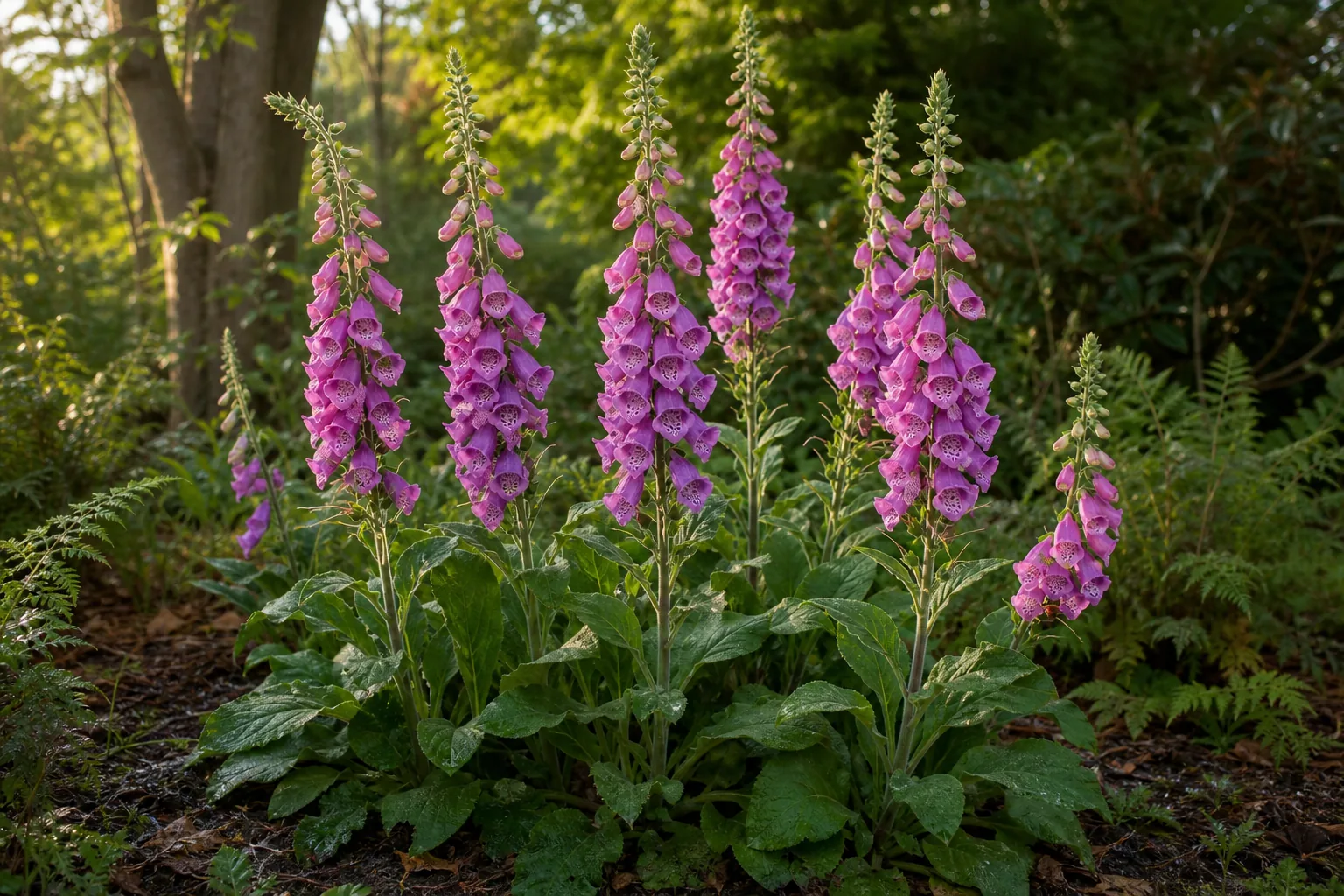
Common foxglove (Digitalis purpurea) is grown from seed, usually sown in spring or summer for bloom the following year (it forms a rosette the first year, then flowers the next). Plant in part shade in rich, moist, well-drained soil, spacing 12-24 inches apart and keeping the crown at the soil line. Water consistently so the soil never dries out completely, and mulch to keep roots cool. Remove flower spikes after bloom if you do not want self-sowing, or leave a few to drop seed for future years. In cold, wet winters improve drainage to avoid crown rot.
Light
Foxglove performs best in part shade - morning sun with afternoon protection, especially in warm zones. It tolerates full sun in cool, humid climates if soil stays moist, but deep shade reduces flowering and makes plants leggy.
Water
Water regularly to keep the soil evenly moist; foxglove has shallow roots and wilts in dry soil. Aim for about 1 inch per week, more in heat and drought, and never let the root zone dry out. Mulch to conserve moisture and keep crowns cool.
Soil and planting
Plant in rich, humusy, moist, well-drained soil with a slightly acidic pH. Improve clay or sand with compost. In containers use a deep, moisture-retentive, freely draining mix; foxglove is usually grown in the ground and treated as a biennial rather than repotted.
Temperature, humidity, and fertilizer
Hardy in USDA zones 4-9, foxglove likes cool, moist conditions and suffers in hot, dry sites. Good air circulation limits foliar disease. Feed in spring with a balanced fertilizer as growth starts; avoid high nitrogen, which softens stems.
Pruning and propagation
Cut flower spikes to the basal foliage after bloom to encourage a possible second flush, or leave a few to self-sow. Propagate by seed sown in spring or summer (needs light to germinate, so press in, do not bury); named cultivars may not come true from seed.
Common problems
Start with the pattern, current soil moisture, and recent changes. One symptom can have several causes, so change the most likely factor first and observe before making another major adjustment.
| Symptom | Check first | First action |
|---|---|---|
| No flowers in the first year | Check plant age; foxglove is a biennial with a first-year rosette. | Expect bloom in year two; sow seed yearly for continuous flowering. |
| Wilting in dry soil | Check moisture; foxglove has shallow roots. | Water regularly and mulch to keep soil cool and moist. |
| Powdery or spotted leaves | Check for powdery mildew or leaf spot in humid weather. | Improve airflow, avoid overhead watering, and remove affected leaves. |
| Crown rot in wet winters | Check drainage; crowns rot in soggy soil. | Improve soil drainage and avoid wet sites; lift and discard affected plants. |
| Animal or child ingestion | Check access; all parts are highly toxic. | Site away from children and pets; contact a veterinarian or poison line if eaten. |
Pet and household safety
Foxglove is highly toxic to dogs, cats, and horses according to the ASPCA. The toxic principles are cardiac glycosides (digitoxin and digoxin) in the leaves, flowers, and seeds; clinical signs include vomiting, diarrhea, abnormal heart rate, weakness, and collapse. All parts are dangerous, including dried material and water from cut stems - keep pets and children away and contact a veterinarian or poison control immediately if ingested.
Frequently asked questions
Why doesn't my foxglove flower the first year?
It is a biennial: it makes a leaf rosette the first year and blooms the second; sow seed yearly for continuous flowering.
How much sun does foxglove need?
Part shade is best - morning sun with afternoon protection; tolerate full sun in cool, moist climates.
How often should I water foxglove?
Regularly to keep soil evenly moist; it wilts in dry soil and has shallow roots.
Should I let foxglove self-sow?
Yes - leave a few flower spikes to drop seed so plants return each year; remove others to control spread.
How do I avoid crown rot?
Improve drainage and avoid wet sites, especially in cold winters; mulch but do not pile on crowns.
Is foxglove safe for pets?
No - the ASPCA lists foxglove as highly toxic to dogs, cats, and horses (cardiac glycosides). Keep pets and children away.
Sources and editorial review
This editorial draft is based on the sources below and awaits named horticulture-expert approval before publication.
- Digitalis purpureaRoyal Botanic Gardens, Kew (Plants of the World Online) · Checked
- FoxgloveASPCA · Checked
- Digitalis purpureaMissouri Botanical Garden · Checked
- FoxgloveNorth Carolina State University Extension · Checked
What works well
- Dramatic vertical spikes that attract hummingbirds and bees.
- Good for part-shade borders, woodland edges, and cottage gardens.
- Self-sows readily, returning year after year in the right spot.
What to consider
- Highly toxic to dogs, cats, and horses (cardiac glycosides).
- Biennial or short-lived, so it needs self-sowing to persist.
- Susceptible to powdery mildew, leaf spot, and crown rot in wet soil.