Key takeaways
- Plant in full sun to part shade in rich, well-drained soil with a neutral to slightly alkaline pH (about 6.5-7.5).
- Water deeply and regularly the first year, then keep the root zone evenly moist but never soggy.
- Shear in late winter or early summer and thin interior growth for air flow to prevent boxwood blight.
How to care for common boxwood
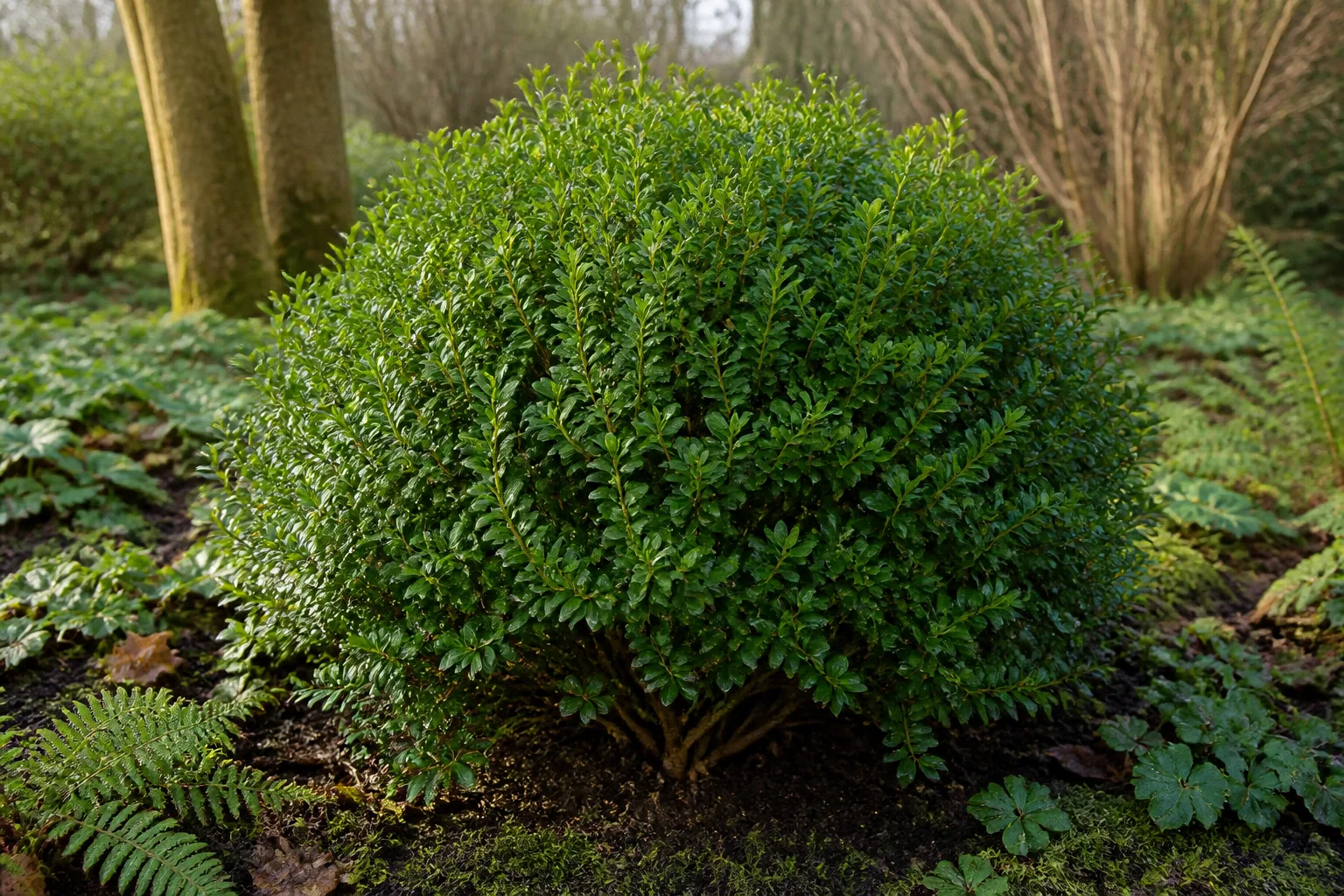
Common boxwood (Buxus sempervirens) is a tidy evergreen that rewards good siting more than constant work. Plant it in full sun to part shade in rich, well-drained soil, setting the crown at the soil line and spacing 2-3 ft for hedges so air moves through. Water deeply through the first season and mulch 1-2 in to keep roots cool, refreshing the layer yearly. Avoid piling mulch against the stems, which invites disease. Thin crowded interior branches each year so light and air reach the center and reduce fungal problems.
Light
Boxwood grows in full sun to part shade. In hot climates afternoon shade reduces leaf scorch and winter burn; in cool climates full sun keeps plants dense. Too much shade makes foliage thin and open and raises disease risk.
Water
Water new plants regularly for the first year, then keep the root zone evenly moist - about 1 in per week - without waterlogging. Boxwood has shallow roots and suffers in both drought and soggy soil; drip irrigation aimed at the base is ideal. Let the top few inches dry slightly between waterings.
Soil and planting
Boxwood wants fertile, well-drained soil with a neutral to slightly alkaline pH (about 6.5-7.5). Amend clay with compost and grit, and avoid acidic sites unless limed. In containers use a loam-based, freely draining mix and repot only when rootbound, keeping the crown at the soil surface.
Temperature, humidity, and fertilizer
Hardy in USDA zones 5-8, boxwood dislikes harsh winter wind and bright winter sun that cause bronze, burned foliage (winter burn). Site for protection and water well going into winter. Fertilize lightly in spring with a balanced, slow-release feed; overfeeding produces soft growth prone to blight. Good air circulation is the best defense against fungal disease.
Pruning and propagation
Shear formal hedges in late winter and again lightly in early summer after the flush; always leave some green growth, since boxwood will not regrow from bare old wood. Thin a few interior stems yearly to open the plant. Propagate from semi-hardwood cuttings in summer or layer low branches; start new plants from 3-4 in tip cuttings with the lower leaves removed.
Common problems
Start with the pattern, current soil moisture, and recent changes. One symptom can have several causes, so change the most likely factor first and observe before making another major adjustment.
| Symptom | Check first | First action |
|---|---|---|
| Bronzed, scorched, or dying winter foliage | Check for winter burn from wind and sun plus dry soil going into winter. | Site out of wind, water well in fall, apply winter mulch, and use burlap screens in cold zones. |
| Rapid browning and blackened stems in humid weather | Check for boxwood blight (streaked stems, leaf drop, white fungal growth). | Remove and destroy affected material, improve air flow, avoid overhead water, and consult a diagnostic lab if spread is fast. |
| Yellowing leaves with webbing or curled foliage | Check for boxwood leaf miner or spider mites. | Prune affected tips, improve air flow, and use targeted controls; avoid broad insecticide sprays that kill beneficials. |
| Sparse, open interior with dieback | Check density, mulch against stems, and poor drainage. | Thin for air, keep mulch off stems, and improve drainage; replant if the crown has rotted. |
| Wilting despite moist soil | Check for root rot from poor drainage or overwatering. | Improve drainage, water less, and replant in a raised bed or mound if needed. |
Pet and household safety
Common boxwood is toxic to dogs, cats, and horses according to the ASPCA. The toxic principles are steroidal alkaloids (notably buxin and cycloprotobuxine) concentrated in the leaves; clinical signs include vomiting, diarrhea, drooling, and in severe cases muscle tremors or seizures. The bark and roots are most concentrated, but prevent pets from chewing any part and call a veterinarian after substantial ingestion.
Frequently asked questions
How much sun does boxwood need?
Full sun to part shade. Afternoon shade helps in hot climates; too much shade thins the plant and invites disease.
How often should I water boxwood?
About 1 inch per week, evenly, once established. It has shallow roots and dislikes both drought and soggy soil.
What soil does boxwood prefer?
Fertile, well-drained soil with a neutral to slightly alkaline pH (about 6.5-7.5). Avoid wet, acidic sites.
When and how do I prune boxwood?
Shear hedges in late winter and lightly again in early summer; never cut into bare old wood, which will not regrow.
Why are my boxwood leaves turning brown?
Usually winter burn, boxwood blight, or leaf miner. Check sun and wind exposure and look for blackened stems or leaf mining; improve air flow.
Is boxwood safe for pets?
No - the ASPCA lists boxwood as toxic to dogs, cats, and horses (buxin and cycloprotobuxine alkaloids). Keep pets from chewing it.
Sources and editorial review
This editorial draft is based on the sources below and awaits named horticulture-expert approval before publication.
- Buxus sempervirensRoyal Botanic Gardens, Kew (Plants of the World Online) · Checked
- BoxwoodASPCA · Checked
- Buxus sempervirensMissouri Botanical Garden · Checked
- Buxus sempervirensNorth Carolina State University Extension · Checked
What works well
- Evergreen structure that holds its shape year-round for hedges and topiary.
- Tolerates heavy pruning and formal shaping better than almost any other shrub.
- Deer resistant and long-lived when sited and drained well.
What to consider
- Toxic to dogs, cats, and horses if eaten (alkaloids such as buxin and cycloprotobuxine).
- Prone to boxwood blight, leaf miner, and winter burn in exposed sites.
- Hates wet feet and hot, humid, poorly drained conditions.