Key takeaways
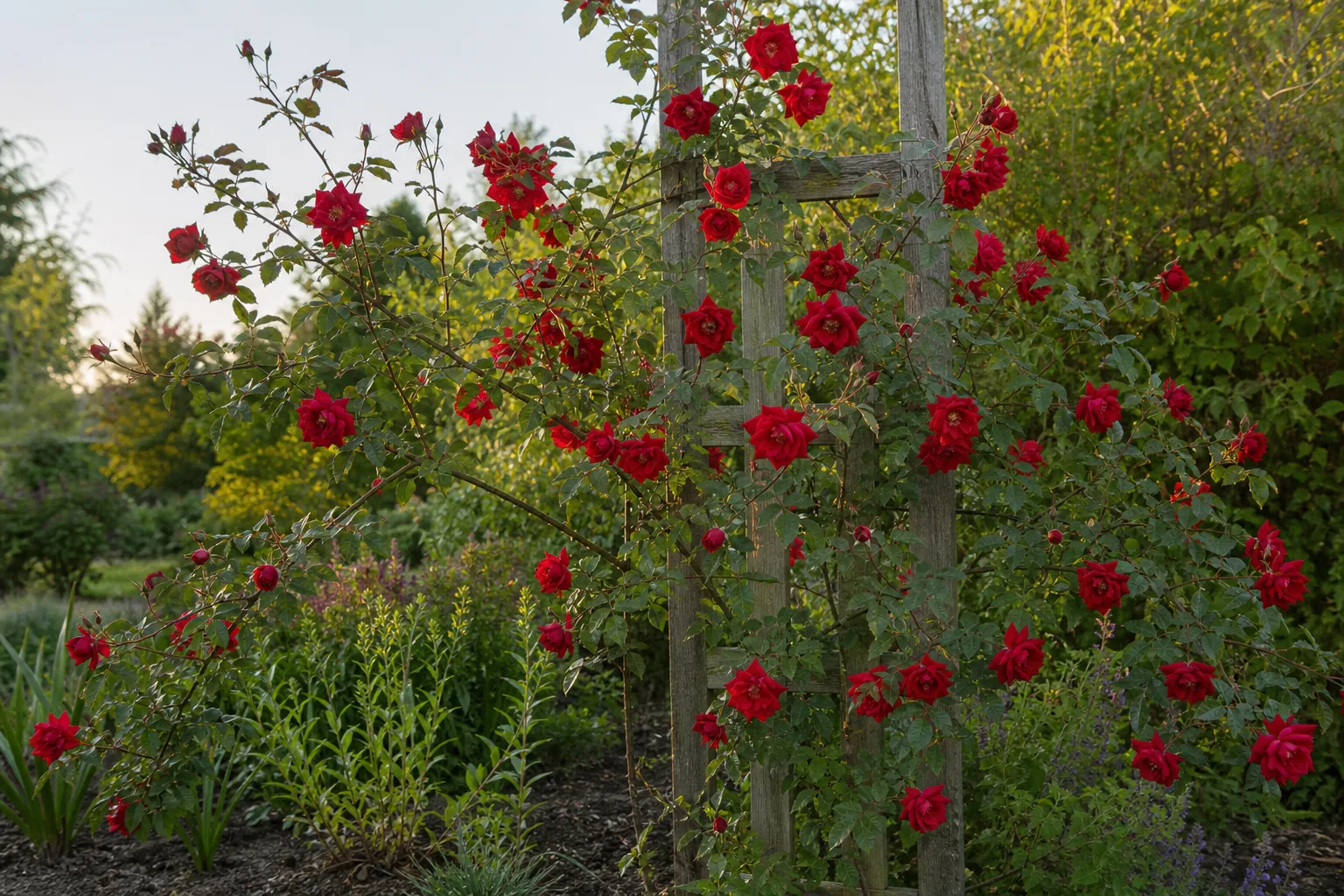
- Give climbing roses at least 6 hours of full sun and a sturdy support; most grow 8-15 ft depending on the cultivar.
- Train the main canes horizontally and prune the side shoots in early spring to maximize flowering.
- Water deeply during establishment and feed with a rose fertilizer in spring; mulch to keep the roots cool.
How to care for climbing roses
Climbing roses (Rosa Climbing Group) are roses bred with long, flexible canes rather than a shrubby frame. Plant them in full sun in organically rich, well-drained soil, 6-12 inches from the support, and fan the canes out over a wall, fence, arch, or trellis. Train the main canes as horizontally as possible - horizontal canes produce far more flowering side shoots. Water deeply to establish, mulch to keep the roots cool, feed in spring, and prune only once the plant has had a couple of seasons to build its framework.
Light
Roses need full sun - at least 6 hours of direct light daily - for heavy flowering and healthy foliage. Too much shade produces leggy growth, fewer blooms, and more foliar disease. In very hot climates a little afternoon shade can prevent stress, but in most gardens choose the sunniest wall or fence you have.
Water
Water deeply and regularly during the first season to establish deep roots. Established climbers want about an inch of water per week in dry spells, delivered at the base; avoid wetting the foliage, which invites black spot and powdery mildew. Mulch 2-3 inches around the base to conserve moisture and keep the roots cool.
Soil and planting
Plant in organically rich, well-drained soil with a slightly acidic to neutral pH. Work compost into the planting hole and set the graft union at or just below the soil line in cold zones. Roses grown in containers need a large pot, a rich freely draining mix, and more frequent water; repot in early spring only when rootbound, refreshing the soil.
Temperature, humidity, and fertilizer
Hardiness follows the cultivar (many climbers are USDA 4-9); cold, drying winter winds and late frosts can damage canes. Good airflow and dry foliage limit black spot and mildew in humid summers. Feed with a balanced rose fertilizer in spring as growth begins, and stop feeding by late summer so the canes harden off before winter.
Pruning and propagation
For the first two seasons, prune only dead or diseased wood so the main canes build a framework. Once established, prune climbers in early spring: remove winter-damaged and old, unproductive canes, and cut the flowering side shoots back to 3-6 inches. Train new canes horizontally to replace old ones. Propagate by hardwood cuttings or by budding onto rootstock; named cultivars require vegetative propagation to come true.
Common problems
Start with the pattern, current soil moisture, and recent changes. One symptom can have several causes, so change the most likely factor first and observe before making another major adjustment.
| Symptom | Check first | First action |
|---|---|---|
| Black spots on leaves that yellow and drop | Check for black spot in humid, wet weather with poor airflow. | Remove affected leaves, water at the base, and improve airflow; apply a fungicide only if severe. |
| White powdery coating on buds and leaves | Check humidity, crowding, and overhead watering. | Improve airflow and spacing, avoid wetting foliage, and remove badly infected shoots. |
| Few blooms on a mature climber | Check pruning timing and whether canes are trained vertically instead of horizontally. | Train the canes horizontally and prune side shoots in early spring to stimulate flowering wood. |
| Chewed flowers and skeletonized leaves | Check for Japanese beetles during summer. | Hand-pick in the morning and use traps away from the plant; control grubs in the lawn. |
| Suckers at the base | Check below the graft union on budded roses. | Pull suckers off at the root where they emerge rather than cutting them, which encourages regrowth. |
Pet and household safety
Roses are listed as non-toxic to dogs, cats, and horses on the ASPCA plant list. Non-toxic does not mean harmless to chew - the thorns can injure mouths, and large amounts of rose hips or foliage can cause mild stomach upset. Discourage chewing and contact a veterinarian after substantial ingestion or a thorn injury.
Frequently asked questions
How much sun do climbing roses need?
At least 6 hours of full sun daily for heavy bloom and healthy foliage; shade reduces flowering and invites disease.
How often should I water climbing roses?
Deeply about once a week in dry spells, at the base; avoid wetting the foliage.
How do I train a climbing rose?
Bend and tie the main canes as horizontally as possible to encourage flowering side shoots along their length.
When do I prune climbing roses?
In early spring once the plant is established; remove old wood and cut the side shoots back to 3-6 inches.
Why isn't my climbing rose blooming?
Check light, nitrogen, and cane training; horizontal canes and balanced feeding fix most cases.
Are roses safe for pets?
Yes - the ASPCA lists roses as non-toxic to dogs, cats, and horses, though the thorns can cause injury.
Sources and editorial review
This editorial draft is based on the sources below and awaits named horticulture-expert approval before publication.
- Rosa (genus)Royal Botanic Gardens, Kew (Plants of the World Online) · Checked
- RoseASPCA · Checked
- RosaNorth Carolina State University Extension · Checked
- Pruning RosesUniversity of Illinois Extension · Checked
What works well
- Long, arching canes cover walls, fences, arches, and trellises with color and fragrance.
- Repeat-flowering climbers bloom from late spring well into autumn.
- Roses are non-toxic to dogs, cats, and horses per the ASPCA (thorn injuries aside).
What to consider
- Susceptible to black spot, powdery mildew, and Japanese beetles in humid or crowded sites.
- Demand regular pruning, training, and feeding to flower well.
- Thorns and heavy canes require sturdy, well-anchored supports; climbing roses are large plants.