Key takeaways
- Grow in part shade to full shade in rich, moist, well-drained soil against a wall, fence, or arbor.
- Clings by aerial rootlets - give it a rough, stable surface; be patient, as it is slow to establish and bloom.
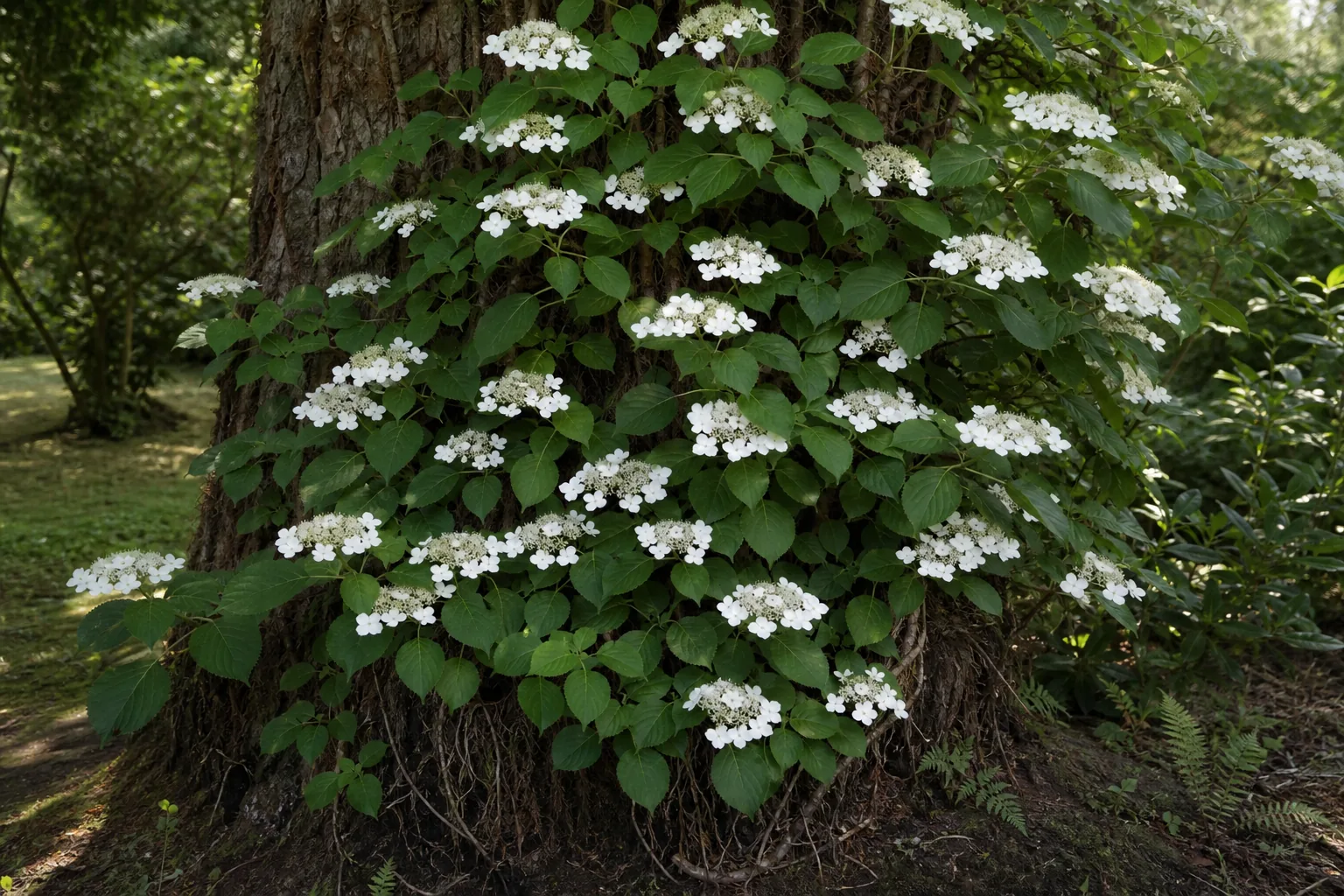
- Once established it can climb 30-60 feet, with fragrant white lacecap flowers in early summer.
How to care for climbing hydrangea
Climbing hydrangea (Hydrangea petiolaris) is a slow-starting but eventually vigorous self-clinging vine. Plant it against a rough masonry wall, fence, or arbor, or let it climb a large tree, in part shade to full shade with rich, moist, well-drained soil. The vine attaches by aerial rootlets, so it needs a stable, unpainted surface it can grip. Be patient: it is slow to establish and may not flower for several years, but once established it covers walls impressively and has few problems. Keep the root zone mulched and moist in the early years.
Light
Climbing hydrangea performs best in part shade to full shade. It tolerates full sun only where the soil stays consistently moist. In most gardens, morning sun with afternoon shade, or a north-facing wall, suits it well; deep shade is fine, with flowering somewhat reduced.
Water
Water consistently to keep the soil moist but well drained, especially during establishment. Established vines are reasonably drought tolerant but look and flower best with regular moisture. Mulch 2-3 inches deep to keep the shallow roots cool and moist.
Soil and planting
Grow in rich, fertile, humus-rich, moist but well-drained soil, tolerating clay, loam, or sand. Add organic matter at planting and keep the root zone mulched. Container growing is possible for a few years in a large pot with a trellis and a moist, free-draining mix, but this vine is really a permanent landscape plant.
Temperature, humidity, and fertilizer
Hardy in USDA zones 4-8, climbing hydrangea thrives in cool, moist conditions and is somewhat intolerant of the hot, humid deep South, where it may not thrive in zone 8. It is very winter-hardy. Fertilizer is rarely needed; a light spring application of compost or a balanced slow-release feed supports establishment, and avoid forcing late soft growth.
Pruning and propagation
Little pruning is needed - mostly removing dead wood and trimming wayward side shoots back to a pair of buds to keep the vine flat against its support. Prune right after flowering if shaping is needed. Propagate by layering (easiest, since stems root where they touch soil), by softwood stem cuttings in summer, or by seed.
Common problems
Start with the pattern, current soil moisture, and recent changes. One symptom can have several causes, so change the most likely factor first and observe before making another major adjustment.
| Symptom | Check first | First action |
|---|---|---|
| Vine grows but never blooms | Check plant age and establishment - climbing hydrangea is famously slow to flower. | Be patient; give it time (often 3-5 or more years), avoid heavy nitrogen, and keep moisture even. |
| Slow or stalled establishment after planting | Check root moisture and planting depth. | Water consistently, mulch, and avoid disturbing the roots; establishment takes a few seasons. |
| Scorched or browned leaf margins in sun | Check exposure and soil moisture. | Move to shadier ground or water consistently; full sun requires constantly moist soil. |
| Plant fails to cling to the wall | Check the surface - paint, sealant, or very smooth surfaces give the aerial rootlets nothing to grip. | Provide a rough surface or a trellis, or attach the stems with ties until established. |
| Yellowing leaves in humid summer | Check for overly wet roots or heat stress in warm climates. | Improve drainage, mulch, and ensure airflow; some plants struggle in the deep South. |
Pet and household safety
Climbing hydrangea (Hydrangea petiolaris) is toxic to cats and dogs. The ASPCA lists Hydrangea as toxic to dogs, cats, and horses, with the toxic principle a cyanogenic glycoside and clinical signs of vomiting, depression, and diarrhea - cyanide intoxication is rare, and ingestion usually causes gastrointestinal upset. NC State Extension flags the species as poisonous. Keep pets from chewing the leaves, buds, and flowers, and contact a veterinarian after substantial ingestion.
Frequently asked questions
How long does climbing hydrangea take to bloom?
It is slow - often 3-5 or more years after planting before flowers appear. Patience, even moisture, and avoiding excess nitrogen help.
Will climbing hydrangea damage my wall?
The aerial rootlets grip rough masonry well; on painted or sealed surfaces the vine cannot attach and may need a trellis. It rarely damages sound mortar.
How big does climbing hydrangea get?
A mature, well-established vine can climb 30-60 feet, so give it a large structure and room to spread.
Can climbing hydrangea grow in full shade?
Yes - it tolerates deep shade, though flowering is best with some light, such as morning sun or dappled shade.
How do I prune climbing hydrangea?
Minimally: remove dead wood and trim side shoots back to a pair of buds right after flowering to keep it flat and tidy.
Is climbing hydrangea safe for pets?
No - like all hydrangeas it is toxic to cats and dogs (cyanogenic glycoside). Keep pets from chewing it.
Sources and editorial review
This editorial draft is based on the sources below and awaits named horticulture-expert approval before publication.
- Hydrangea petiolarisRoyal Botanic Gardens, Kew (Plants of the World Online) · Checked
- HydrangeaASPCA · Checked
- Hydrangea petiolarisNorth Carolina State University Extension · Checked
- Hydrangea anomala subsp. petiolaris (climbing hydrangea)Missouri Botanical Garden Plant Finder · Checked
What works well
- Self-clinging woody vine that needs no tying once established on masonry or rough surfaces.
- Four-season interest: white lacecap blooms, glossy leaves, yellow fall color, exfoliating bark.
- Tolerates shade, is long-lived, and has no serious pest problems once established.
What to consider
- Slow to establish and can take several years to begin flowering.
- Very large at maturity - 30-60 feet - and heavy against structures.
- Toxic to cats, dogs, and horses (cyanogenic glycoside), like other hydrangeas.