Key takeaways
- Cauliflower is the most heat-sensitive brassica — grow it for cool spring or fall, aiming for 50-70°F while the curd forms.
- Keep soil consistently moist; drought stress ruins curd quality and flavor.
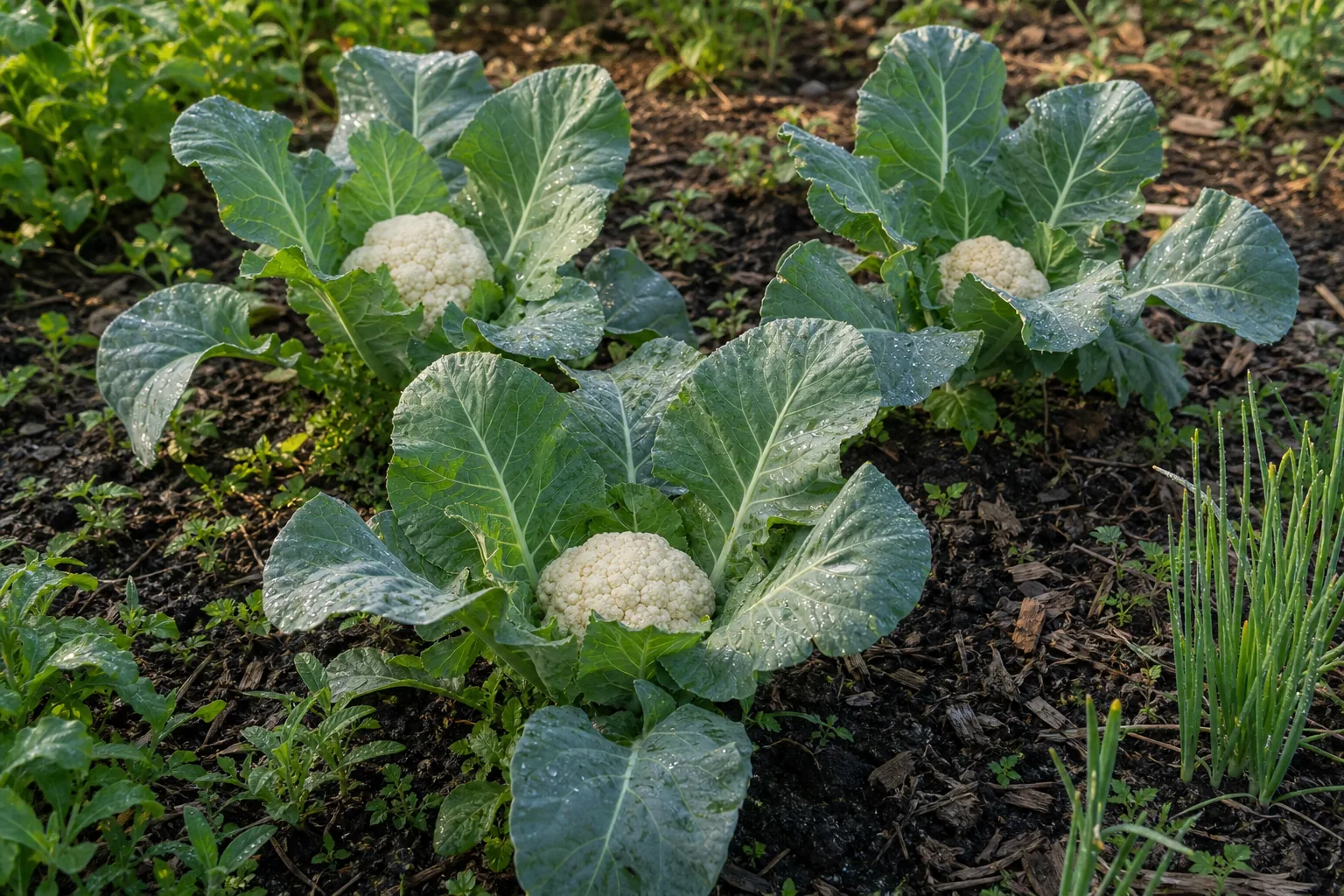
- Blanch white cauliflower by tying the outer leaves over the head; colored types need sun instead.
How to care for cauliflower
Cauliflower (Brassica oleracea var. botrytis) is a cool-season crop that needs rich, moist soil without drought stress. Start seeds indoors in early April for spring or July for fall, setting transplants 18 inches apart, and use a row cover early to protect from wind and insects. Water so the soil never dries out, because stress produces loose, off-flavored curds. For white types, once the curd is visible gather the outer leaves and tie them over it to blanch; colored and Romanesco types should be left in the sun. Harvest when the head reaches usable size before the buds open.
Light
Cauliflower grows best in full sun (6+ hours) but tolerates light partial shade; cool temperatures during curd development matter more than maximum sun, and hot sun can discolor curds.
Water
Water to keep the soil consistently moist, at least 1 inch per week and more on sandy soil. Cauliflower must not experience water stress or the curds become hard, loose, and off-flavored; check moisture depth with a trowel and water deeply when the top inch or two is dry.
Soil and planting
Plant in well-drained yet moisture-retentive, fertile soil with a pH of about 6.0-7.0. In containers use a large pot with a rich, free-draining mix and set transplants at the same depth. Add compost or well-rotted manure (not fresh), side-dress when plants are about 4 inches tall, rotate away from brassicas for 4 years, and avoid 'Weed and Feed' fertilizers.
Temperature, humidity, and fertilizer
Cauliflower is the most temperature-sensitive brassica; curds form best at 50-70°F and hot weather (about 86°F day, over 77°F night) can cause 'buttoning' or failure to enlarge. High humidity raises downy-mildew and black-rot risk, so space for airflow. Feed as a heavy feeder with compost at planting and a side-dressing of balanced fertilizer when plants are about 4 inches tall.
Pruning and propagation
No pruning beyond removing yellow leaves and tying leaves over white curds; cut the head at harvest. Propagate from seed: start indoors in early April (spring) or July (fall) and transplant 18 inches apart, or direct-sow in summer and thin to one plant every 18 inches.
Common problems
Start with the pattern, current soil moisture, and recent changes. One symptom can have several causes, so change the most likely factor first and observe before making another major adjustment.
| Symptom | Check first | First action |
|---|---|---|
| Small, bumpy, or 'buttoned' curds | Check temperature and stress — heat or drought causes buttoning. | Grow for cool weather, water evenly, and choose heat-tolerant varieties. |
| Loose, rice-like curds in cool weather | Check temperature — too cool produces a loose head rather than a compact curd. | Accept it as edible, or time planting for steadier cool temperatures. |
| Small holes in leaves and chewed seedlings | Check for flea beetles and cabbage worms / loopers. | Use row cover on seedlings and hand-pick; apply Bt for caterpillars. |
| Yellow triangles on leaf edges and rotting curds | Check for black rot in warm, wet conditions. | Improve airflow, avoid overhead watering, rotate crops, and remove infected plants. |
| Brown flecks in the curd | Check for boron deficiency or plant stress. | Correct soil fertility and moisture; ensure even watering and nutrition. |
Pet and household safety
Cauliflower is considered non-toxic to dogs and cats and is not listed as a poison by the ASPCA; the curd and leaves are safe as an occasional treat. As with any plant, very large amounts may cause mild stomach upset, so feed in moderation and contact a veterinarian if a pet shows persistent signs.
Frequently asked questions
How much sun does cauliflower need?
Full sun (6+ hours) but tolerates some shade; cool 50-70°F curd-forming weather is key.
How often should I water cauliflower?
Keep soil consistently moist, at least 1 inch per week; drought ruins curd quality.
Do I need to blanch cauliflower?
Blanch white types by tying leaves over the curd; colored and Romanesco types need sun to color.
Why is my cauliflower buttoning?
Heat or drought stress; grow for cool weather and keep soil evenly moist.
When do I harvest cauliflower?
When the head is usable size before buds open; cut above ground and remove wrapper leaves.
Is cauliflower safe for pets?
Yes — cauliflower is non-toxic to dogs and cats per the ASPCA; the curd and leaves are safe as occasional treats.
Sources and editorial review
This editorial draft is based on the sources below and awaits named horticulture-expert approval before publication.
- Brassica oleraceaRoyal Botanic Gardens, Kew (Plants of the World Online) · Checked
- Toxic and Non-Toxic Plants ListASPCA · Checked
- Growing cauliflower in home gardensUniversity of Minnesota Extension · Checked
- How to Grow CauliflowerMichigan State University Extension · Checked
What works well
- Compact, mild, versatile curd for raw eating, roasting, and soups.
- Colored varieties (orange, green, purple, Romanesco) are ornamental and sun-grown.
- Cool-season and frost-tolerant once established.
What to consider
- Most difficult brassica — very sensitive to heat, drought, and stress ('buttoning').
- Needs blanching for white types and precise timing to avoid loose or discolored curds.
- Prone to the same cabbage-family pests and diseases as its relatives.