Key takeaways
- Site in part shade with acidic, organic, well-drained soil (pH below 6).
- Keep roots consistently moist and cool with yearly acidic mulch; never let it dry out.
- Prune lightly right after flowering and protect from hot sun and winter wind.
How to care for Catawba rhododendron
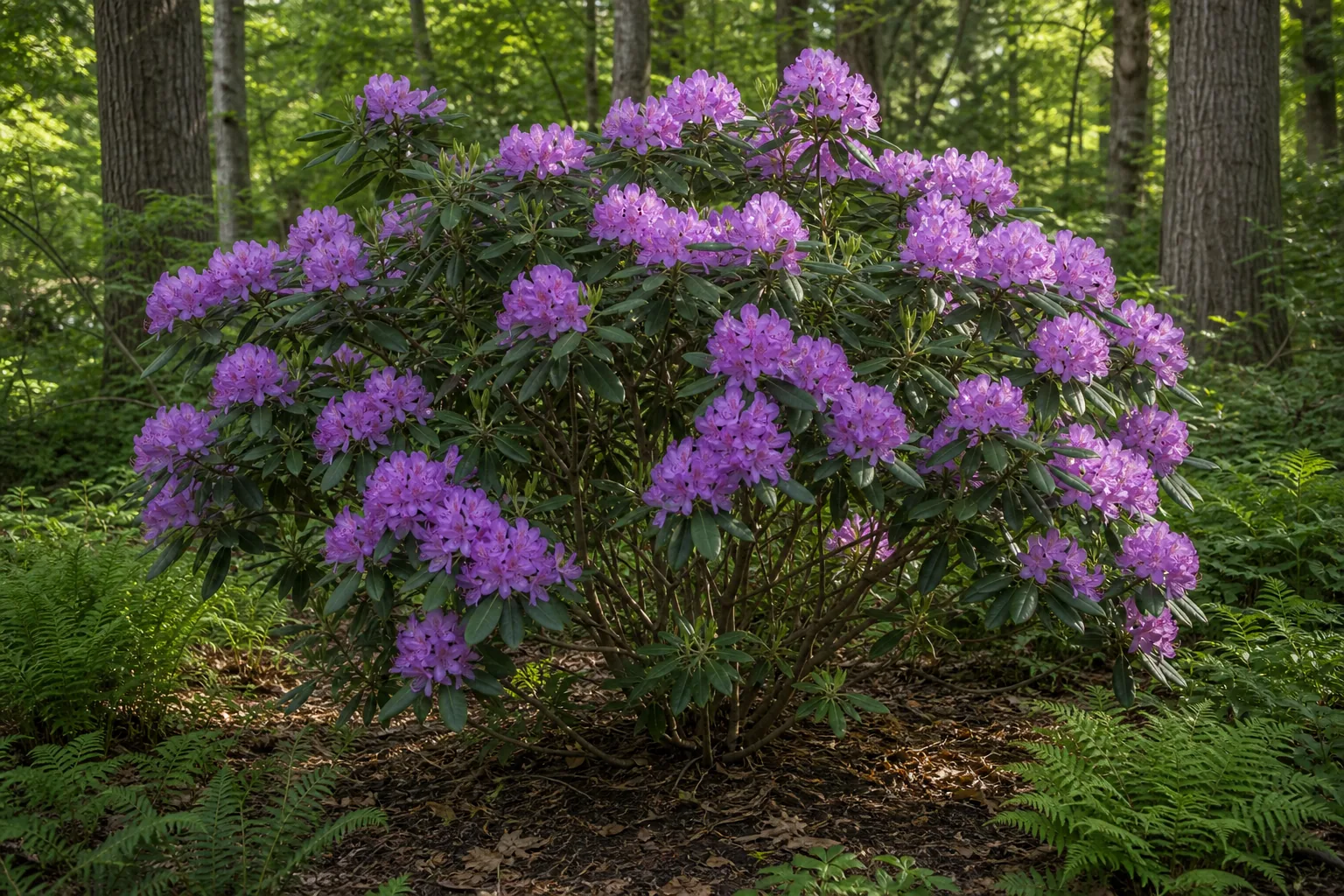
Catawba rhododendron (Rhododendron catawbiense) is a woodland shrub that wants acidic, organic soil and even moisture. Plant in part shade - morning sun with afternoon protection - in a bed amended with peat or compost, setting the shallow root ball slightly high and mulching 2-3 in with pine bark or leaves. Water regularly so the roots never dry out, especially in the first two years and in containers. Avoid disturbing the surface roots. Prune lightly right after flowering and shelter from winter wind and bright sun to prevent leaf scorch and bud kill.
Light
Rhododendron performs best in part shade: gentle morning sun and protection from hot afternoon rays. In cool climates it tolerates more sun if the soil stays moist. Deep shade reduces flowering and leads to open growth, and full hot sun scorches leaves.
Water
Rhododendrons have fine, shallow roots and need steady moisture - about 1 in per week - without soggy soil. Water at the base and never let the root zone dry completely, particularly when buds set in late summer. Mulch to conserve moisture and keep roots cool.
Soil and planting
Plant in acidic (pH below about 6.0), humus-rich, well-drained soil. Rhododendrons are ericaceous and fail in alkaline or heavy clay ground; amend with peat, pine bark, or compost. In containers use an acid mix and repot when rootbound, keeping the crown at the soil line.
Temperature, humidity, and fertilizer
Hardy in USDA zones 4-8, Catawba rhododendron can suffer winter bud kill and leaf scorch in exposed sites. Apply a fertilizer for acid-loving plants in spring after bloom at half rate; avoid lime and high nitrogen. Good air circulation limits lace bug and fungal leaf spots in humid weather.
Pruning and propagation
Prune lightly immediately after flowering, because it sets buds on old wood; simply shape and thin crowded branches. Heavy pruning is rarely needed and can remove the next season's bloom. Propagate from softwood cuttings in summer or by layering low branches.
Common problems
Start with the pattern, current soil moisture, and recent changes. One symptom can have several causes, so change the most likely factor first and observe before making another major adjustment.
| Symptom | Check first | First action |
|---|---|---|
| No flowers or few buds | Check for wrong-time pruning, too much shade, or winter bud kill. | Prune only after bloom, give brighter part-shade, and protect buds from winter cold and wind. |
| Yellow leaves with green veins (chlorosis) | Check soil pH - rhododendrons need acidic soil. | Lower pH with sulfur or acid fertilizer; avoid lime and alkaline water. |
| Stippled, pale leaves | Check leaf undersides for lace bug. | Spray foliage with water, encourage beneficials, and treat with targeted controls if severe. |
| Brown, scorched, or curled leaves | Check sun exposure and winter wind. | Provide afternoon shade and winter protection; keep roots moist. |
| Buds that brown and drop before opening | Check for bud blast or late frost. | Remove affected buds, improve air flow, and site away from frost pockets. |
Pet and household safety
Catawba rhododendron is toxic to dogs, cats, and horses according to the ASPCA. The toxic principles are grayanotoxins in the leaves and flowers (the same compounds found in azalea); clinical signs include vomiting, diarrhea, drooling, weakness, and in severe cases abnormal heart rhythm. All parts are hazardous, so prevent pets from chewing the plant and call a veterinarian if ingestion is substantial.
Frequently asked questions
How much sun does rhododendron need?
Part shade is best - morning sun with afternoon protection. Hot sun scorches the leaves.
What soil does rhododendron need?
Acidic, humus-rich, well-drained soil (pH below about 6.0). It fails in alkaline or heavy clay ground.
How often should I water rhododendron?
About 1 inch per week, evenly, keeping the shallow roots moist but not soggy.
When should I prune rhododendron?
Immediately after flowering. It blooms on old wood, so late pruning removes next year's buds.
Why are my rhododendron leaves yellow?
Usually chlorosis from soil that is not acidic enough. Lower pH with sulfur or an acid fertilizer.
Is rhododendron safe for pets?
No - the ASPCA lists rhododendron (azalea) as toxic to dogs, cats, and horses (grayanotoxins). Keep pets from chewing it.
Sources and editorial review
This editorial draft is based on the sources below and awaits named horticulture-expert approval before publication.
- Rhododendron catawbienseRoyal Botanic Gardens, Kew (Plants of the World Online) · Checked
- AzaleaASPCA · Checked
- Rhododendron catawbienseMissouri Botanical Garden · Checked
- Rhododendron catawbienseNorth Carolina State University Extension · Checked
What works well
- Large, showy late-spring flower trusses in lavender-pink.
- Evergreen foliage gives bold year-round structure.
- Native to eastern North America and supports pollinators.
What to consider
- Toxic to dogs, cats, and horses (grayanotoxins).
- Demands acidic soil and even moisture; fails in alkaline or dry ground.
- Susceptible to chlorosis, lace bug, and winter burn.