Key takeaways
- Loose, deep, stone-free soil is essential — rocks and compaction fork and split the roots.
- Keep soil evenly moist, especially during germination and root swell; uneven water cracks roots.
- Sow in cool weather for spring and fall; flavor sweetens after light frost.
How to care for carrot
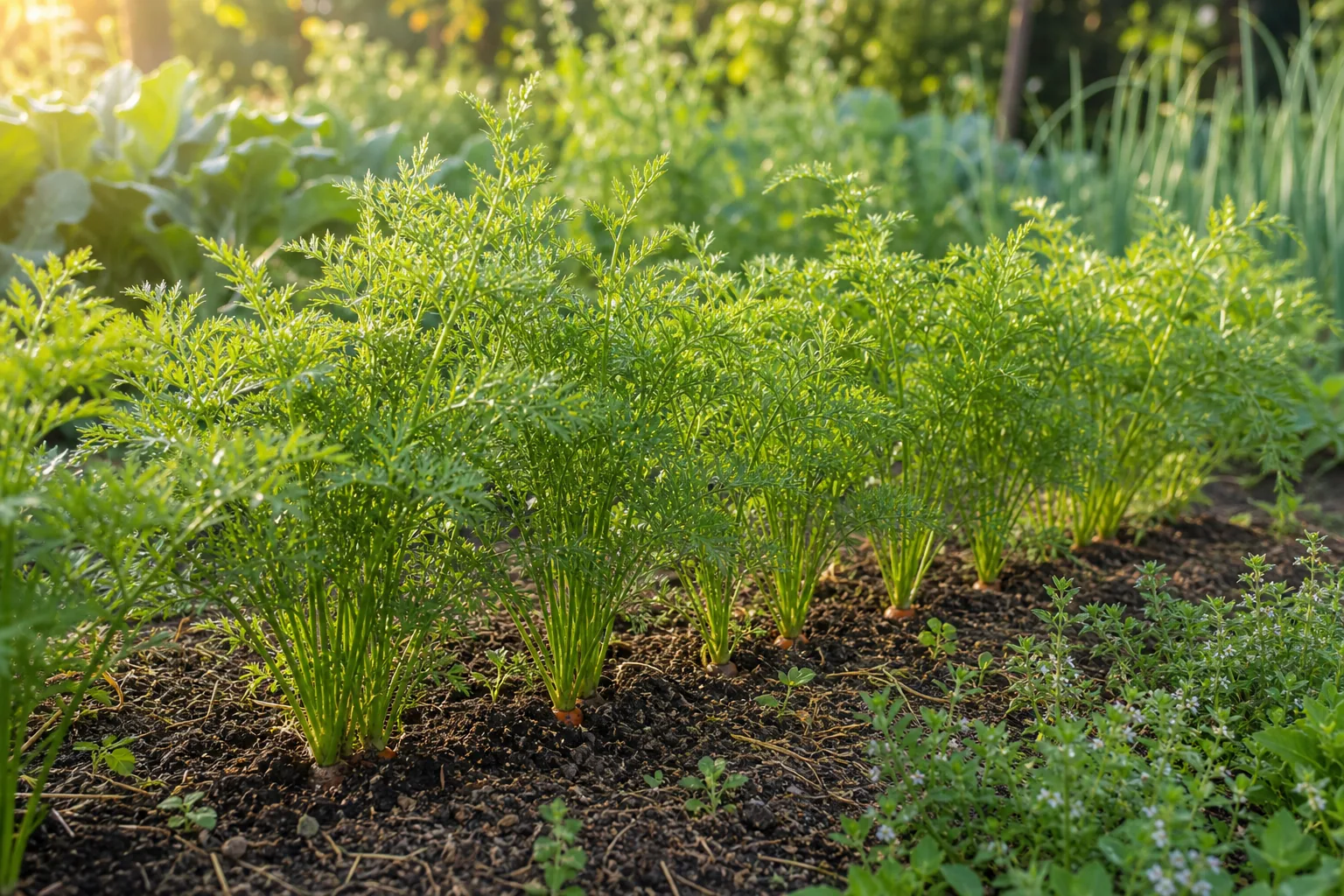
Carrot (Daucus carota subsp. sativus) is a cool-season root crop that needs a deep, friable seedbed. Sow seed 1/4 inch deep in rows, keeping the soil consistently moist through the slow 2-3 week germination; a board over the row helps hold humidity. Thin seedlings to 2-3 inches once they are a few inches tall so roots size up. Mulch to suppress weeds (which compete badly with carrots) and keep the shoulders from greening. Harvest when roots reach the variety's size; a light frost improves sweetness.
Light
Carrots grow best in full sun (at least 6 hours) for the best root development, but they tolerate light partial shade, which can be useful in hot climates. Too much shade reduces yield and produces spindly roots.
Water
Water to keep the soil evenly moist, about 1 inch per week, and never let the top few inches dry out during germination and early root swell. Uneven moisture causes the roots to crack and split; deep, infrequent watering encourages a long taproot. Avoid overwatering, which can rot seeds and invite disease.
Soil and planting
Plant in deep, loose, well-drained, stone-free soil with a pH of about 6.0-6.8; short or round varieties suit heavier ground while long types need deep loose beds or raised planters filled with a fine mix. Avoid fresh manure and excess nitrogen, which fork the roots. In containers use a deep pot (at least 12 inches) with a light, sandy potting mix and sow thinly, thinning rather than transplanting.
Temperature, humidity, and fertilizer
Carrots germinate around 55-75°F (slowly below 50°F) and grow best in cool weather, about 60-70°F, tolerating light frost. High humidity is fine with airflow. Feed lightly at planting with a low-nitrogen, phosphorus-and-potassium fertilizer or compost; too much nitrogen pushes leafy tops at the expense of the root. Use row cover to manage carrot rust fly in fly-prone areas.
Pruning and propagation
No pruning is needed; simply thin seedlings and remove flower stalks if a second-year plant bolts. Propagate from seed only: direct-sow as soon as soil can be worked in spring, and again in mid-to-late summer for fall and winter harvest. Carrots do not transplant well because of the taproot, so always sow in place.
Common problems
Start with the pattern, current soil moisture, and recent changes. One symptom can have several causes, so change the most likely factor first and observe before making another major adjustment.
| Symptom | Check first | First action |
|---|---|---|
| Roots forked, split, or misshapen | Check soil for rocks, compaction, fresh manure, or uneven watering. | Loosen soil deeply, avoid fresh manure, and water evenly; choose short varieties for heavy ground. |
| Tunnels or rust-colored scarring in the root | Check for carrot rust fly larvae, especially near the soil line. | Use floating row cover and crop rotation; remove and discard affected roots. |
| Green, bitter shoulders at the top of the root | Check whether the crown is exposed to sunlight. | Mound soil or mulch over the shoulders to exclude light and prevent greening. |
| Slow germination and bare patches | Check moisture and soil temperature during the 2-3 week emergence. | Keep the row evenly moist (a board helps) and sow fresh seed; avoid crusted soil. |
| Fine sticky insects curling the foliage | Check leaf undersides for aphids. | Rinse with water or apply insecticidal soap; encourage beneficial insects. |
Pet and household safety
Carrot is considered non-toxic to dogs and cats and is not listed as a poison by the ASPCA; the root and even the leafy tops are safe as an occasional treat. The greens are high in fiber and, like any plant, very large amounts may cause mild stomach upset, so feed in moderation and contact a veterinarian if a pet shows persistent signs.
Frequently asked questions
How much sun does carrot need?
Full sun (at least 6 hours) for the best roots; light partial shade is tolerated, especially in heat.
How often should I water carrots?
Keep soil evenly moist, about 1 inch per week. Uneven water causes cracking; deep watering builds a long root.
Why are my carrots forked or misshapen?
Rocks, compaction, fresh manure, or uneven watering. Loosen soil deeply and water steadily.
When do I harvest carrots?
When roots reach variety size; flavor sweetens after a light frost. Loosen soil and lift carefully.
How do I grow carrots in containers?
Use a deep pot (12+ inches) with a light, sandy mix and choose shorter varieties; sow thinly and thin seedlings.
Are carrots safe for pets?
Yes — carrots are non-toxic to dogs and cats per the ASPCA; the root and tops are safe as occasional treats.
Sources and editorial review
This editorial draft is based on the sources below and awaits named horticulture-expert approval before publication.
- Daucus carotaRoyal Botanic Gardens, Kew (Plants of the World Online) · Checked
- Toxic and Non-Toxic Plants ListASPCA · Checked
- CarrotsCornell University Home Gardening · Checked
- How to Grow CarrotsMichigan State University Extension · Checked
What works well
- Long storage life compared with most leafy greens.
- Cold-hardy and flavor improves with cool weather and frost.
- Wide range of colors, shapes, and sizes for different soils.
What to consider
- Slow, uneven germination (often 2-3 weeks) demands patience and moisture.
- Needs deep, loose soil; heavy or rocky ground forks the roots.
- Susceptible to carrot rust fly, aphids, and wireworms.