Key takeaways
- Cabbage is a cool-season crop — spring and fall plantings give the best, sweetest heads.
- Keep soil evenly moist; uneven water and drought make heads bitter and can cause splitting.
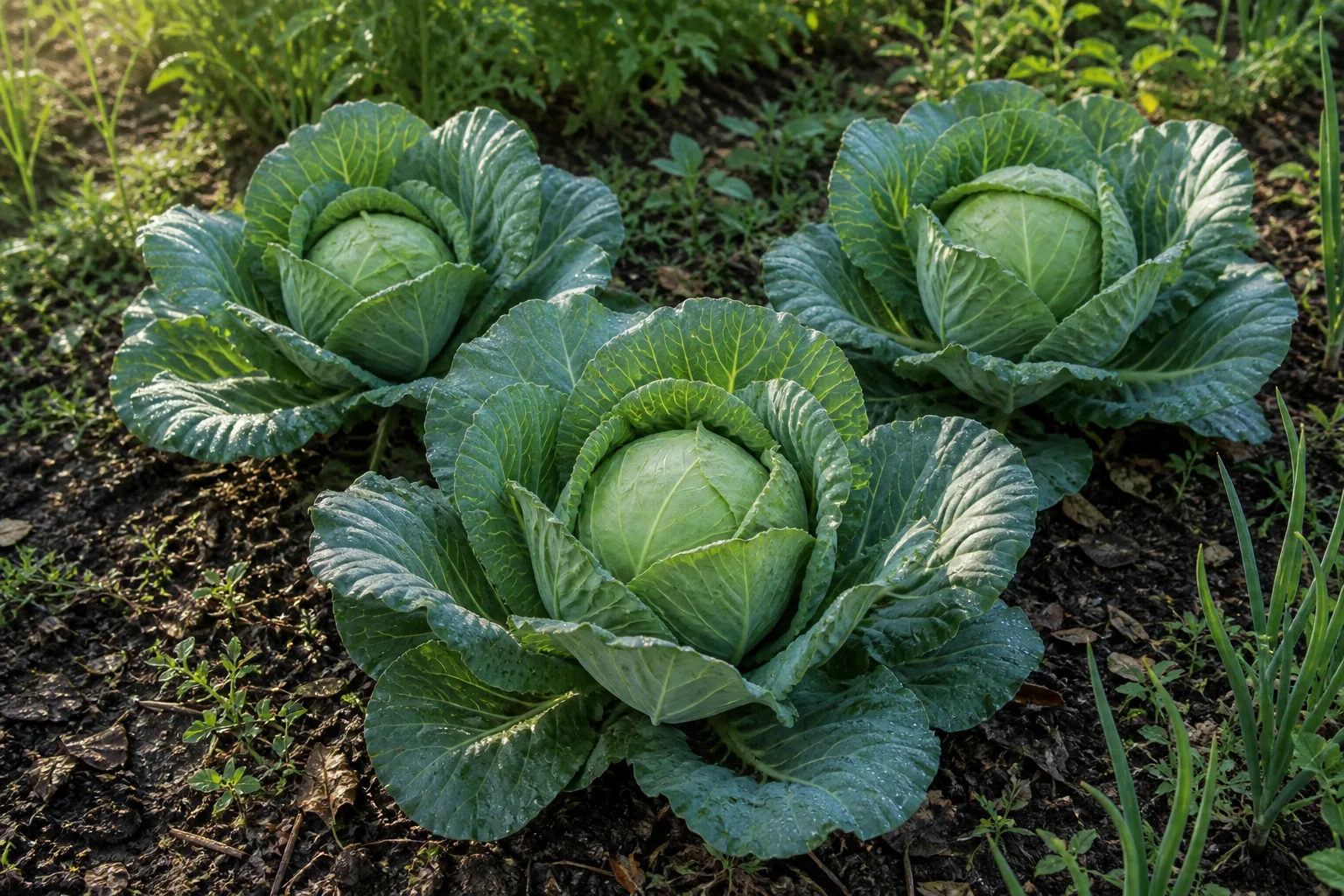
- Harvest when the head is firm; twist or undercut the roots if you can't pick right away to slow splitting.
How to care for cabbage
Cabbage (Brassica oleracea var. capitata) is a cool-season, heavy-feeding crop that wants rich, moisture-retentive, well-drained soil. Start seeds indoors in early April for spring or direct-sow in early July for fall, setting transplants 15-18 inches apart. Mulch and water so the soil stays evenly moist, because drought or uneven water makes heads bitter and can cause splitting. Harvest when the head is firm and full-sized, cutting above the outer leaves; if you must delay, twist the head a quarter turn or shear one side of roots to slow splitting. Cabbage tolerates below-freezing temperatures late in growth.
Light
Cabbage grows best in full sun (6+ hours) but tolerates light partial shade; too much shade reduces head size and quality. Cool temperatures during head formation give the best flavor.
Water
Water to keep the soil consistently moist, about 1 inch per week and more on sandy soil. Even moisture produces firm, crisp, sweet heads; drought causes bitterness and poor heading, while a heavy late rain can split mature heads. Water deeply and avoid late-evening overhead watering, which encourages black rot and downy mildew.
Soil and planting
Plant in well-drained yet moisture-retentive, fertile soil with a pH of about 6.0-7.0. In containers use a large pot with a rich, free-draining mix and set transplants at the same depth. Add compost or well-rotted manure (not fresh) and side-dress when plants are about 4 inches tall; rotate away from cabbage-family crops for 4 years and avoid 'Weed and Feed' fertilizers.
Temperature, humidity, and fertilizer
Cabbage is a cool-season crop that tolerates down to about 20°F once established; hot weather at maturity lowers quality. High humidity raises black-rot and downy-mildew risk, so space for airflow. Feed as a heavy feeder with compost at planting and a nitrogen side-dress 6-8 weeks after transplanting if needed; even moisture late in the season prevents splitting.
Pruning and propagation
No pruning beyond removing yellow or damaged leaves; cut the head at harvest. Propagate from seed: start indoors in early April (spring) or direct-sow in early July (fall) and transplant 15-18 inches apart; thin direct-sown seedlings to one per spot.
Common problems
Start with the pattern, current soil moisture, and recent changes. One symptom can have several causes, so change the most likely factor first and observe before making another major adjustment.
| Symptom | Check first | First action |
|---|---|---|
| Heads split open before harvest | Check moisture — a heavy rain after dry weather splits mature heads. | Harvest promptly, or twist the head or shear roots to slow splitting; keep soil evenly moist. |
| Small holes in leaves and chewed seedlings | Check for flea beetles and cabbage worms / loopers. | Use row cover on seedlings and hand-pick; apply Bt for caterpillars. |
| Yellow triangles on leaf edges and rotting heads | Check for black rot in warm, wet conditions. | Improve airflow, avoid overhead watering, rotate crops, and remove infected plants. |
| Stunted plants with swollen roots | Check for clubroot, a soil-borne brassica disease. | Rotate out of cabbage family for years and improve drainage; liming acid soils can help. |
| Failure to form a head | Check for damage to the growing point from cold, rough handling, or insects. | Handle transplants gently, set out after weather settles, and protect from pests. |
Pet and household safety
Cabbage is considered non-toxic to dogs and cats and is not listed as a poison by the ASPCA; the head and leaves are safe as an occasional treat. As with any plant, very large amounts may cause mild stomach upset or gas, so feed in moderation and contact a veterinarian if a pet shows persistent signs.
Frequently asked questions
How much sun does cabbage need?
Full sun (6+ hours) but tolerates some shade; cool weather gives the best heads.
How often should I water cabbage?
Keep soil evenly moist, about 1 inch per week; uneven water causes bitter heads and splitting.
When do I harvest cabbage?
When the head is firm and full-sized; cut above the outer leaves and use soon or store cold and moist.
Why did my cabbage head split?
Usually a heavy rain after dry soil; harvest promptly or twist the head to slow splitting.
How do I store cabbage?
Cold and moist (about 32°F, high humidity) for months, or ferment it into sauerkraut or kimchi.
Is cabbage safe for pets?
Yes — cabbage is non-toxic to dogs and cats per the ASPCA; the head and leaves are safe as occasional treats.
Sources and editorial review
This editorial draft is based on the sources below and awaits named horticulture-expert approval before publication.
- Brassica oleraceaRoyal Botanic Gardens, Kew (Plants of the World Online) · Checked
- Toxic and Non-Toxic Plants ListASPCA · Checked
- Growing cabbage in home gardensUniversity of Minnesota Extension · Checked
- How to Grow CabbageMichigan State University Extension · Checked
What works well
- Long storage life (months in cold, moist conditions) versus most greens.
- Cold-hardy and even tolerates below-freezing temperatures late in growth.
- Versatile in the kitchen — raw, fermented (sauerkraut, kimchi), or cooked.
What to consider
- Heavy feeder needing steady fertility and moisture.
- Prone to cabbage-family pests (worms, loopers, maggots, flea beetles) and diseases (black rot, clubroot).
- Heads can split after rain if left too long, and it needs a 4-year rotation from brassicas.