Key takeaways
- Onions need full sun and a well-drained, high-organic soil; choose long-day types for storage in northern climates.
- Keep the shallow roots evenly moist and weed carefully — slow-growing onions compete poorly with weeds.
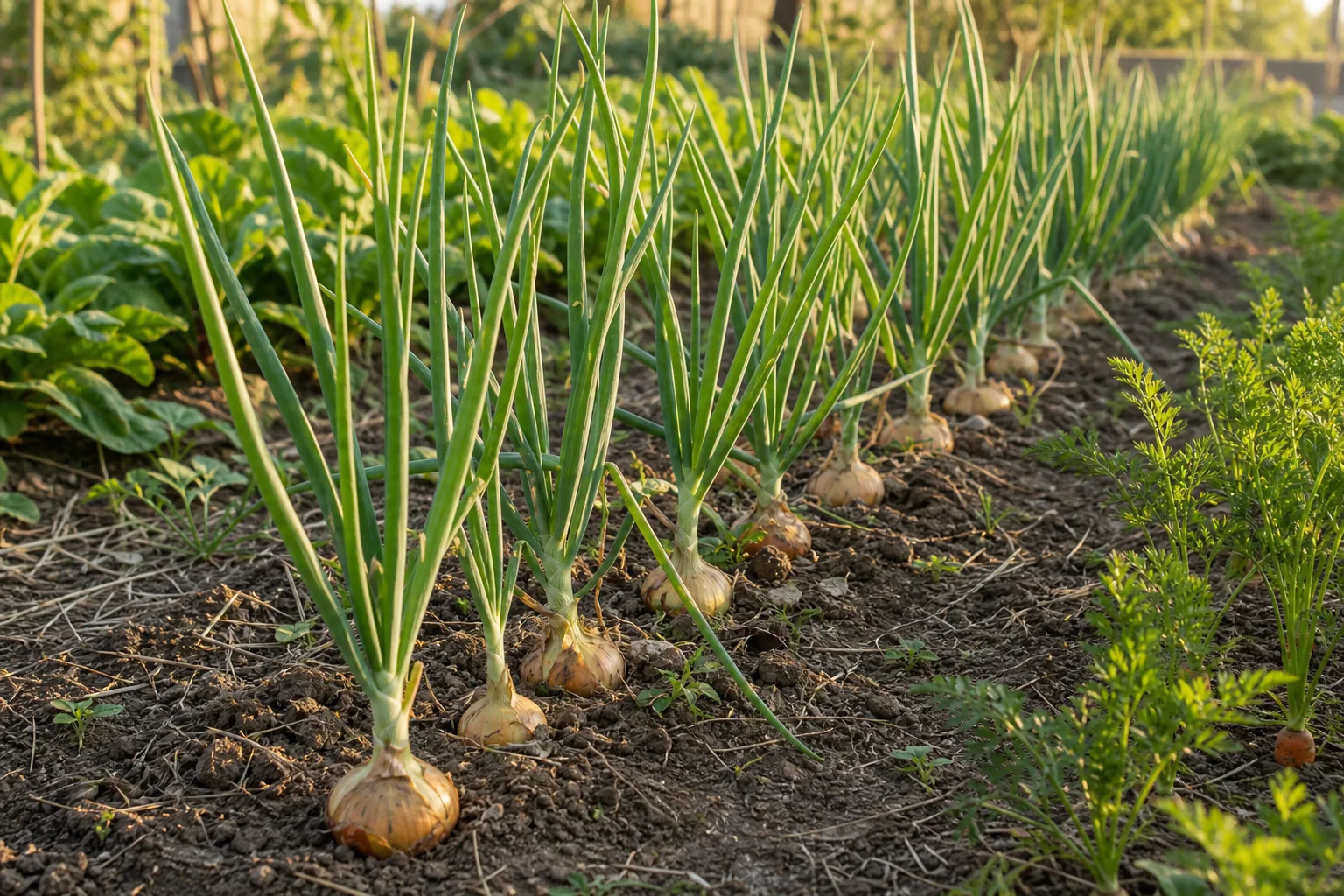
- Harvest when about half the tops fall over, then cure in a warm, dry, airy spot before storing.
How to care for bulb onion
Bulb onion (Allium cepa) is a cool-season crop with a shallow root system that wants full sun, well-drained soil high in organic matter, and steady moisture. Plant from sets, transplants, or direct-sown seed as soon as soil is workable in spring, spacing plants 2-4 inches apart in rows 12-18 inches apart, and keep the bed weed-free because onions compete poorly. Water evenly (more as bulbs size), side-dress with nitrogen once roots are established, and harvest when about half the tops fall over; cure in a warm, dry, airy place for storage. Choose long-day types for northern gardens and best storage.
Light
Onions need full sun — at least 6-8 hours of direct light — for the best bulb development; overcast skies and cool, short days delay bulb formation. Long-day types need 14+ hours of daylight to size up a bulb.
Water
Water to keep the soil consistently moist, about 1 inch per week and more as bulbs enlarge. Onions have a limited root system and need a constant supply of moisture, especially before bulbing; keep the tops dry to limit disease and water early in the day. Extra water late, until tops fall, improves yield and mild flavor, then dry weather after tops fall helps curing.
Soil and planting
Plant in well-drained soil high in organic matter with a pH of about 6.0-7.0. In containers use a deep pot with a rich, free-draining mix and set plants at the same depth. Add compost or well-rotted manure (not fresh), side-dress with nitrogen after roots establish, and avoid 'Weed and Feed' fertilizers; rotate out of alliums.
Temperature, humidity, and fertilizer
Onions are cool-season and grow best in moderate temperatures; bulbing is triggered by day length and warmth. High humidity raises downy-mildew and botrytis risk, so space for airflow. Feed with a good supply of available nitrogen but not so much that necks stay soft and uncured; side-dress once or twice during the season.
Pruning and propagation
No pruning; cut or bend tops at harvest time if needed to finish curing. Propagate from seed, sets, or transplants: direct-sow 1/4-1/2 inch deep in early spring, or set out transplants/sets 2-4 inches apart; thin seedlings to 3-4 inches.
Common problems
Start with the pattern, current soil moisture, and recent changes. One symptom can have several causes, so change the most likely factor first and observe before making another major adjustment.
| Symptom | Check first | First action |
|---|---|---|
| Seedlings or plants wilting and falling | Check for onion maggot larvae in the base and roots. | Use crop rotation, avoid heavy manure at planting, and remove affected plants. |
| Silvery streaks and distorted leaves | Check for thrips on the leaves. | Hose off or use appropriate insecticides; avoid drought stress that favors them. |
| Tops flop prematurely with rotting at the base | Check for fungal bulb rots (botrytis, Fusarium) in wet conditions. | Improve drainage and airflow, avoid overhead watering, and cure bulbs well. |
| Small bulbs despite healthy tops | Check day length — a short-day type in a long-day climate won't bulb. | Choose long-day storage varieties for northern latitudes. |
| Downy, spotted foliage | Check for downy mildew in humid weather. | Improve spacing and airflow, avoid wetting foliage, and remove infected leaves. |
Pet and household safety
Onion is toxic to dogs and cats (and horses) per the ASPCA; all parts of the plant — including the edible bulb — contain N-propyl disulfide, which can break down red blood cells and cause Heinz body anemia. The bulb is a safe, everyday food for people but should not be fed to pets; keep onions away from dogs and cats and contact a veterinarian if a pet eats any amount.
Frequently asked questions
How much sun does bulb onion need?
Full sun — at least 6-8 hours; long-day types need 14+ hours of daylight to bulb well.
How often should I water onions?
Keep soil evenly moist, about 1 inch per week and more as bulbs size; shallow roots dry fast.
When do I harvest onions?
When about half the tops fall over; then cure in a warm, dry, airy place before storing.
Why are my onion bulbs small?
Often the wrong day-length type for your latitude, or uneven moisture and weeds; choose long-day storage types up north.
How do I store onions?
Cure in a warm, dry, airy spot until necks are tight, then store cool and dry; long-day types store for months.
Are onions safe for pets?
No — onions are toxic to dogs and cats (and horses) per the ASPCA; all parts including the bulb contain compounds that can cause anemia, so keep them away from pets.
Sources and editorial review
This editorial draft is based on the sources below and awaits named horticulture-expert approval before publication.
- Allium cepaRoyal Botanic Gardens, Kew (Plants of the World Online) · Checked
- OnionASPCA (Animal Poison Control) · Checked
- How to Grow OnionsMichigan State University Extension · Checked
- Growing onions in home gardensUniversity of Minnesota Extension · Checked
What works well
- Excellent storage life when cured (months in cool, dry conditions).
- Adaptable — grow from seed, transplants, or sets to fit your season.
- A foundational cooking crop with many colors, shapes, and pungency levels.
What to consider
- Shallow-rooted and slow to establish; needs steady moisture and diligent weeding.
- Day-length sensitive — wrong type for your latitude gives small bulbs.
- Susceptible to onion maggot, thrips, and fungal bulb diseases (botrytis, downy mildew).