Key takeaways
- Full sun with some afternoon shade and rich, well-drained, medium-moisture soil.
- Start seeds indoors 6-8 weeks before the last frost (soak seeds overnight first) or buy transplants.
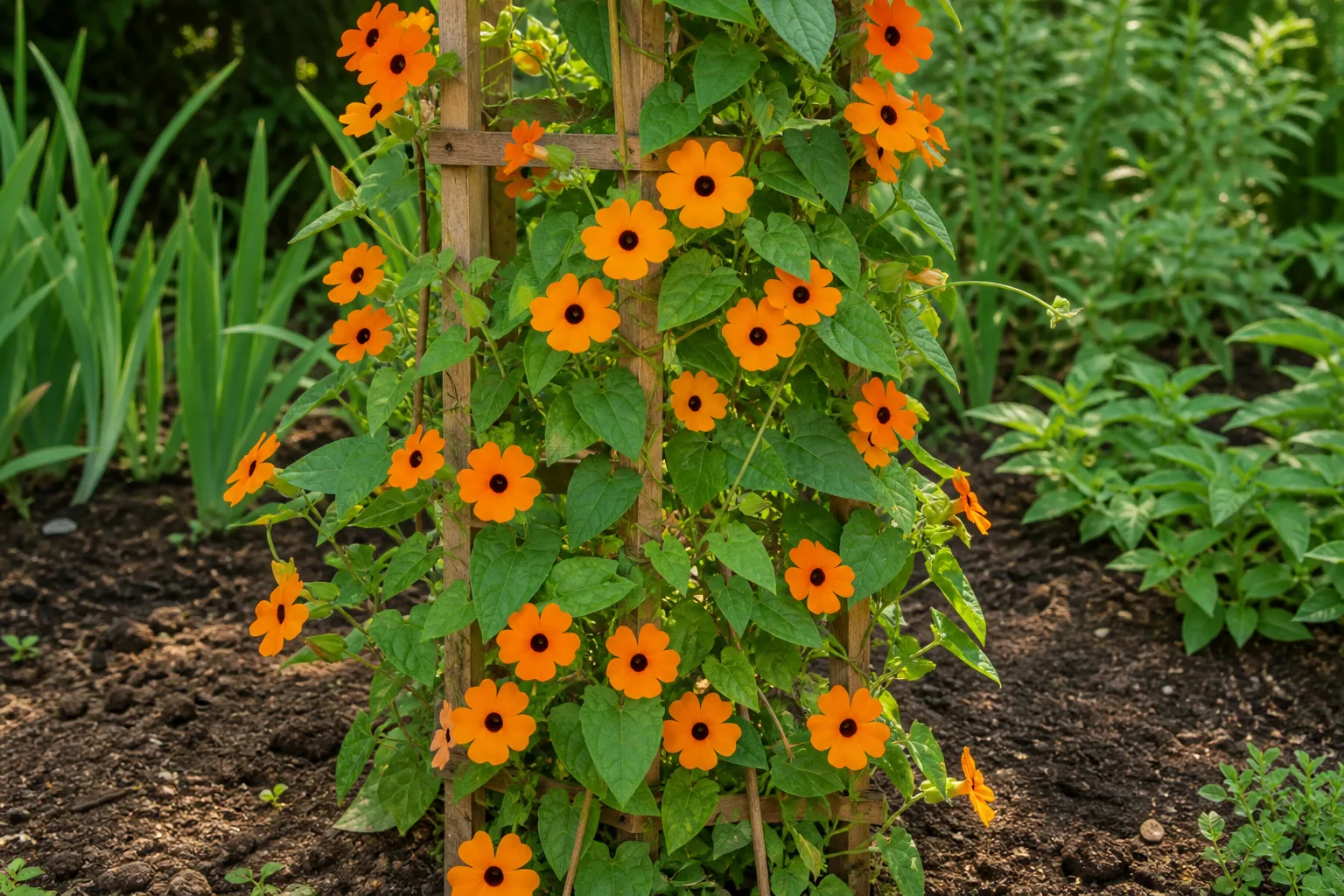
- Twining vine of 3-8 feet, great for trellises, fences, and hanging baskets; pinch for a fuller plant.
How to care for black-eyed Susan vine
Black-eyed Susan vine (Thunbergia alata) is a showy, twining tropical vine grown as an annual in most climates. Set it in full sun with some afternoon shade in rich, medium-moisture, well-drained soil, and give the twining stems a trellis, fence, strings, or a hanging basket. Start seeds indoors 6-8 weeks before the last frost (soak the seeds overnight to speed germination) or buy plants, and pinch young stems to encourage a full, bushy plant. Water consistently, and expect the best flower display in late summer and early autumn.
Light
Black-eyed Susan vine flowers best in full sun (at least 6 hours of direct light), tolerating some afternoon shade, which helps in hot climates. Too much shade reduces flowering and makes the vine leggy.
Water
Water regularly to keep the soil evenly moist but well drained - the vine dislikes both drought and soggy ground. In containers and hanging baskets, check daily in hot weather, since they dry out quickly.
Soil and planting
Plant in rich, fertile, well-drained soil with plenty of organic matter. In containers use a quality potting mix with drainage holes; a 12-14 inch pot suits one vigorous plant. Plants can be overwintered indoors as container specimens in a bright, warm spot, repotting or refreshing the soil in spring.
Temperature, humidity, and fertilizer
This is a tropical tender perennial, hardy only in frost-free zones (10-11); elsewhere grow it as a warm-season annual or bring containers indoors for winter. It thrives in warm temperatures and average humidity. Feed container plants every 2-3 weeks while blooming with a balanced fertilizer; in-ground plants need little feeding.
Pruning and propagation
No heavy pruning is needed; pinch young shoots to promote branching, trim straggly growth, and cut plants back to refresh them. Propagate from seed (start indoors 6-8 weeks early; soak seeds overnight) or from softwood stem cuttings rooted in moist mix. The plant self-seeds easily in warm climates.
Common problems
Start with the pattern, current soil moisture, and recent changes. One symptom can have several causes, so change the most likely factor first and observe before making another major adjustment.
| Symptom | Check first | First action |
|---|---|---|
| Plenty of vine, few flowers | Check light and nitrogen. | Move to full sun and avoid high-nitrogen fertilizer; peak bloom comes in late summer. |
| Yellowing or wilting leaves | Check watering - most often overwatering or poor drainage. | Water only when the top inch of soil dries and improve drainage; container plants should never sit in water. |
| Sticky leaves with fine webbing | Check for spider mites, especially indoors. | Rinse the foliage, raise humidity, and treat with insecticidal soap. |
| White, cottony insects on stems | Check for whiteflies or mealybugs on indoor plants. | Isolate and treat with insecticidal soap or horticultural oil. |
| Self-sown seedlings appear the next year | Check for seed capsules ripening in warm regions. | Deadhead spent flowers in frost-free gardens or pull volunteers early. |
Pet and household safety
Black-eyed Susan vine (Thunbergia alata) is non-toxic to cats and dogs. NC State Extension's profile lists no poison characteristics for the species, and the ASPCA's toxic and non-toxic plant list does not carry a Thunbergia species page or toxicity warning. While the plant is not edible, nibbling by pets generally causes no clinical signs; as with any garden plant, discourage heavy chewing and contact a veterinarian after a substantial ingestion, especially in a small pet.
Frequently asked questions
Is black-eyed Susan vine a perennial?
It is a tender perennial, hardy only in frost-free zones (10-11); most gardeners grow it as a fast annual or overwinter it indoors.
How much sun does it need?
Full sun (6 or more hours) with a little afternoon shade in hot regions gives the most flowers; heavy shade reduces bloom.
How do I start seeds?
Soak seeds overnight, start indoors 6-8 weeks before the last frost, and transplant after frost; germination takes 10-21 days.
Why is my vine all leaves and no flowers?
Usually too much shade or too much nitrogen. Give it full sun and a balanced feed, and be patient until late summer.
Can I keep it over winter?
Yes - grow it in a container, bring it indoors to a bright, warm window before frost, and cut it back in spring.
Is black-eyed Susan vine safe for pets?
Yes - NC State Extension lists no poison characteristics and the ASPCA list shows no toxicity warning for Thunbergia; it is non-toxic to cats and dogs.
Sources and editorial review
This editorial draft is based on the sources below and awaits named horticulture-expert approval before publication.
- Thunbergia alataRoyal Botanic Gardens, Kew (Plants of the World Online) · Checked
- Toxic and Non-Toxic Plants listASPCA · Checked
- Thunbergia alataNorth Carolina State University Extension · Checked
- Black-eyed Susan Vine, Thunbergia alataUniversity of Wisconsin-Madison Extension · Checked
What works well
- Long bloom season from summer to frost with cheerful orange-and-black flowers.
- Attracts hummingbirds, bees, and butterflies.
- Non-toxic to cats and dogs; easy from seed and vigorous.
What to consider
- Frost tender - grows as an annual except in frost-free zones.
- Self-seeds easily and can be weedy in warm, frost-free areas.
- Best bloom comes in late summer, after the hottest weather passes.