Key takeaways
- Site in morning sun and afternoon shade with consistently moist, humus-rich soil.
- Water deeply and regularly; bigleaf hydrangeas wilt fast in dry soil but hate wet feet.
- Prune immediately after blooming - most cultivars flower on old wood, so late pruning removes next year's buds.
How to care for bigleaf hydrangea
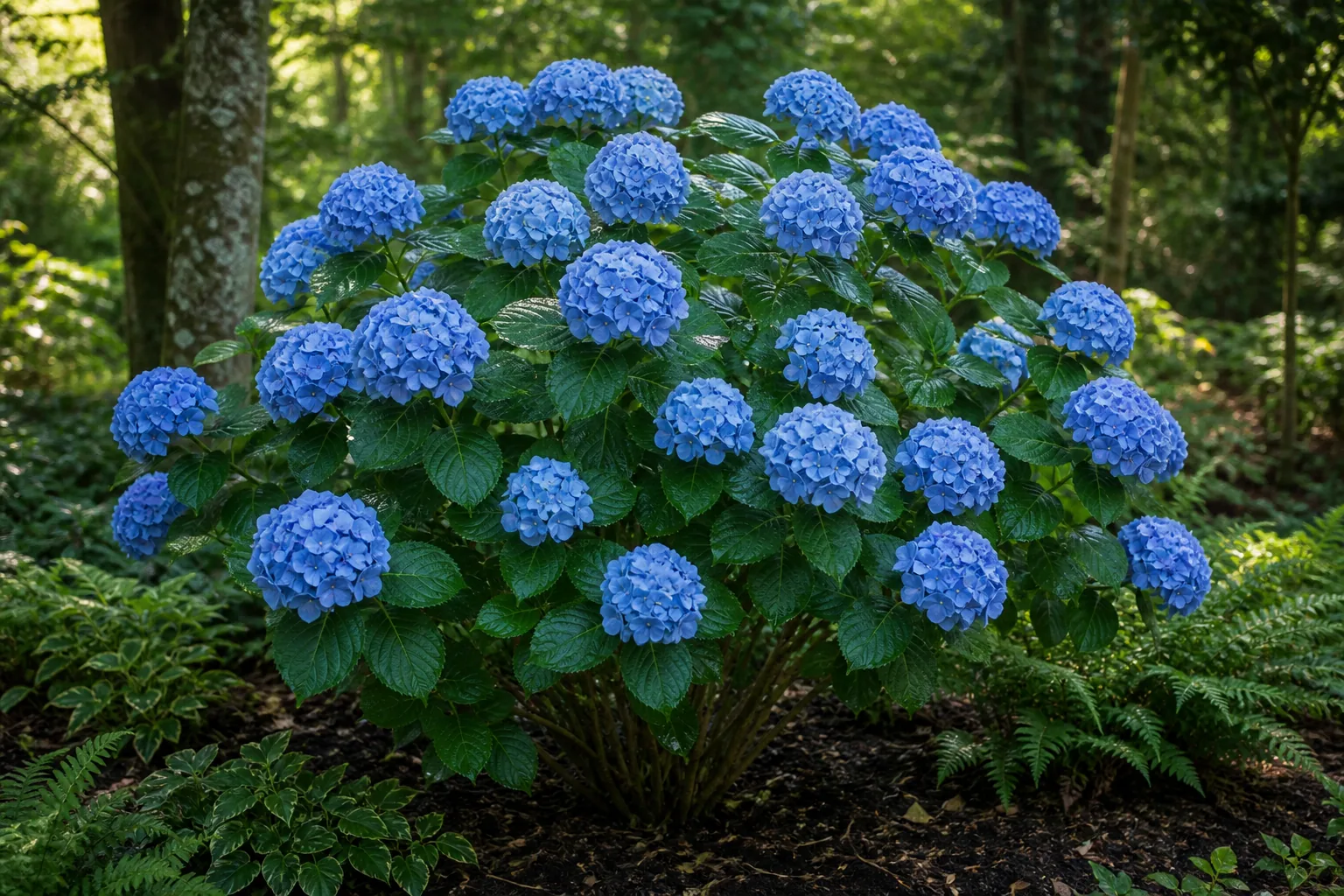
Bigleaf hydrangea (Hydrangea macrophylla) is a deciduous shrub that earns its keep with big summer blooms but rewards attention to siting. Plant in rich, medium-moisture, well-drained soil in part shade - morning sun with afternoon protection is ideal, especially in warm zones. Keep the root zone consistently moist (mulch 2-3 inches year-round) and avoid letting it dry out. Most cultivars bloom on old wood, so time any pruning for right after flowering. Winter cold and late frosts can cut the flower buds, so choose a sheltered site.
Light
Bigleaf hydrangea performs best in part shade: gentle morning sun and protection from hot afternoon rays. In cooler climates (USDA 4-6) it tolerates more sun if the soil stays moist. Too much sun scorches leaves and wilts flowers; deep shade reduces blooming and leads to leggy growth.
Water
Water is the name of the game - bigleaf hydrangeas have large leaves that transpire heavily and wilt quickly in dry soil. Aim for about 1 inch of water per week, delivered deeply, and never let the root zone dry out completely. Consistent moisture also protects next year's flower buds. Mulch to conserve soil water and keep roots cool.
Soil and planting
Plant in rich, humusy, well-drained soil amended with compost or peat. Bigleaf hydrangea is famous for pH-dependent flower colour: acidic soil (pH below about 5.5) turns blooms blue by freeing aluminium, while alkaline soil (pH above about 6.5) produces pink. Change colour slowly with aluminium sulfate (blue) or garden lime (pink), starting months ahead of bloom. In containers use a moist, peat-based mix and repot when roots fill the pot.
Temperature, humidity, and fertilizer
Hardy in USDA zones 6-9 (some to 5 with protection), bigleaf hydrangea is sensitive to winter cold and temperature swings that kill flower buds. Apply a balanced, slow-release fertilizer in early spring as new growth starts; avoid high-nitrogen feeds and stop by mid-summer so late growth isn't winter-tender. Good air circulation helps limit foliar disease in humid summers.
Pruning and propagation
Prune bigleaf hydrangea immediately after flowering, because it sets buds on old wood; pruning in fall, winter, or spring removes the coming season's blooms. Simply cut back flowering stems to a pair of healthy buds and remove weak or winter-damaged wood in late winter. 'Reblooming' cultivars flower on both old and new wood and are more forgiving. Propagate by softwood cuttings in summer or by layering.
Common problems
Start with the pattern, current soil moisture, and recent changes. One symptom can have several causes, so change the most likely factor first and observe before making another major adjustment.
| Symptom | Check first | First action |
|---|---|---|
| No flowers despite healthy leaves | Check for wrong-time pruning, winter bud damage, or too much shade. | Prune only right after bloom, protect from late frosts, and move to brighter (part-sun) siting. |
| Leaves scorched or wilting in afternoon | Check sun exposure and soil moisture. | Provide afternoon shade and water deeply; mulch to keep roots cool and moist. |
| Flowers are the wrong colour | Check soil pH and aluminium availability. | Lower pH with aluminium sulfate for blue, raise with lime for pink; adjust months before bloom. |
| Powdery coating or spotted leaves | Check for powdery mildew or leaf spot in humid, crowded conditions. | Improve airflow, avoid overhead watering, and remove affected foliage; fungicide if severe. |
| Sudden wilting and collapse of stems | Check for bacterial wilt or root rot in wet, warm soil. | Remove and destroy affected stems; improve drainage and avoid overwatering. |
Pet and household safety
Bigleaf hydrangea is toxic to dogs, cats, and horses according to the ASPCA. The toxic principle is a cyanogenic glycoside found in the leaves, flowers, and buds; clinical signs include vomiting, depression, and diarrhea. Cyanide poisoning is rare from typical garden nibbling, but prevent pets from chewing the plant and call a veterinarian if ingestion is substantial.
Frequently asked questions
How much sun does bigleaf hydrangea need?
Part shade is best - morning sun with afternoon protection. In cool climates it tolerates more sun if soil stays moist; deep shade reduces blooms.
How often should I water hydrangea?
About 1 inch per week, deeply, keeping the root zone consistently moist. It wilts fast when dry but also resents soggy soil.
Why are my hydrangea flowers pink or blue?
Soil pH controls colour: acidic soil (below ~5.5) gives blue, alkaline soil (above ~6.5) gives pink. Adjust months ahead with aluminium sulfate or lime.
When should I prune bigleaf hydrangea?
Immediately after flowering. It blooms on old wood, so pruning later removes next year's buds.
Why didn't my hydrangea bloom?
Usually winter cold, late frost, or pruning at the wrong time killed the old-wood buds. Protect buds and prune right after bloom.
Is hydrangea safe for pets?
No - the ASPCA lists hydrangea as toxic to dogs, cats, and horses (cyanogenic glycoside). Keep pets from chewing leaves or flowers.
Sources and editorial review
This editorial draft is based on the sources below and awaits named horticulture-expert approval before publication.
- Hydrangea macrophyllaRoyal Botanic Gardens, Kew (Plants of the World Online) · Checked
- HydrangeaASPCA · Checked
- Hydrangea macrophyllaMissouri Botanical Garden · Checked
- Pruning Tips for HydrangeasNorth Carolina State University Extension · Checked
What works well
- Showy, long-lasting mophead or lacecap flowers in blue, pink, white, or purple.
- Flower colour can be tuned by adjusting soil pH.
- Good specimen, hedge, or foundation shrub for partly shaded sites.
What to consider
- Toxic to dogs, cats, and horses (cyanogenic glycosides).
- Fails to bloom in many years from winter cold, late frosts, or wrong-time pruning.
- Needs reliable moisture and suffers in hot, dry, or exposed sites.