Key takeaways
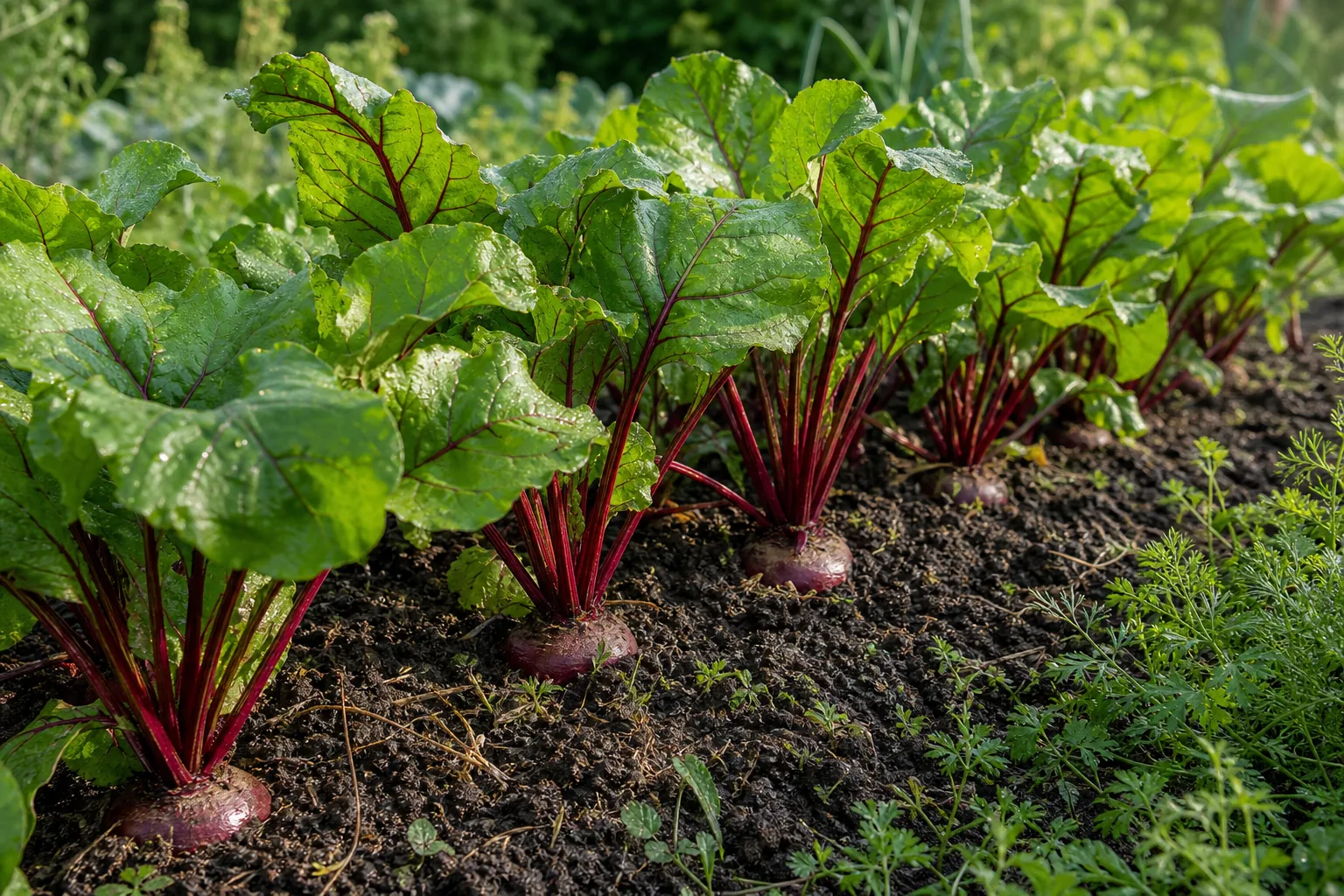
- Sow in cool spring and again in late summer; beets tolerate light frost and the roots store well.
- Thin seedlings to a few inches so each plant develops a round, sweet root.
- You can eat the greens as well as the root — a two-for-one crop.
How to care for beet
Beet (Beta vulgaris) is a cool-season root crop that yields both greens and roots. Sow seed 1/2 inch deep (each 'seed' is a cluster, so thinning matters), and thin to about 3-4 inches once seedlings are a few inches tall. Mulch to keep roots cool and conserve moisture, and harvest outer greens as they grow while letting the root develop. For fall, sow in late summer; roots store well after a light frost. Replace any plants that bolt in heat.
Light
Beets grow best in full sun (6+ hours) in cool weather but tolerate partial shade, which is useful in summer and still gives good greens. Too much shade reduces root size and yield.
Water
Water to keep the soil evenly moist, about 1 inch per week. Beets are about 90% water, so drought makes roots tough, woody, and less sweet, and it stresses the greens. Water deeply and mulch; avoid wetting foliage at night to limit leaf spot.
Soil and planting
Plant in loose, fertile, well-drained soil with a near-neutral to slightly alkaline pH of about 6.5-7.5; acidic soil (below ~6.0) causes poor germination and rough roots, so lime if needed. In containers use a deep pot (8-10 inches) with a rich, light mix and thin rather than transplant (beets dislike root disturbance). Remove stones so roots stay smooth.
Temperature, humidity, and fertilizer
Beets germinate around 50-85°F (slowly when cool) and grow best in 60-70°F, tolerating light frost. High humidity raises leaf-spot risk, so space for airflow. Feed with compost at planting and a balanced feed if weak; boron deficiency can cause internal browning, so use a complete fertilizer in deficient soils. Bolting rises with heat and day length.
Pruning and propagation
No pruning beyond harvesting outer greens and pulling bolting plants. Propagate from seed only: direct-sow as soon as soil can be worked in spring, and again in mid-to-late summer for fall. Pre-soak seed clusters to speed germination, and thin seedlings early since beets do not transplant well.
Common problems
Start with the pattern, current soil moisture, and recent changes. One symptom can have several causes, so change the most likely factor first and observe before making another major adjustment.
| Symptom | Check first | First action |
|---|---|---|
| Rough, forked, or misshapen roots | Check soil pH and texture — acidity or compaction is the usual cause. | Lime acidic soil toward pH 6.5+, loosen deeply, and remove stones. |
| Plants bolt and roots stay small in heat | Check temperature and day length. | Harvest and sow a fresh cool-season crop; use shade in warm spells. |
| Winding trails inside the leaves | Check for leaf-miner larvae. | Remove affected leaves and use row cover to exclude adult flies. |
| Brown, dead spots on older leaves | Check for cercospora leaf spot in warm, humid weather. | Improve airflow, avoid overhead watering, and remove infected leaves. |
| Slow or patchy emergence | Check soil temperature and crusting during the ~2-week germination. | Keep the row evenly moist, pre-soak seed, and sow into loose soil. |
Pet and household safety
Beet is considered non-toxic to dogs and cats and is not listed as a poison by the ASPCA; both the root and the greens are safe as an occasional treat. Beets are high in oxalates and sugar, so very large amounts could contribute to digestive upset or, in pets prone to oxalate issues, are best limited — contact a veterinarian if a pet eats a large quantity.
Frequently asked questions
How much sun does beet need?
Full sun (6+ hours) in cool weather; partial shade is fine and still yields good greens.
How often should I water beets?
Keep soil evenly moist, about 1 inch per week. Drought makes roots woody and less sweet.
Can I eat beet greens?
Yes — the greens are edible and nutritious; harvest outer leaves and let the root keep growing.
Why are my beet roots misshapen?
Acidic or compacted soil. Aim for pH 6.5-7.5, loosen deeply, and remove stones.
When do I harvest beets?
When roots reach 1-3 inches across; baby beets are tender. A light frost sweetens them.
Are beets safe for pets?
Yes — beets are non-toxic to dogs and cats per the ASPCA; both root and greens are safe as occasional treats.
Sources and editorial review
This editorial draft is based on the sources below and awaits named horticulture-expert approval before publication.
- Beta vulgarisRoyal Botanic Gardens, Kew (Plants of the World Online) · Checked
- Toxic and Non-Toxic Plants ListASPCA · Checked
- How to Grow BeetsMichigan State University Extension · Checked
- BeetNC State Extension Gardener Plant Toolbox · Checked
What works well
- Both roots and greens are edible and nutritious.
- Cold-hardy with good storage life after harvest.
- Grows in partial shade and in containers.
What to consider
- Needs loose, non-acidic soil; compaction and low pH cause rough, forked roots.
- Slow, sometimes patchy germination (~2 weeks) needs patience and moisture.
- Susceptible to leaf miners, cercospora leaf spot, and bolting in heat.