Key takeaways
- Plant in full sun to part shade in moist, well-drained soil.
- Water regularly the first year, then it tolerates average moisture and some drought.
- Prune lightly after flowering and plant two clones for the best berry set.
How to care for arrowwood viburnum
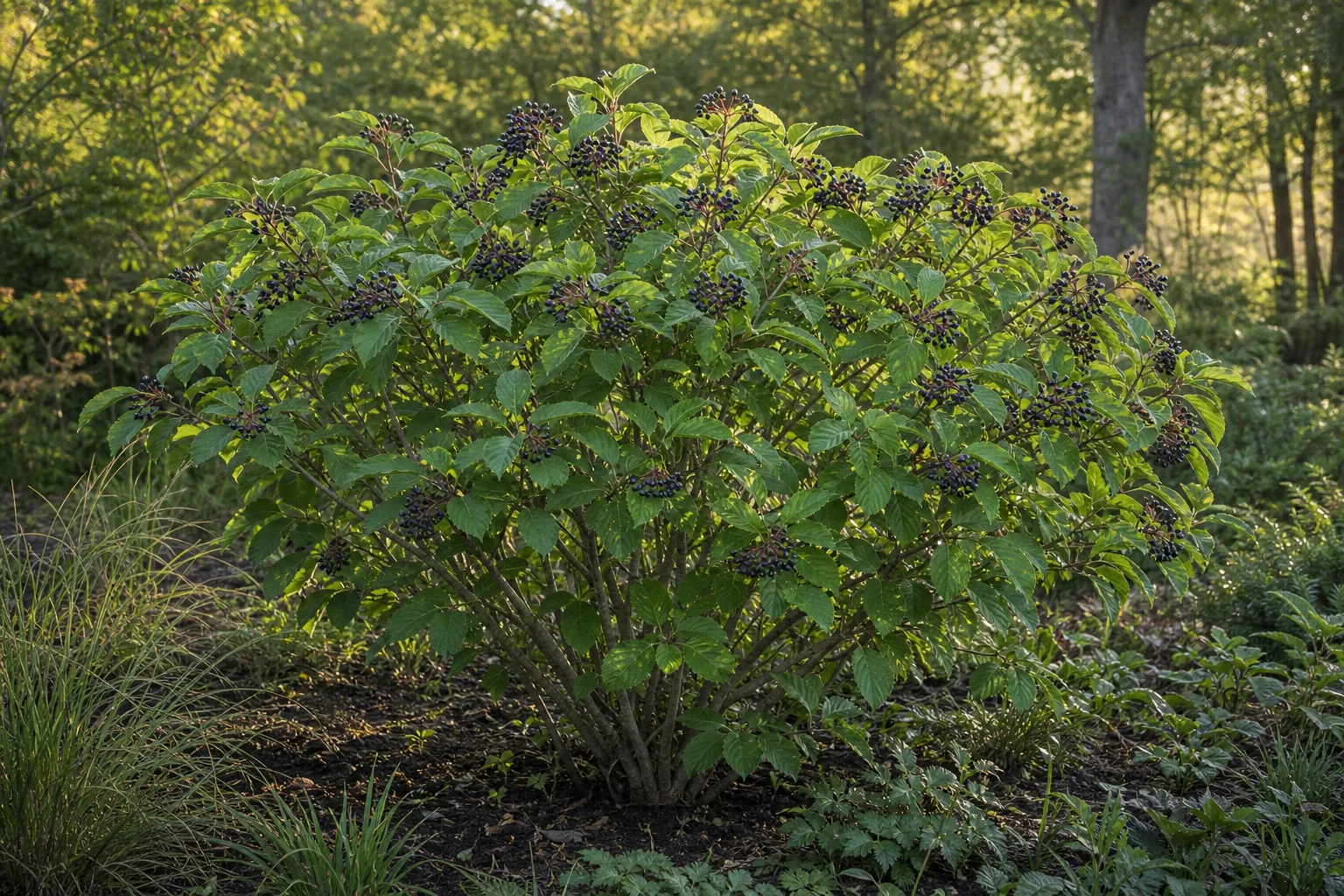
Arrowwood viburnum (Viburnum dentatum) is an adaptable native shrub that asks for little. Plant in full sun to part shade in moist, well-drained soil, spacing 6-10 ft for hedges. Water regularly the first year and mulch 2-3 in to hold moisture. It tolerates clay, wet sites, and urban conditions better than many shrubs. Prune lightly after flowering to shape, and plant two different seedlings or clones nearby if you want a heavy crop of blue berries.
Light
Arrowwood viburnum grows in full sun to part shade. Full sun gives the most flowers, berries, and best fall color; part shade is fine and useful in hot climates. Too much deep shade reduces flowering and fruiting.
Water
Water regularly through the first season, then arrowwood tolerates average moisture and short dry spells. Aim for about 1 in per week in dry periods. It handles occasional wetness better than prolonged drought, so keep the root zone from drying out in summer.
Soil and planting
Plant in average to fertile, moist, well-drained soil; it tolerates clay and even periodically wet ground. A slightly acidic to neutral pH is fine. In containers use a freely draining, moisture-retentive mix and repot when rootbound, keeping the crown at the soil line.
Temperature, humidity, and fertilizer
Hardy in USDA zones 2-8, arrowwood is cold hardy across most of the country. It is not fussy about humidity. Fertilize lightly in spring with a balanced, slow-release feed only if growth is weak; established plants rarely need it. Good air flow limits leaf spot in humid summers.
Pruning and propagation
Prune lightly after flowering to shape and remove dead wood; arrowwood needs little pruning. Thin a few oldest stems to renew an overgrown plant. Propagate from softwood cuttings in summer or by seed (stratify for best germination); seedlings vary, so use clones for uniform berries.
Common problems
Start with the pattern, current soil moisture, and recent changes. One symptom can have several causes, so change the most likely factor first and observe before making another major adjustment.
| Symptom | Check first | First action |
|---|---|---|
| No berries or few berries | Check for a single plant (needs a pollinizer clone) and too much shade. | Plant a second clone nearby and give brighter light for better fruit set. |
| Chewed, notched, or skeletonized leaves | Check for viburnum leaf beetle. | Monitor in early summer, prune out egg-laden twigs, and use targeted controls. |
| Sticky leaves or small bumps on stems | Check for scale insects. | Scrape or prune affected parts and use horticultural oil if needed. |
| Spotted or blotchy leaves | Check for fungal leaf spot in humid weather. | Improve air flow, avoid overhead watering, and rake up fallen leaves. |
| Poor fall color or weak growth | Check light, soil fertility, and moisture. | Move to fuller sun, water in drought, and apply a light spring feed. |
Pet and household safety
Arrowwood viburnum is considered non-toxic to dogs and cats and is not on the ASPCA toxic plant list. The blue berries are eaten by birds and are not considered a serious pet poison, but eating large amounts of any berry can cause mild vomiting or diarrhea, so discourage pets from foraging and contact a veterinarian if signs persist.
Frequently asked questions
How much sun does arrowwood viburnum need?
Full sun to part shade. Full sun gives the most flowers, berries, and fall color.
How often should I water arrowwood viburnum?
About 1 inch per week once established; it tolerates clay and some wetness but dislikes prolonged drought.
Will it produce berries?
Often needs a second clone nearby for the heaviest set; plant two different seedlings or cultivars.
When should I prune arrowwood viburnum?
Lightly after flowering to shape. It needs little pruning otherwise.
What soil does it like?
Average to fertile, moist, well-drained soil; tolerates clay and occasional wetness.
Is arrowwood viburnum safe for pets?
Yes - it is not listed as toxic to dogs or cats by the ASPCA, though large amounts of berries may upset the stomach.
Sources and editorial review
This editorial draft is based on the sources below and awaits named horticulture-expert approval before publication.
- Viburnum dentatumRoyal Botanic Gardens, Kew (Plants of the World Online) · Checked
- ViburnumASPCA · Checked
- Viburnum dentatumMissouri Botanical Garden · Checked
- Viburnum dentatumNorth Carolina State University Extension · Checked
What works well
- White spring flowers, blue berries, and good fall color in one shrub.
- Native, adaptable, and valuable to birds, bees, and butterflies.
- Non-toxic to dogs and cats and tolerant of many soils.
What to consider
- Berries can cause mild stomach upset if eaten in quantity.
- Occasionally bothered by viburnum leaf beetle or scale.
- Needs another clone nearby for the heaviest fruit set.