Key takeaways
- Plant in full sun for the heaviest bloom; part shade reduces flowering and can keep vines from blooming.
- Prune regularly after spring flowering and feed lightly in early spring to stimulate bloom.
- Choose the planting site carefully - established wisteria dislikes being transplanted.
How to care for American wisteria
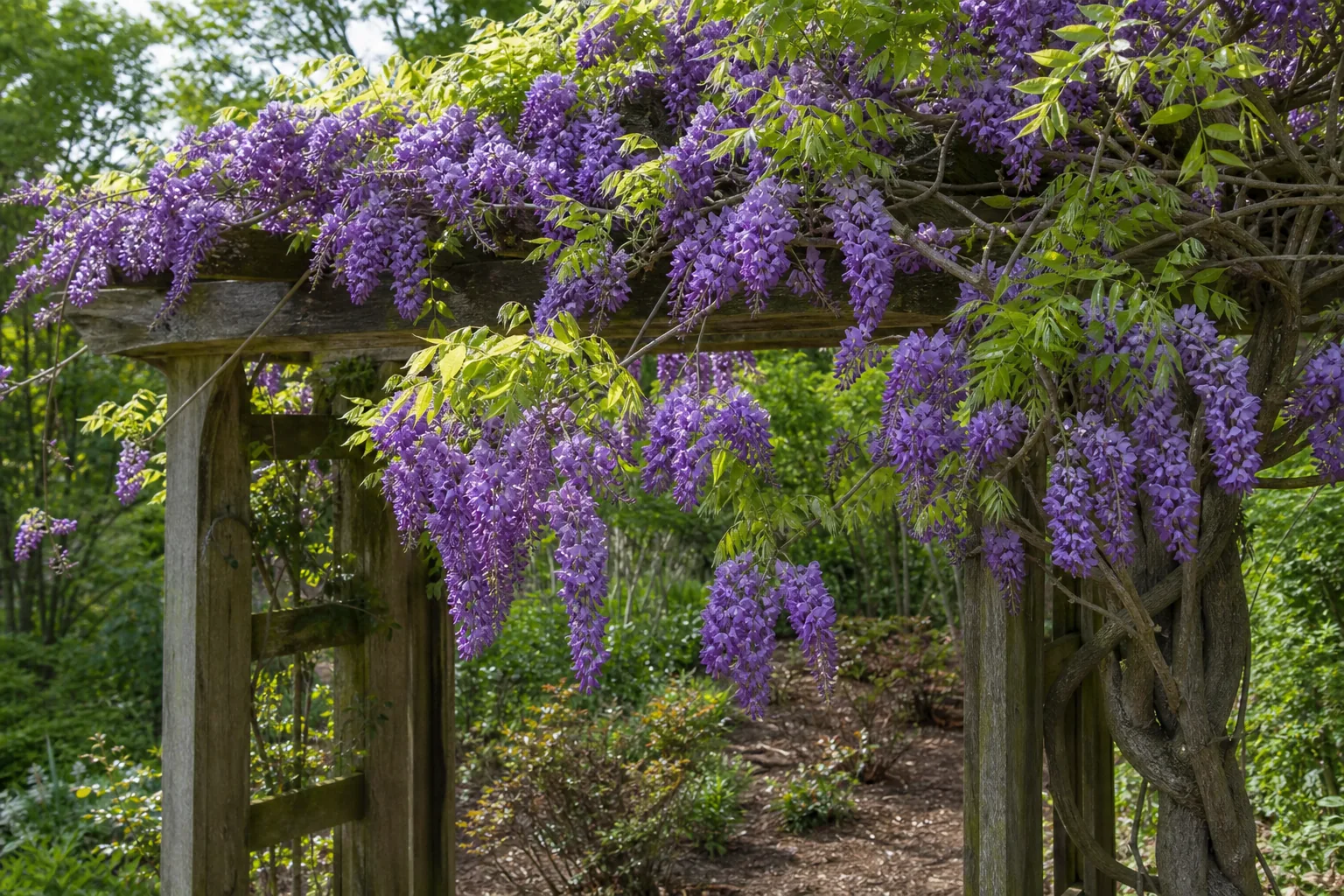
American wisteria (Wisteria frutescens) is a twining, deciduous woody vine best treated with patience and a firm hand. Plant it in full sun in slightly acidic, humusy, moderately fertile, moist, well-drained soil, and give it a strong support such as an arbor, pergola, or sturdy fence that its twining stems can climb. Water to establish, then let the vine settle in; established plants tolerate seasonal flooding to droughty conditions. Prune regularly to control size and shape and to encourage flowering, apply a fertilizer in early spring, and choose the site wisely because established wisteria dislikes being moved.
Light
American wisteria needs full sun - at least 6 hours of direct light daily - for the best flower display. It grows in part shade but produces fewer flowers, and too much shade is a common reason vines fail to bloom. Give it open, sunny exposure above the support so the flowering racemes receive full light.
Water
Water new vines regularly through the first season to build roots. Established American wisteria is tolerant of a wide moisture range, from seasonal flooding to dry conditions once settled, but it performs best with moderate, consistent moisture. Avoid letting the soil stay waterlogged, especially in heavy clay.
Soil and planting
Plant in slightly acidic (pH below 6.0), humusy, moderately fertile, moist, well-drained soil; clay, loam, and high-organic-matter soils all work if drainage is adequate. Work compost into the planting hole and mulch to hold moisture. Wisteria is rarely grown in containers long-term - its woody, twining habit and dislike of transplanting make a permanent in-ground site the better choice.
Temperature, humidity, and fertilizer
Hardy in USDA zones 5-9, American wisteria is tough once established and tolerates heat, drought, and temporary wet soil. An application of fertilizer in early spring helps stimulate flowering; avoid high-nitrogen feeds, which push foliage at the expense of flowers. Good airflow around the leaves reduces fungal leaf spots and mildew in humid summers.
Pruning and propagation
Regular pruning is the key to a flowering, in-bounds vine: prune after the spring bloom to remove spent racemes and shape the plant, and cut back long whips in summer. Heavy structural pruning is best done immediately after flowering. Propagation by cuttings is faster than seed - seed-grown vines can take years to bloom and may not be true to type, so named cultivars are propagated vegetatively.
Common problems
Start with the pattern, current soil moisture, and recent changes. One symptom can have several causes, so change the most likely factor first and observe before making another major adjustment.
| Symptom | Check first | First action |
|---|---|---|
| No flowers despite healthy foliage | Check plant age, sun exposure, pruning timing, and overfertilization. | Give full sun, avoid excessive nitrogen, prune after bloom rather than in spring, and wait for young vines to mature. |
| Seed pods ripen and split in fall | Check whether spent racemes were left on the vine. | Remove spent flower racemes after blooming to prevent pods and keep the vine tidy. |
| Yellowed leaves in alkaline soil | Check soil pH for iron chlorosis. | Amend toward a slightly acid pH and use an iron-chelate foliar feed if chlorosis persists. |
| Chewed or skeletonized foliage | Check for foliage-chewing insects. | Use cultural controls and monitor; damage is rarely significant on established vines. |
| Vine grows wildly and tangles its support | Check whether long whips were pruned during summer. | Cut back long, non-flowering whips in summer and thin crowded stems in early spring. |
Pet and household safety
Wisteria is toxic to dogs, cats, and horses according to the ASPCA. The toxic principles are lectin and the glycoside wisterin, concentrated in the seeds and pods (which also contain the amino acid canavanine); clinical signs include vomiting - sometimes with blood - diarrhea, and depression, and even one or two seed pods can cause illness. Keep pets from chewing the pods, seeds, or bark and contact a veterinarian after ingestion.
Frequently asked questions
How much sun does American wisteria need?
Full sun - at least 6 hours of direct light daily - for the best flowering; part shade reduces bloom.
How often should I water wisteria?
Water to establish the first season, then during dry spells; established vines tolerate a wide moisture range.
What soil suits American wisteria?
Slightly acidic, humusy, moist, well-drained soil; clay and loam work if drainage is adequate.
Why won't my wisteria bloom?
Usually the vine is too young, too shaded, overfertilized, or pruned at the wrong time; give full sun and prune after bloom.
When should I prune wisteria?
Prune after the spring flowering, then remove long whips in summer to keep it in bounds.
Is wisteria safe for pets?
No - wisteria is toxic to dogs, cats, and horses (lectin and wisterin in the seeds and pods). Prevent chewing and call a veterinarian after ingestion.
Sources and editorial review
This editorial draft is based on the sources below and awaits named horticulture-expert approval before publication.
- Wisteria frutescensRoyal Botanic Gardens, Kew (Plants of the World Online) · Checked
- WisteriaASPCA · Checked
- Wisteria frutescensNorth Carolina State University Extension · Checked
- Wisteria frutescensMissouri Botanical Garden · Checked
What works well
- Fragrant lilac-purple spring racemes that attract butterflies and bees.
- Far less aggressive than Chinese wisteria (Wisteria sinensis) and easier to keep in bounds.
- Good deer tolerance and reliable performance on arbors, pergolas, and trellises.
What to consider
- Toxic to dogs, cats, and horses - the seeds and pods contain lectin and the wisterin glycoside.
- First flowering can take several years, especially for seed-grown vines.
- Needs regular pruning and an early-spring fertilizer to flower well; mature vines become heavy and woody.