Key takeaways
- Plant in full sun to part shade in moist, fertile, well-drained soil.
- Prune in late winter, removing old canes to encourage vigorous new growth.
- Harvest ripe berries for cooking; never eat raw leaves, stems, or unripe fruit (toxic).
How to care for American elderberry
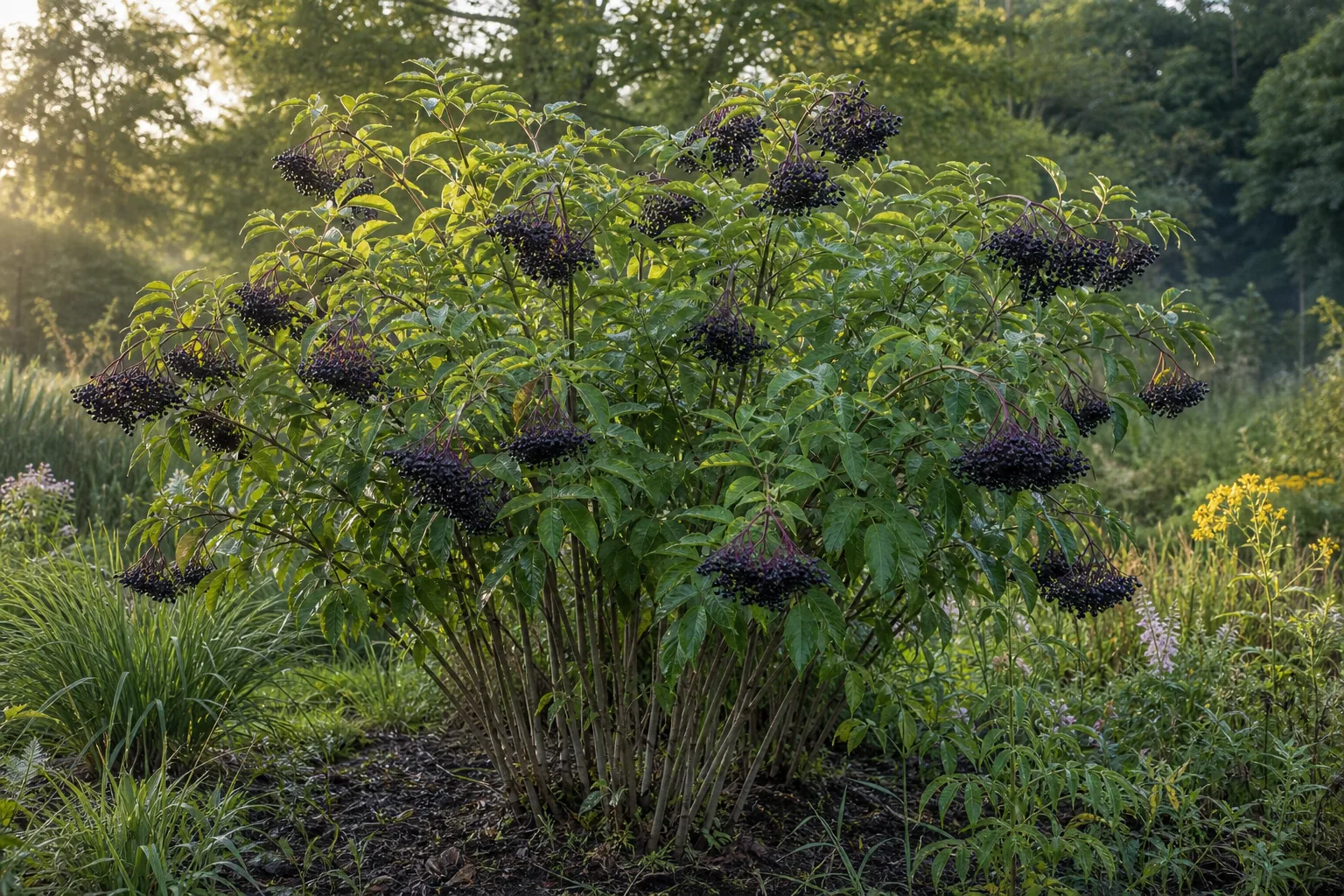
American elderberry (Sambucus canadensis) is a vigorous native that rewards moisture and sun. Plant in full sun to part shade in moist, fertile, well-drained soil, spacing 6-10 ft and mulching 2-3 in. Water regularly so the root zone stays evenly moist, especially in the first two years and during fruiting. It tolerates wet ground better than most shrubs. Prune in late winter to remove a few of the oldest canes and open the center for vigorous new growth and better yields.
Light
Elderberry grows in full sun to part shade. Full sun gives the most flowers, fruit, and sturdy canes; part shade is tolerated and useful in hot climates. Too much deep shade reduces flowering and fruiting.
Water
Water regularly through the first season and during dry spells, aiming for about 1-2 in per week. Elderberry prefers evenly moist soil and tolerates occasional wetness, but a consistently soggy, stagnant site is best avoided. In containers water more often.
Soil and planting
Plant in fertile, moist, well-drained soil with an acid to neutral pH. It tolerates clay, sand, and wet sites better than many shrubs. In containers use a moisture-retentive, freely draining mix and a large pot; elderberry is not a long-term container plant, so repot when rootbound and keep the crown at the soil line.
Temperature, humidity, and fertilizer
Hardy in USDA zones 4-8, elderberry is cold hardy and not fussy about humidity. Fertilize in spring with a balanced feed if growth is weak; ample organic matter usually suffices. Good air circulation limits foliar disease and helps the flower and fruit display.
Pruning and propagation
Prune in late winter, removing a few of the oldest canes at the base each year and thinning the center; elderberry fruits on second-year wood, so keep a mix of young and old canes. Suckers can be dug and replanted in fall, or propagate from hardwood cuttings.
Common problems
Start with the pattern, current soil moisture, and recent changes. One symptom can have several causes, so change the most likely factor first and observe before making another major adjustment.
| Symptom | Check first | First action |
|---|---|---|
| Few flowers or fruit | Check light, age of canes, and whether you over-pruned young wood. | Give fuller sun and keep a mix of one- and two-year-old canes; prune in late winter only. |
| Vomiting after a pet chews the plant | Check for ingestion of leaves, stems, or unripe fruit. | These contain cyanogenic glycosides - contact a veterinarian; keep pets from raw plant parts. |
| Powdery or spotted leaves | Check for fungal leaf disease in humid weather. | Improve air flow, avoid overhead watering, and remove affected foliage. |
| Weak, floppy canes | Check for too much shade or overly rich, soft growth. | Move to fuller sun and reduce nitrogen; thin for air. |
| Suckers invading beds | Check natural suckering from the roots. | Remove unwanted suckers in winter or dig them to start new plants. |
Pet and household safety
American elderberry is toxic to dogs, cats, and horses according to the ASPCA. The toxic principles are cyanogenic glycosides in the leaves, stems, bark, and unripe fruit, which can release cyanide; clinical signs include vomiting, diarrhea, weakness, and abdominal pain. Ripe, cooked berries are commonly used in food, but raw berries and all green parts should be kept from pets, and a veterinarian should be contacted after substantial raw-plant ingestion.
Frequently asked questions
How much sun does elderberry need?
Full sun to part shade; full sun gives the most flowers and fruit.
Are elderberries edible?
Ripe berries are edible when cooked (jams, syrup, wine). Raw berries and leaves, stems, and unripe fruit are toxic - never eat them.
When should I prune elderberry?
In late winter, removing a few oldest canes and thinning the center; it fruits on second-year wood.
What soil does elderberry like?
Moist, fertile, well-drained soil; it tolerates clay and wet sites better than most shrubs.
How do I get more fruit?
Full sun, even moisture, and a mix of young and old canes; cross-pollination from a second plant helps.
Is elderberry safe for pets?
No - the ASPCA lists elderberry as toxic to dogs, cats, and horses (cyanogenic glycosides in leaves, stems, unripe fruit). Cooked ripe berries are the edible part.
Sources and editorial review
This editorial draft is based on the sources below and awaits named horticulture-expert approval before publication.
- Sambucus canadensisRoyal Botanic Gardens, Kew (Plants of the World Online) · Checked
- ElderberryASPCA · Checked
- Sambucus canadensisMissouri Botanical Garden · Checked
- Sambucus canadensisNorth Carolina State University Extension · Checked
What works well
- Edible cooked berries for jelly, syrup, and wine; rich in antioxidants.
- Big flower and fruit clusters that attract pollinators and birds.
- Tolerant of wet soils where many shrubs fail.
What to consider
- Toxic to dogs, cats, and horses (cyanogenic glycosides in leaves, stems, unripe fruit).
- Spreads by suckers and can look coarse without pruning.
- Unripe fruit and raw plant parts can cause vomiting.